Beginner's Guide: Your First Hours in MARVEL Tōkon
A step-by-step beginner's guide to MARVEL Tōkon: Fighting Souls — covering controls, your first team, basic combos, defense, and how to start improving from day one.
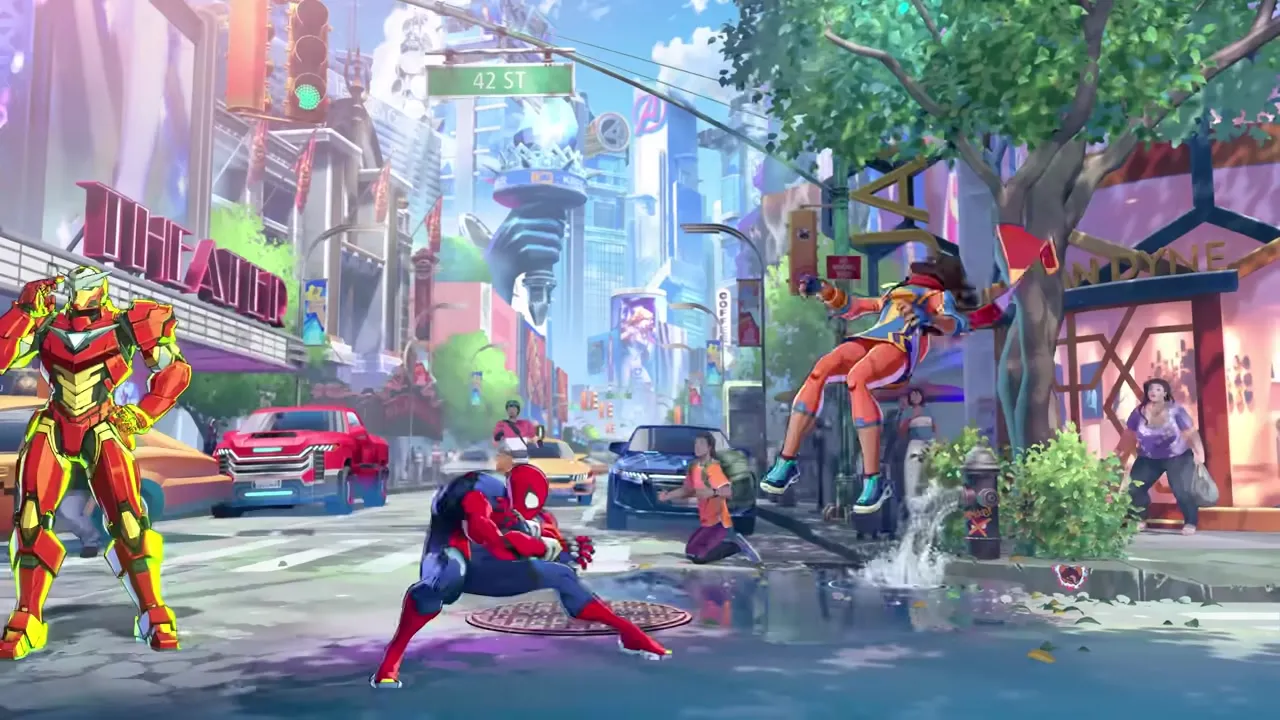
So you’ve picked up MARVEL Tōkon: Fighting Souls, you’ve watched the trailers, and now you’re staring at the character select screen with fourteen-plus fighters and no idea where to start. That’s fine — everyone’s been there. Fighting games look intimidating from the outside, but Tōkon’s progressive tag system actually does something clever: it eases you into team mechanics instead of throwing you into the deep end. Your first match starts as a 1v1 with an assist. By the time you’ve unlocked your full four-character team through Wall Breaks and damage, you’ve had time to get your bearings.
This guide is for absolute beginners and for people coming from other genres who want a structured plan for their first hours. No prior fighting game experience assumed.
Step one: pick a main (don’t overthink it)
Your first character choice doesn’t need to be optimal. It needs to be someone you actually want to play. That said, if you want a recommendation: Iron Man and Captain America are both rated easy difficulty and have well-rounded kits that teach good fundamentals without requiring character-specific tech. Ms. Marvel is another solid pick — medium difficulty but versatile enough to handle anything.
Avoid starting with hard-difficulty characters like Doctor Doom, Magik, or Green Goblin. They’re rewarding once mastered, but their execution demands will slow your fundamental growth. You can always switch later — there’s no penalty for changing mains.
For your assist character (your second pick), choose someone whose attacks cover your main’s weak spots. If your point character is a close-range brawler like Wolverine, pick an assist that helps you get in — a beam or lockdown assist from Storm or Star-Lord, for instance. The assists system page has a full breakdown of assist types.
Step two: learn the buttons
MARVEL Tōkon hasn’t published its exact button layout yet, but based on Arc System Works’ conventions, expect something like this:
| Button | Expected function |
|---|---|
| Light attack (L) | Fast, short range, safe on block |
| Medium attack (M) | Moderate speed and range |
| Heavy attack (H) | Slow, long range, launches on hit |
| Special (S) | Unique property button (launcher, drive, etc.) |
| Assist | Calls your partner for a backup attack |
| Tag | Swaps to your partner (once unlocked) |
Go into training mode and just press buttons. Find out what your character’s normals look like — standing, crouching, and jumping versions of each button. Get a feel for range and speed. Don’t worry about combos yet. Spend five minutes literally just pressing each button and watching what happens.
Step three: your first combo
Every character in an ArcSys game has a basic chain combo that flows from light to medium to heavy. In Tōkon this likely looks like:
L > M > H > Special move
That’s it. Four hits, ending in a special move. In training mode, set the dummy to stand and practice this chain until you can do it five times in a row without dropping. Then try it with the dummy set to crouch (you might need to start with a crouching light instead).
This bread-and-butter combo won’t win tournaments, but it’ll win you rounds. Most beginners lose not because they don’t know advanced combos but because they can’t convert a stray hit into any damage at all. A simple four-hit chain that you land every time is worth more than a flashy fifteen-hit combo that you drop half the time.
Once the basic chain feels natural, learn to end it with a super from the Skill Gauge when you have meter. That adds a big damage spike to what was already a solid conversion.
For deeper combo routes and tag extensions, check the combo basics guide once you’re comfortable here.
Step four: learn to block
Blocking is literally holding the stick or D-pad away from your opponent. That’s the input. But the decision-making behind it is where fighting games get deep.
Block low by default. Hold down-back. This stops most attacks including lows, which are the most common pokes in neutral. Only switch to standing block when you see an overhead attack coming — a jumping attack, a command overhead, a clearly high-hitting move. This habit alone will save you from eating the majority of pressure patterns at a beginner level.
Don’t jump when you’re scared. The new-player instinct when getting pressured is to jump away. Resist it. Jumping has startup frames where you can’t block, and a smart opponent will catch your jump with an anti-air or air throw for a full combo. Just block. Let them finish their string. Wait for a gap. Then it’s your turn.
Learn push block. When you’re blocking and the pressure feels endless — especially with assists piling on — push block creates distance. It’s expected to be a simple input during blockstun, and it’s your primary tool for getting breathing room. Details on the full defense mechanics page.
Step five: use your assist (but don’t spam it)
Your assist partner is your biggest advantage in the early match phase. One press and they fly in for an attack. But there are rules:
Call assists during your own pressure. When the opponent is blocking your attacks, calling an assist extends your pressure and creates mixup opportunities. This is the safest time to use it because the opponent can’t easily hit your incoming partner.
Don’t call assists when you’re being attacked. If the opponent hits your assist on the way in, that character takes damage — damage that carries over once they join as a playable fighter through the tag system. Protecting your assists is fundamental.
Space out your calls. Assists have a cooldown. If you spam the button, you’ll find it unavailable right when you need it most. Use it deliberately once or twice per offensive sequence, then let it recharge.
Step six: understand the tag system (the simple version)
Here’s the short version: you start with one fighter and one assist. As you deal damage and score Wall Breaks, your third and fourth characters unlock. More characters means more assists, more tag combos, and more options.
What this means for you right now: play aggressively. The tag system rewards you for dealing damage — it literally gives you more team members. Sitting back and waiting doesn’t progress your roster, while pushing offense does. You don’t need to be reckless, but lean forward. Take your turn. Throw out attacks. Push toward the wall.
For the full system explanation, see how the tag system works.
Step seven: a practice routine
Fighting games improve fastest with structured practice. Here’s a fifteen-minute routine you can run before each online session:
- Combo drill (5 minutes) — Practice your basic chain combo ten times on each side. Add the super ender when you have it down.
- Anti-air drill (3 minutes) — Set the dummy to jump at you randomly. Practice hitting them out of the air with your character’s best anti-air normal.
- Block practice (3 minutes) — Record the dummy doing a basic pressure string and practice blocking it. Focus on identifying the gap where you can take your turn.
- Assist timing (4 minutes) — Practice calling your assist during your combo and during your blockstring. Get the timing so the assist hit connects with your pressure naturally.
That’s it. Fifteen minutes of focused practice before you queue up will accelerate your growth faster than ten hours of mindless online matches.
Common beginner mistakes
Mashing buttons on defense. When you’re being attacked, the instinct is to press buttons wildly hoping something comes out. Stop doing this. Block first, identify a gap, then take your turn with a deliberate button press. Mashing gets you counter-hit, which leads to bigger combos from your opponent.
Burning burst immediately. When you unlock the burst mechanic, you’ll want to use it the instant you get hit. Hold it. Short combos don’t warrant a burst — save it for the devastating sequences that will actually kill your character. A burst saved is a round saved.
Ignoring the corner. New players tend to fight in the middle of the screen. But the Wall Break mechanic means corners are strategic gold. Push your opponent toward the wall. Carry them there in combos. The payoff — a stage transition plus a team member unlock — is worth the effort.
Playing too many characters. With fourteen options and a four-person team, it’s tempting to constantly switch who you’re playing. Don’t. Stick with one point character for at least a few weeks. Depth beats breadth early on. You can explore the full roster once your fundamentals are solid.
Your first team template
If you want a simple starting team that covers the basics:
| Slot | Role | Recommended pick | Why |
|---|---|---|---|
| Point (1st) | Your main — fights solo at the start | Iron Man | Easy difficulty, balanced tools, good normals |
| Assist (2nd) | Backup attack — joins team after unlock | Storm | Excellent beam assist, covers Iron Man’s gaps |
| 3rd slot | Mid-game addition | Captain America | Easy, durable, solid anchor |
| 4th slot | Late-game closer | Spider-Man | Explosive offense for the late game when the match is wild |
This isn’t a tier list — it’s a learner’s shell. It gives you straightforward characters up front and more dynamic ones later when you have teammates to back them up.
Where to go from here
Once you can reliably land your basic combo, block simple pressure, and use your assist without getting it killed, you’re ready to branch out:
- Combo basics guide — learn tag extensions, meter combos, and Wall Break carry routes
- Defense guide — push block, burst timing, guard cancel, and how to survive tag pressure
- Tag system deep dive — team-order optimization, unlock timing, and competitive team building
- Controls and settings — button mapping, sensitivity, and PC optimization
The first few hours of any fighting game feel overwhelming. That’s normal. What separates people who stick with it from people who bounce off is having a plan — and now you have one. Pick your character, learn the chain, block low, call your assist, and push toward the wall. Everything else builds from there.
Frequently asked questions
What's the best starter character in MARVEL Tōkon?
Iron Man and Captain America are both rated easy difficulty and have well-rounded toolkits that don't have glaring weaknesses. They're ideal for learning fundamentals without being punished for gaps in character-specific knowledge.
Do I need fighting game experience to play MARVEL Tōkon?
No. Tōkon is designed to be accessible with its progressive tag system easing you into team mechanics. The game starts each match as a simpler 1v1 before scaling into full 4v4, which gives newcomers time to learn at each stage.
How do combos work in MARVEL Tōkon?
Combos chain together light, medium, and heavy attacks in sequence, often ending with a special move or super. The game is expected to use a chain combo system similar to other Arc System Works games, where buttons flow naturally into each other.
What should I learn first?
Focus on blocking, one basic combo, and when to call your assist. These three skills cover 80% of what you need in your first dozens of matches. You can add more advanced techniques like mixups and tag combos later.