Doctor Doom
Sovereign Technical Tyrant
Doctor Doom technical guide for MARVEL Tōkon Fighting Souls. Victor Von Doom playstyle, plasma specials, Knights of Doom team tips.
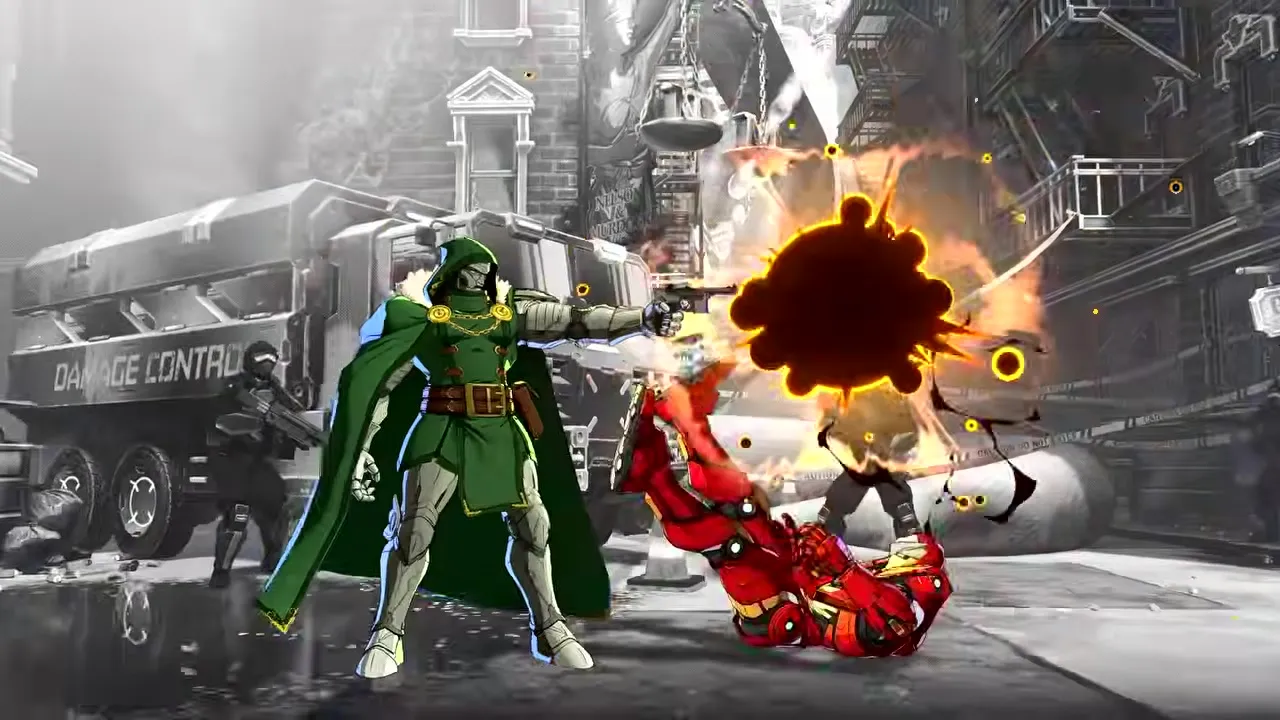
Doom does not assist. Doom commands.
Who Is Doctor Doom in MARVEL Tōkon: Fighting Souls?
Victor Von Doom is arguably the greatest villain in Marvel’s history — a monarch, a sorcerer, a genius inventor, and now the leader of the Knights of Doom in MARVEL Tōkon: Fighting Souls. Revealed alongside Magneto, Green Goblin, and Carnage in the Knights of Doom trailer, Doom enters Tōkon with the kind of gravitas only ArcSys can deliver — cape physics, imperious animations, and a moveset that screams “I am the smartest person in every room, including this one.”
Doom has a legendary fighting game legacy. His MvC2 and MvC3 iterations defined what a support character could be — Hidden Missiles assist was one of the most powerful tools in fighting game history. The question for Tōkon isn’t whether Doom will be good. It’s whether ArcSys can resist making him too good.
Playstyle and Archetype
Doctor Doom is technical with a kit that covers virtually every situation. He has beams for zoning, armored dive attacks for approach, missiles for screen control, and command normals for close-range pressure. He’s not the best at any single thing, but unlike a typical all-rounder, his tools are individually excellent — they just require the skill to deploy them correctly.
His technical rating comes from execution requirements and decision-making overhead. Doom has options for every situation, but choosing the wrong one is punished severely. Throwing a Plasma Beam when you should have anti-aired means eating a full combo. Using Foot Dive when the opponent is ready means getting punished hard. The character rewards game knowledge as much as execution.
In the context of Tōkon’s tag system, Doom is almost certainly designed as the backbone of the Knights of Doom villain team. Pairing him with Magneto, Green Goblin, and Carnage is the intended composition, and their combined toolkit — Doom’s trap-heavy control, Magneto’s zoning, Green Goblin’s setplay, Carnage’s rushdown — covers every archetype.
Signature Moves and Specials (Expected)
Based on Doom’s extensive fighting game history and trailer analysis.
Plasma Beam — A horizontal beam that crosses the screen. Faster than Iron Man’s Uni-Beam with less damage but better recovery. This is Doom’s primary space control tool and possibly the basis for one of his assist options.
Hidden Missiles — Doom’s signature. Small missiles launch upward and rain down after a delay, catching opponents who are jumping, super-jumping, or otherwise committed to aerial movement. The delayed nature of this move is what makes it technical — you fire it early, and it pays off seconds later when the opponent forgets about it.
Foot Dive — An armored diving kick from the air. Doom descends at a steep angle, cutting through anti-air attempts with super armor. Possibly one of the best approach tools in the game, balanced by being risky when the opponent is ready for it.
Photon Shot — A finger-laser projectile at upward angles. Covers the space between Plasma Beam (horizontal) and Hidden Missiles (vertical). Useful for catching specific approach angles, especially the drive movement dashes that other characters rely on.
Sphere Flame (Super) — A close-range explosive sphere of energy. Based on the Skill Gauge, probably his level-1. Good damage, invincible startup, and usable as a reversal.
Doom’s Day (Expected Level-3) — A cinematic super involving Doom’s full technological and mystical arsenal. Expect Doombots, energy blasts, and the kind of dramatic camera work that makes you feel like Victor just conquered the world. Again.
Tag and Assist Synergy
This is where Doom historically transcends from “good character” to “best character in the game.” If Hidden Missiles returns as an assist, it could be the single most important assist in Tōkon. A delayed multi-hitting projectile from above forces the opponent to respect the sky at all times, enabling rushdown characters to approach freely and zoners to set up without fear of aerial approaches.
Alternatively, Plasma Beam assist provides immediate horizontal coverage — less tricky than missiles but more directly useful for combo extensions and blockstring pressure.
In the tag system, Doom works best as a second or third character. He doesn’t need to be point — his value is in his assist supporting the point character. When he does tag in, his versatile toolkit means he can adapt to whatever situation the previous character left him in.
His Wall-Break potential is high. Foot Dive carries opponents downward and likely leads to wall-splat, and Plasma Beam combos near walls should consistently force stage transitions.
Who to Pair Him With
Doom pairs with everyone, but the Knights of Doom are the canonical team.
Magneto — The two greatest Marvel villains on one team. Magnus covers the aerial space with his expected magnetic projectiles while Doom controls the ground with beams and missiles. Together they create a projectile fortress. This is the Knights of Doom core.
Carnage — Carnage’s aggressive rushdown backed by Doom’s Hidden Missiles is a nightmare. The symbiote gets in with tentacle attacks while missiles rain down, creating left/right/high/low mix-ups layered with projectile pressure.
Spider-Man — Classic hero-villain synergy (from a gameplay perspective). Spidey’s speed backed by Doom missiles was devastating in MvC3, and there’s no reason it won’t be devastating here. Check the offense and mixups guide for understanding how assists layer with close-range pressure.
Tips for Beginners
Doom is not a beginner character, but he’s more approachable than Magik because his tools are individually simpler — beam goes forward, missiles go up, dive goes down. Start by learning Plasma Beam spacing at full-screen, then add Foot Dive as your approach when the opponent starts jumping over beams. Ignore Hidden Missiles entirely until you can handle Doom’s basic gameplan without them. The beginner’s guide will teach you the universal defense mechanics that help when opponents pressure Doom up close.
Tips for Competitive Players
Doom’s competitive tier will likely depend on one thing: assist strength. If Hidden Missiles assist functions anything like its MvC iterations, Doom will be on most competitive teams regardless of his solo strength. Lab missile timing obsessively — knowing exactly when missiles will arrive lets you plan pressure sequences around them. Foot Dive’s armor properties will need frame-precise understanding: which moves beat it, which it powers through, and how it interacts with Wall Break combos near edges. Doom rewards preparation more than any other character on the roster. Come to the match with a plan, and the plan will work. Improvise against Doom, and he’ll make you pay.