Assists & Partner Calls
Backup attacks
How assist attacks work in MARVEL Tōkon: Fighting Souls — from your opening partner call to full tag-team pressure once the roster unlocks.
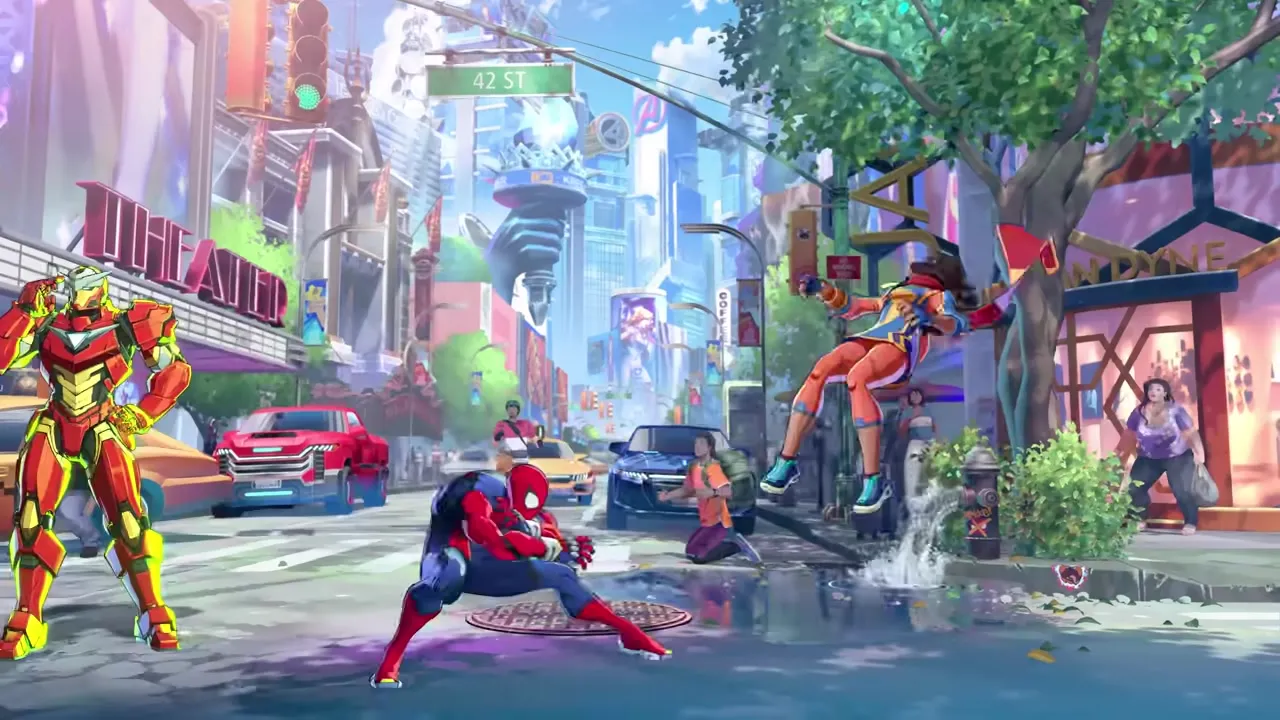
A good assist turns a blocked string into a guessing game.
Assists are the connective tissue of MARVEL Tōkon: Fighting Souls’ team system. From the very first moment of a match — before your third and fourth characters have even unlocked through the tag system — your assist partner is already available, jumping in on command to throw an attack and jump back out. Once the full roster opens up, assists multiply. Suddenly every character on your bench is a tool you can call, and the match goes from a careful duel to a layered team assault.
The basics
Based on Arc System Works’ conventions and everything shown in Tōkon’s preview footage, calling an assist works roughly like this: you press the assist button during neutral or during a combo, your partner flies in, performs a preset attack, and leaves. The whole action takes a fraction of a second, but it changes the dynamics of the screen completely.
Your assist’s attack occupies space that your point character can’t cover alone. Think of Storm firing a horizontal projectile while your point rushdown character like Wolverine closes the gap on the ground. Or Ghost Rider swinging his chain at mid-range while Spider-Man presses a high/low mixup up close. The second body on screen forces your opponent to deal with two threats simultaneously, which is what makes tag fighters feel so different from 1v1 games.
Assist types (expected)
While Tōkon hasn’t published a full assist-type list yet, ArcSys tag fighters typically assign each character one or more assist options that fall into a few functional categories:
- Beam / projectile — covers horizontal space, good for neutral control and approaching
- Anti-air / vertical — catches jump-ins and superdashes, protecting against aerial approaches
- Lockdown / blockstun — traps the opponent in block for a long time, letting your point character run a mixup
- Combo extension — pops the opponent up or holds them in hitstun so your solo combo can continue
Picking the right assist type for your team composition is half the battle. A rushdown-heavy team might stack lockdown assists to smother the opponent once they get in, while a more balanced squad might spread its assists across coverage types to handle multiple situations.
When to call — and when not to
Assists are powerful, but they’re not free. In virtually every tag fighter ArcSys has made, the assist character is vulnerable during their entry animation. If your opponent reads the call and clips your assist as they fly in, that character takes damage — and in Tōkon’s progressive system, a hurt assist partner starts the match weaker once they fully unlock into a playable fighter.
Timing your calls is a skill that separates intermediate players from advanced ones. Good moments to call an assist:
- During your own blockstring — your opponent is stuck blocking you, so they can’t hit the incoming assist
- After scoring a knockdown — the opponent is getting up and has to deal with both your melee pressure and the assist attack
- In neutral at safe range — if you’re far enough away that the opponent can’t quickly punish the assist’s entry
Bad moments: calling an assist while you’re being pressured (your partner eats a combo), calling predictably at the same timing (your opponent baits it), or calling when the assist is still on cooldown and nothing comes out.
Assists and the tag system
Here’s where Tōkon’s design gets interesting. In the early phase of a match, you have exactly one assist — your second character. That means your assist choice is locked in at character select, and it’s the only backup you get until you unlock fighter three through damage thresholds or a Wall Break.
Once additional characters unlock, your assist options expand. Now you can potentially call your second, third, or fourth character as assists (the ones not currently on point), giving you more coverage and more combo routes. The match goes from a careful two-person operation to a juggling act with multiple resources.
This escalation is core to Tōkon’s identity. Early rounds feel deliberate — you and your one assist against the world. Late rounds feel explosive — three possible assists, tag combos, and the full weight of a four-person roster. The Skill Gauge likely factors in too, since meter builds faster with more active characters generating it.
Assist synergy and team building
When you sit down at character select, you’re really making four assist decisions disguised as character picks. Every character on your team will spend some time in the assist role, so their assist attack matters as much as their point game.
Some expected strong pairings based on archetype logic:
| Point character | Ideal assist type | Why |
|---|---|---|
| Spider-Man (rushdown) | Lockdown / beam | Covers his approach and lets him run mixups on block |
| Storm (zoner) | Anti-air / combo extend | Protects her from jumps and rewards her when she scores a hit |
| Doctor Doom (technical) | Projectile / lockdown | Gives him space to set up his technical gameplan |
| Iron Man (all-rounder) | Flexible — any type works | His balanced kit adapts to whatever his assist provides |
Punishing sloppy assists
Learning to snipe opponent assists is a genuine skill. Dash through or jump over the point character’s pressure and tag the incoming partner with a full combo. In Tōkon, the stakes are especially high — if your assist takes a beating before they unlock as a playable fighter via the tag system, you start expansion at a health deficit.
For how assists fit into offensive pressure, see the offense and mixups system page. The beginner’s guide walks through team-building basics with assists in mind.