Storm
Weather-Command Zoner
Storm zoner guide for MARVEL Tōkon Fighting Souls. Ororo Munroe playstyle, weather specials, assists and team synergy tips.
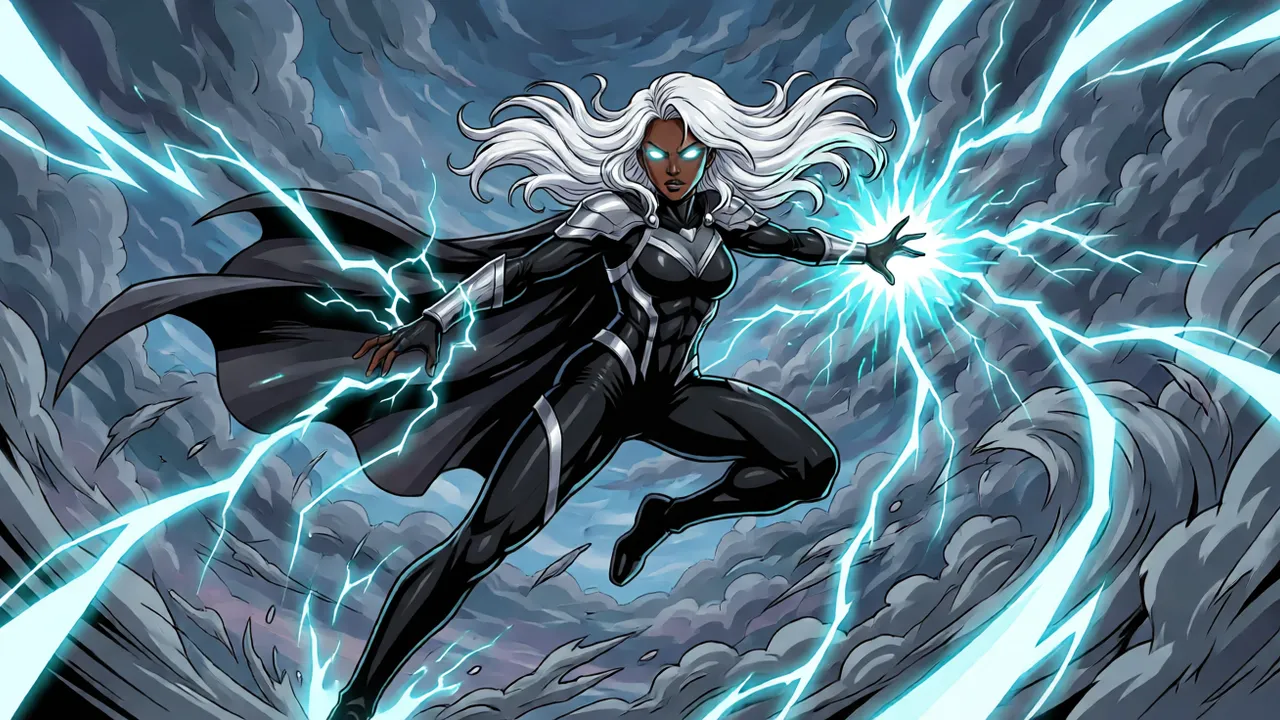
I am a force of nature. You cannot outrun the sky.
Who Is Storm in MARVEL Tōkon: Fighting Souls?
Ororo Munroe commands the weather itself, and in MARVEL Tōkon: Fighting Souls she looks poised to command the screen just as thoroughly. ArcSys has given her a gorgeous design — flowing white hair, crackling atmospheric effects, and animations that sell the weight and grandeur of controlling a thunderstorm. She appeared in trailer footage summoning winds and lightning, immediately establishing herself as the roster’s premier keepaway character.
Storm has a proud history in Marvel fighting games. Her MvC2 incarnation was top-tier, and her toolkit here looks like a modern update of those same principles: control space, deny approaches, punish people for being anywhere on screen. She’s one of the X-Men representatives on the confirmed roster, and she fills a role no other character currently matches — a true full-screen zoner who can fight at distances where most characters have zero options.
Playstyle and Archetype
Storm is a zoner built around projectile layering and aerial control. Her gameplan is straightforward in concept: keep the opponent away, fill the screen with weather effects, and punish any attempt to approach. The execution, however, is where the medium difficulty comes in — managing multiple projectile types, maintaining flight positioning, and knowing when to commit to which weather attack requires solid game sense.
Her flight mode looks critical. Based on trailer footage, Storm can hover at various heights and attack from the air, making her much harder to pin down than a grounded zoner. This is especially significant given Tōkon’s drive movement system, where aggressive dashing is likely a core mechanic. Storm needs flight to stay above the scramble.
In the tag system, Storm presents an interesting dynamic. Zoners traditionally struggle in tag fighters because the pace favors aggression, but Tōkon’s progressive 4v4 unlock might actually favor Storm. If she can zone effectively in the early 1v1 phase and build toward Wall Breaks passively through chip and projectile confirms, she transitions into the mid-game with a full team while the opponent is still catching up.
Signature Moves and Specials (Expected)
Trailer-based speculation. Specific frame data and properties are unconfirmed.
Whirlwind — A forward-moving tornado projectile. Likely slow but covers significant screen space and probably knocks the opponent away on hit, resetting to Storm’s preferred range.
Lightning Attack — A diagonal or vertical lightning bolt. This is probably her key anti-approach tool, covering the aerial angles that horizontal projectiles miss. In a game with lots of super-jumps and air dashes, a fast overhead lightning strike is invaluable.
Typhoon — A close-range wind burst for pushing opponents away when they manage to get in. Expect this to be Storm’s get-off-me button and likely the basis for her assist call.
Double Typhoon — An enhanced version that probably creates a projectile wall in front of Storm. Higher commitment but more coverage.
Hailstorm (Super) — Storm’s iconic super. Ice shards rain down across the entire screen. Based on the Skill Gauge, this is probably her level-1 — filling the screen with chip damage and catching opponents no matter where they are.
Lightning Storm (Expected Level-3) — A cinematic super involving a massive atmospheric event. ArcSys will make this one of the most visually stunning supers in the game — expect dramatic clouds, a pillar of lightning, and the camera work they’re famous for.
Tag and Assist Synergy
Storm’s assist value is interesting. A Typhoon assist would push opponents out, which sounds counterintuitive for a rushdown partner — but in practice, it would reset neutral in your favor, which is exactly what a cornered character needs. Alternatively, if her assist is a Lightning Attack, it covers an anti-air angle that complements horizontal assists like Iron Man’s beam.
Her tag-in timing matters a lot. Storm wants to come in when there’s distance between her and the opponent. Tagging her in after a combo that ends with knockdown at mid-screen is perfect — she wakes up at her ideal range with a screen to work with. Tagging her in close-quarters is a waste of her strengths.
Her Wall-Break potential is probably limited compared to rushdown characters. She’s more about preventing the opponent from getting Wall Breaks than pursuing her own. That said, any combo conversion into Hailstorm super near a wall should still trigger the transition.
Who to Pair Her With
Storm wants teammates who handle the close-range situations she actively avoids.
Wolverine — The classic X-Men duo. Logan handles anyone who gets past Storm’s projectiles, while Storm’s zoning gives Wolverine the breathing room rushdown characters need between engagements. They cover each other’s exact weaknesses.
Iron Man — Double zoning taken to its extreme. Storm’s vertical lightning and Tony’s horizontal beams create a projectile grid that covers nearly every approach angle. Opponents have to take massive risks to get in against both of them.
Magik — Illyana’s expected teleport mix-ups get much scarier when Storm’s projectiles force the opponent to block. Storm creates the situation, Magik exploits it. Check the offense and mix-ups guide for more on high/low pressure layering.
Tips for Beginners
Storm rewards patience above all else. Your instinct might be to throw out projectiles constantly, but spacing them correctly matters more than volume. Start by learning Lightning Attack angles — knowing which diagonal covers which approach is the foundation of Storm’s gameplan. Practice Typhoon as your panic button for close-range situations, and learn to flight-cancel into safety when pressure comes. Don’t try to combo aggressively; Storm’s best conversions are simple confirms into knockdowns that reset to her preferred range. The beginner’s guide covers the movement system you’ll need to understand to position correctly.
Tips for Competitive Players
Storm’s competitive value is in how she warps the opponent’s gameplan. They have to approach, which means they have to take risks, which means you get to punish those risks with superior reads. Study the defense mechanics inside and out — knowing exactly when to use burst, when to block, and when to fly away is the difference between a competent Storm and a scary one. Her Hailstorm super is probably a key combo finisher and possibly a safe reversal-super option; understanding the Skill Gauge economy and when to spend meter on full-screen chip versus saving for a punish will define high-level Storm play.