Magik
Limbo Teleport Specialist
Magik technical guide for MARVEL Tōkon Fighting Souls. Illyana Rasputina playstyle, teleport mix-ups, Soulsword specials and tips.
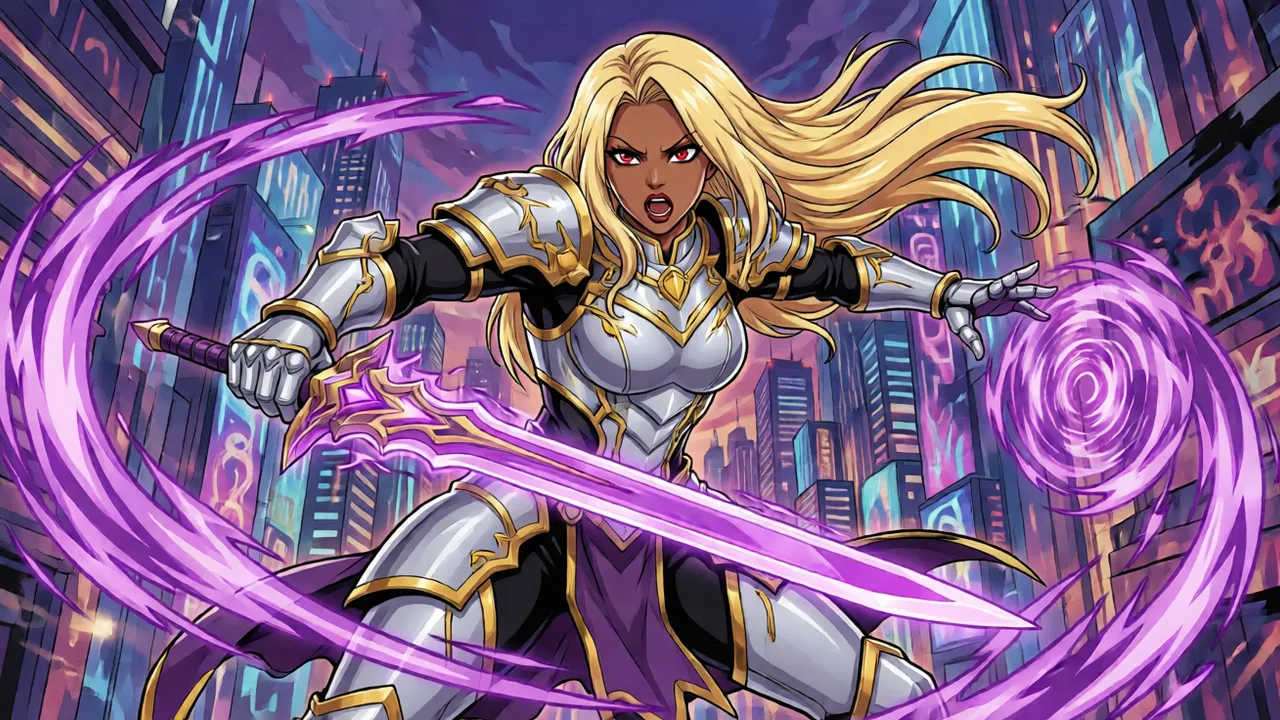
Step through the portal. You won't like where it leads.
Who Is Magik in MARVEL Tōkon: Fighting Souls?
Illyana Rasputina — sister of Colossus, ruler of Limbo, and wielder of the Soulsword — is one of the most exciting picks on the MARVEL Tōkon: Fighting Souls roster. She’s a deep cut compared to marquee names like Spider-Man or Iron Man, but her powerset is perfect for a fighting game. Teleportation, a magic sword, demonic transformations, pocket dimensions — Arc System Works must have been thrilled when they got to design this character.
From what we’ve seen in previews, Magik is the game’s premier technical character. She has mechanics layered on top of mechanics: Limbo portals that redirect attacks, teleports that ignore screen positioning, and a Soulsword that looks like it has unique properties on hit. If you’re the kind of player who spends hours in training mode discovering setups nobody else knows, Magik is your character.
Playstyle and Archetype
Magik is technical through and through, with a difficulty rating that earns the “hard” label honestly. Her gameplan appears to revolve around Limbo portals — spatial anchors that she can teleport to, redirect projectiles through, or use as combo extension points. Think of her as a character who plays a fundamentally different game than anyone else on the roster.
The Soulsword gives her normals an unusual property. Swords in ArcSys games have disjointed hitboxes — they extend past the character’s hurtbox, so the attack hits at ranges where the character can’t be hit back. Ky Kiske in Guilty Gear is the straightforward version of this; Magik is the version where the sword also opens portals and occasionally sets people on fire with eldritch energy.
Her difficulty comes from portal management. Placing portals, tracking where they are, knowing which follow-ups teleport you where — that’s a lot of mental overhead during a match. But the payoff is enormous: a Magik who has her portal setup dialed in can appear anywhere on screen at any time, making her mix-ups borderline unreactable.
She integrates with the tag system in a unique way. Portals might allow her to redirect assists to unexpected screen positions, or she might use teleports to create tag situations that bypass normal spacing. The creative potential here is enormous.
Signature Moves and Specials (Expected)
Heavy speculation for Magik — her fighting game moveset is being built from scratch rather than ported from previous titles.
Stepping Disc — Places a portal on the ground. Magik can teleport to this portal from anywhere, and some projectiles or attacks might travel through it. Portal placement and awareness is probably the core of her entire gameplan.
Soulsword Slash — An enhanced melee attack with the Soulsword that likely has extra properties: more hitstun, guard-crush, or unblockable setups when combined with portals.
Limbo Teleport — A direct teleport to behind, above, or in front of the opponent. This is her primary mix-up tool — appearing on the other side of the opponent mid-string forces them to guess the block direction. Study the offense and mix-ups system to understand how dangerous this can be.
Eldritch Bolt — A projectile that can be fired directly or routed through a Stepping Disc to change its angle. This gives Magik pseudo-zoning capability despite being a close-range character.
Darkchylde (Install Super) — Magik transforms into her demonic Darkchylde form. Based on ArcSys conventions, expect faster movement, enhanced normals, additional portal options, and a time limit. This is probably tied to the Skill Gauge and costs significant meter.
Limbo Banishment (Expected Level-3) — A cinematic super where Magik drags the opponent into Limbo for a dramatic finisher. ArcSys will make the dimensional shift visually spectacular.
Tag and Assist Synergy
Magik’s assist potential is fascinating. A Stepping Disc assist that places a portal on screen could be one of the most unique assists in the game — not directly damaging, but enabling setups for the point character that wouldn’t otherwise be possible. Alternatively, a simple Soulsword slash assist provides a more conventional active hitbox with the disjointed range of a sword normal.
On tag-in, Magik wants setups. She’s not the character you tag in raw during neutral — she’s the character you bring in after a knockdown, with a portal already placed, ready to run her teleport mix-up. The tag system rewards this kind of sequenced play, and Magik embodies it.
Her Wall-Break potential is moderate. The Soulsword probably has strong wall-splat properties, but her optimal play might actually avoid the wall in favor of keeping the opponent in a portal-trapped setup mid-screen. This creates an interesting tension: break the wall for team advancement, or keep the opponent in your web of portals for a safer kill?
Who to Pair Her With
Magik wants teammates who create the breathing room she needs to establish portals.
Storm — Storm’s zoning buys time for Magik to place portals. When Ororo’s projectiles force a block, Illyana teleports in for the mix-up. A cerebral X-Men team that rewards pre-planning.
Doctor Doom — Two technical characters with trap-heavy gameplans. The complexity is staggering, but a practiced player could create layered setups with Doom’s expected projectiles routed through Magik’s portals. Not for beginners.
Captain America — Cap’s stability balances Magik’s high-risk playstyle. When the portal setups fail, Steve provides a reliable fallback. His shield assist also gives Magik cover to establish her preferred screen state. Read the defense guide to understand what your opponents will be trying against Magik’s mix-ups.
Tips for Beginners
Honestly? Magik is not a beginner character. If you’re new to fighting games, try Iron Man or Captain America first, then come back to Illyana once you understand the game’s fundamentals. If you absolutely insist on starting with her — respect — then ignore portals entirely at first. Learn her basic Soulsword combos, get comfortable with teleport as a movement tool rather than a mix-up tool, and slowly layer in portal play as you improve. The beginner’s guide is essential reading before you touch a technical character.
Tips for Competitive Players
Magik’s ceiling is probably the highest on the roster. Portal setups that are character-specific, match-up-dependent, and meter-aware will separate elite Magik players from everyone else. Lab every character’s wake-up options against Stepping Disc teleport mix-ups — some characters can mash out of it, some can’t, and knowing the difference wins rounds. Darkchylde install timing is critical: burn it too early and you waste meter, save it too long and you die without using your best tool. Study how portals interact with the assist system because unique redirect tech could be the difference at the highest level.