The 4v4 Tag System
Build your team mid-match
How MARVEL Tōkon's progressive tag system lets you build a full four-character team mid-match through damage thresholds and Wall Breaks.
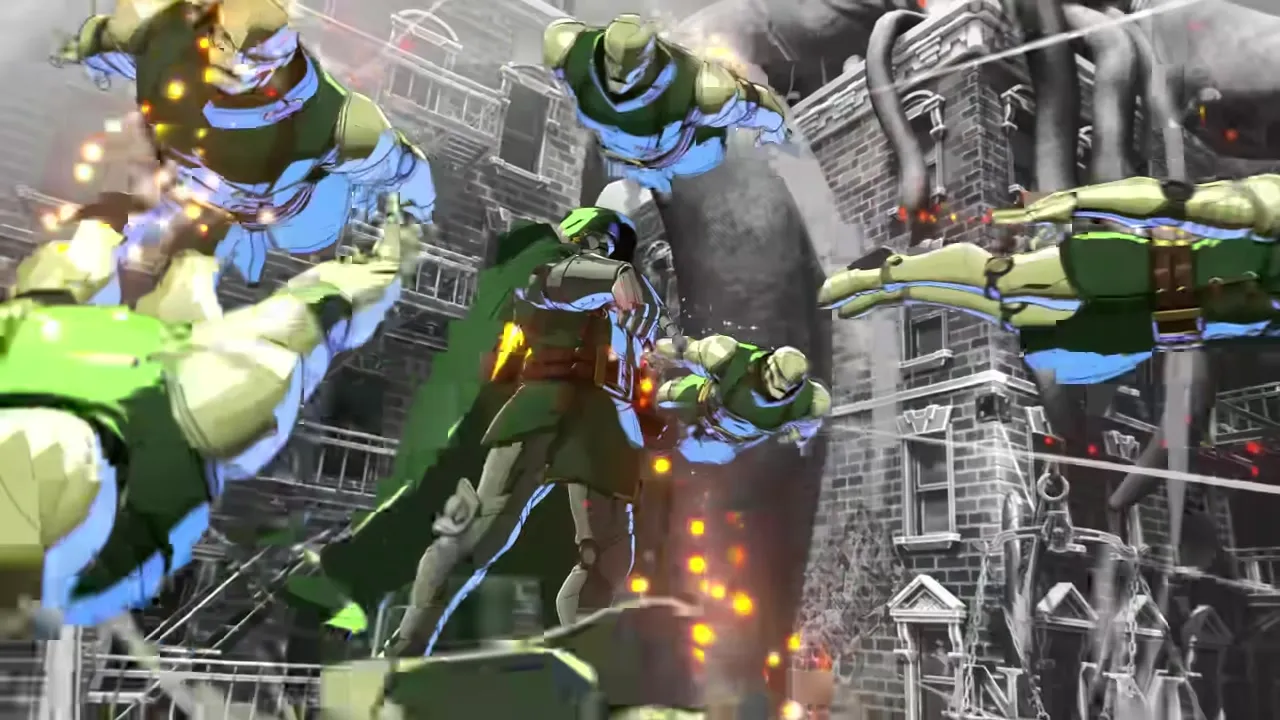
You don't pick a team — you earn one.
The 4v4 tag system is the mechanical heart of MARVEL Tōkon: Fighting Souls. Where most tag fighters hand you a full team in the character select screen and let you swap freely from round one, Tōkon flips the formula: you start each match with just one point character and a single assist partner, then progressively unlock your third and fourth fighters by hitting specific mid-match conditions. The result is a match structure that breathes — it starts tight and personal, then escalates into the kind of high-speed team combat Arc System Works is famous for.
How it starts
Every match opens as a 1v1 with backup. You choose your full roster of four before the fight begins, but only your designated point character takes the stage. Your second pick rides shotgun as an assist — callable for quick attacks but not directly controllable yet. Slots three and four? Locked. You have to earn them.
This opening phase plays more like a traditional fighting game duel. Footsies, spacing, reading your opponent — all the fundamentals matter here because you’re operating without the safety net of a full tag rotation. If you’re coming from Dragon Ball FighterZ or Marvel vs. Capcom, think of it as the game forcing you to prove you can handle yourself before it gives you the keys to the full machine.
Unlocking your team
Two confirmed triggers expand your roster during the match:
Damage dealt. Reaching certain damage thresholds — cumulative hits landed on the opponent — adds your third fighter to the active roster. The exact numbers haven’t been disclosed pre-release, but preview coverage suggests it rewards sustained offense rather than single big combos. Characters like Spider-Man and Wolverine, with their relentless rushdown pressure, may naturally unlock teammates faster thanks to their high hit-count play styles.
Wall Breaks. Landing a Wall Break — smashing your opponent through a stage boundary into a new arena — is the second confirmed unlock trigger. Wall Breaks are dramatic events: the camera shifts, the environment changes, and your team grows. This ties stage control directly to roster momentum. Pushing an opponent into a corner and finishing the sequence with a wall splat isn’t just damage — it’s a strategic investment in your team’s future.
Full 4v4: the late game
Once both players have unlocked their complete rosters, Tōkon transforms. Tag combos become possible — calling in a partner mid-string to extend damage or cover recovery. Character-specific synergies emerge based on archetype pairings: a zoner holding the screen while a rushdown character recovers health off-screen, or a technical fighter tagging in at the perfect moment for a hard-to-block mixup reset.
The Skill Gauge also interacts with the tag system in expected ways. Meter likely accumulates faster as the team grows (more characters generating resources), which means the late game features bigger supers and more spectacular finishers alongside the increased tag options. Arc System Works games historically reward players who manage multiple resources simultaneously, and Tōkon looks like it pushes that design further than anything before it.
Why it matters for the meta
The progressive unlock structure does something subtle to competitive play: it creates asymmetry. One player might unlock their third fighter off a Wall Break while the other is still running a duo. That gap creates comeback potential — the player with fewer options has to play smarter, while the player with the larger roster has to capitalize before the opponent catches up.
Team order matters too. Your point character absorbs the most risk since they fight alone at the start. Your assist pick needs to function well as a support tool before becoming a full fighter. Slots three and four are your late-game closers — strong characters you trust to perform once the match is in full swing. Expect competitive tier discussions to focus not just on which characters are strong individually, but on which four-character shells produce the best escalation arc.
Comparison to other tag fighters
| Feature | Marvel vs. Capcom | Dragon Ball FighterZ | MARVEL Tōkon |
|---|---|---|---|
| Team size | 3 | 3 | 4 (progressive) |
| Available at start | All 3 | All 3 | 1 + 1 assist |
| Unlock mechanic | None | None | Damage & Wall Breaks |
| Tag mid-combo | Yes | Yes | Yes (once unlocked) |
The progressive model is genuinely new for the genre. It borrows the escalation feel of games like Power Rangers: Battle for the Grid’s Megazord mechanic but applies it to the full team structure rather than a single super move.
Tips for new players
Picking your point character is the single most important decision in team building. That fighter needs to be someone you’re comfortable playing solo against any matchup. Iron Man and Captain America — both rated easy difficulty — are strong candidates because their all-rounder toolkits don’t have exploitable gaps in the early phase. Check our beginner’s guide for more on building your first team.
Don’t sleep on the assist choice either. An assist that covers your point character’s weak angles (an anti-air assist for a ground-focused point, or a projectile assist for a close-range fighter) can make the 1v1 opening phase far more comfortable. We break down assist selection in the assists system page.
The tag system isn’t just a gimmick — it’s the foundation that every other mechanic in Tōkon is built around. Meter, offense, defense, movement — all of it feeds back into when and how your team grows. Understanding the tag system first makes learning everything else faster.