Throws, Highs/Lows & Mixups
Open opponents up
How offense and mixups work in MARVEL Tōkon: Fighting Souls — throws, overhead/low mix, left/right cross-ups, and how assists multiply your offensive options.
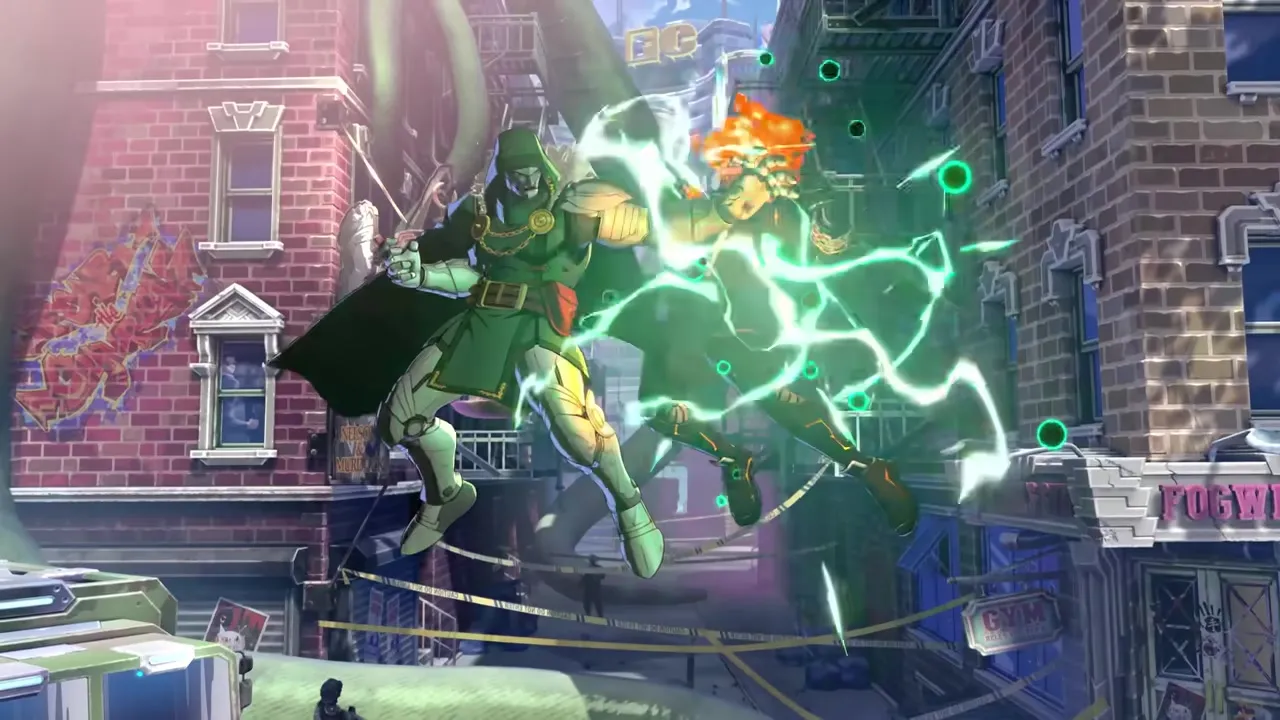
Blocking is a guess — make sure every guess is wrong.
Offense in MARVEL Tōkon: Fighting Souls is about one thing: making your opponent guess wrong. You can have the sickest combos in the world, but none of them matter if you can’t open the other player up in the first place. That’s where mixups come in — layered offensive situations where blocking correctly requires predicting which attack is coming, not just reacting to it.
The strike/throw foundation
Every offensive framework in fighting games starts here. Your opponent is blocking your attacks, and you need a way through their guard. There are two fundamental answers:
Keep hitting. Run a blockstring — a sequence of normals and specials that keeps the opponent locked in blockstun — and look for a gap where they let go of block or switch to the wrong stance. If they’re blocking low, hit them with an overhead. If they’re blocking high, sweep them.
Throw. Throws are unblockable. Walk up, grab, done. The catch: throws are close range and usually have a brief startup window where the opponent can tech (counter-throw) or jump away. But the threat of a throw is what makes blocking dangerous — if your opponent knows they can’t just hold block forever, they start pressing buttons or jumping, which opens them up to your strikes.
This back-and-forth — “am I going to hit you or grab you?” — is the foundation everything else builds on. In Tōkon, the 4v4 tag system and assist calls layer additional complexity on top, but the core is always strike versus throw.
High/low mixups
The second axis of offense. Standing block beats overheads but loses to lows. Crouching block beats lows but loses to overheads. Every character in Tōkon will have attacks that target each level, and the speed of these attacks determines how reactable (or unreactable) the mix is.
Fast overheads — like a quick jump-in normal or a command overhead that hits in 18–22 frames — are harder to react to. Lows are usually the default crouch block position, so overheads carry more surprise value. Some characters specialize in overhead-heavy pressure:
- Spider-Man is expected to have fast air dash overheads that are extremely ambiguous
- Magik likely uses teleport or portal mixups that can attack from overhead angles
- Green Goblin may have glider-based approach options that force stand-blocking
On the low end, sweep attacks and slide moves catch players who default to standing block. Wolverine charging in low with a slide into combo conversion is a classic ArcSys pressure pattern.
The scariest offensive players alternate between these levels so fast that the defender is always one guess behind. Landing a hit from a high/low mix leads to a full combo, which in Tōkon feeds into damage thresholds for the tag system and potentially a Wall Break if you carry to the corner.
Left/right mixups (cross-ups)
The third dimension. Instead of attacking high or low, you attack from the other side — crossing over the opponent so they have to switch their block direction. In a 2D fighter, blocking is done by holding the direction away from the attacker. If the attacker suddenly appears on the other side, “away” reverses.
Cross-ups happen several ways:
- Jump-over cross-ups: jumping over the opponent and attacking with an air normal that hits as you cross their center. The opponent has to figure out which side you’ll land on and block accordingly.
- Air dash cross-ups: air dashing through the opponent’s position mid-jump for an even faster side switch. Characters with strong air mobility — Spider-Man, Storm — are prime cross-up threats.
- Assist cross-ups: this is where tag fighters go nuclear. Your point character attacks from one side while the assist hits from the other. The defender has to figure out which side to block first, and if they guess wrong on either, they eat a combo.
In full 4v4 Tōkon with multiple assists available, cross-up pressure becomes staggeringly complex. Three possible assists can all create different left/right scenarios, and the point character’s own movement adds another variable.
Blockstrings, frame traps and okizeme
Blockstrings — chained attack sequences — keep the opponent locked in block while you look for gaps to reset pressure. Frame traps leave tiny gaps (2–3 frames) that catch opponents who try to mash a button instead of blocking patiently.
After a knockdown, you set up okizeme — calling an assist timed to hit as the opponent wakes up, then going for a high/low or cross-up mix while they’re forced to block the assist. Characters like Carnage and Doctor Doom are expected to thrive here because every knockdown becomes a new setup opportunity.
Offense and the tag escalation
Tōkon’s progressive tag system creates a unique offensive curve. Early in the match, your mixup tools are limited to your point character and one assist. That’s still plenty dangerous, but it’s manageable for the defender. As more characters unlock, your offensive toolkit multiplies:
- Two assists available means harder-to-block setups with overlapping coverage
- Tag combos let you extend damage and carry to the wall for Wall Breaks
- More meter from expanded team activity funds EX moves and Skill Gauge supers that amplify pressure
The offensive snowball effect is intentional — it rewards players who open their opponents up early and often, feeding the tag system and building toward the late-game 4v4 chaos that is Tōkon’s signature experience.
For defensive counterplay to all of these offensive tools, read the defense mechanics system page and the defense guide. For applying offense in practical combo contexts, check the combo basics guide.