Green Goblin
Glider-Mounted Trap Artist
Green Goblin technical guide for MARVEL Tōkon Fighting Souls. Norman Osborn playstyle, Glider specials, pumpkin bombs and tips.
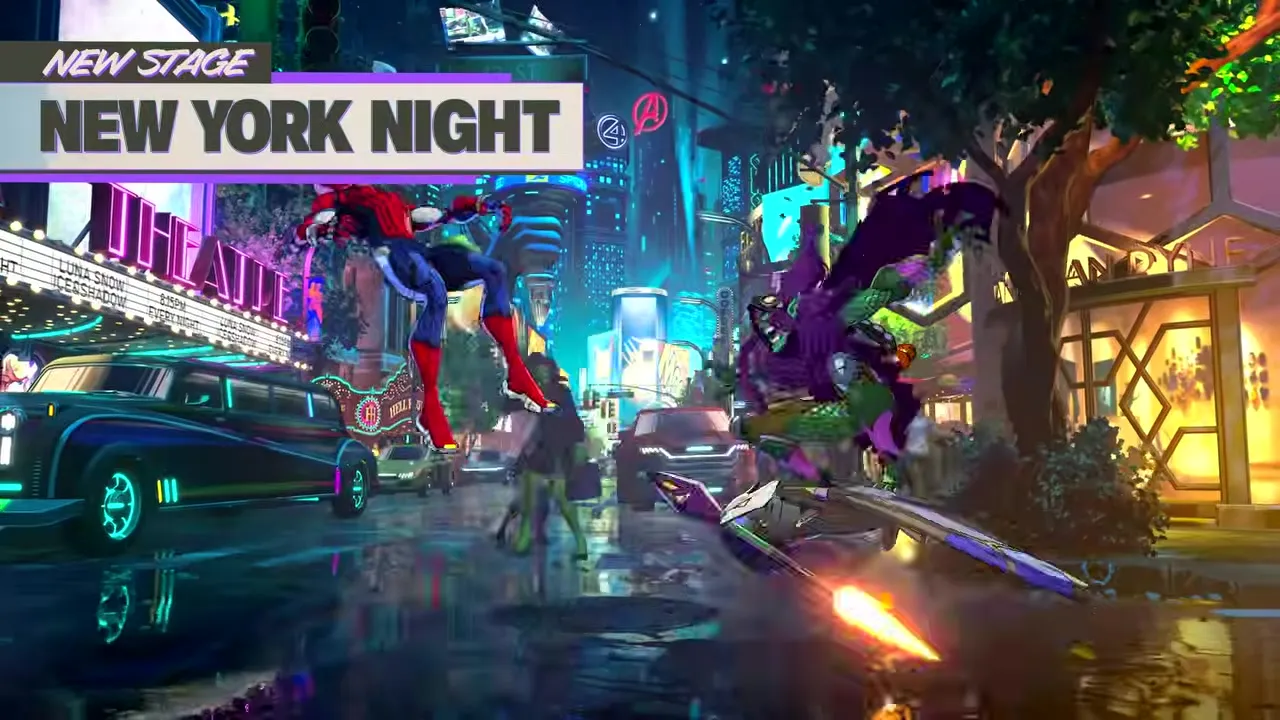
You know what's scarier than a goblin? One that sets traps.
Who Is Green Goblin in MARVEL Tōkon: Fighting Souls?
Norman Osborn — industrialist, supervillain, and Spider-Man’s greatest enemy — swoops into MARVEL Tōkon: Fighting Souls on his Goblin Glider, and he looks absolutely unhinged. Revealed as part of the Knights of Doom alongside Doctor Doom, Magneto, and Carnage in the Knights of Doom trailer, Green Goblin is the villain team’s wild card. While Doom commands and Magneto controls, Norman Osborn throws pumpkin bombs and cackles.
ArcSys has given him a design that walks the line between menacing and manic. The Goblin Glider is a constant presence — Norman fights on it for certain moves, dives off it for others, and probably recalls it for aerial specials. The pumpkin bombs trail sparks, the razor bats glint, and every animation has a theatrical flourish that captures Osborn’s theatrical insanity.
Playstyle and Archetype
Green Goblin is a technical character built around traps and set-play. His gameplan isn’t about directly fighting the opponent — it’s about filling the screen with hazards that force the opponent to move where you want them to move, then punishing them when they do. Pumpkin bombs sit on the ground waiting to detonate. Razor bats fly in patterns. The Glider provides a mobile platform for dropping ordinance from above.
If that sounds complicated, it is. Green Goblin’s hard difficulty comes from managing multiple active hazards simultaneously while maintaining your own position and reading the opponent’s attempts to navigate around your traps. It’s less about reaction speed and more about planning two steps ahead — setting a bomb here, throwing bats there, and knowing that in three seconds the opponent’s only safe option will put them exactly where you want them.
This style is devastating in Tōkon’s tag system because it provides something rushdown characters desperately need: screen control that persists even when the trapper tags out. If Green Goblin places bombs and then tags to Carnage, those bombs are still there. The opponent has to deal with Carnage’s aggression and Goblin’s traps simultaneously.
Signature Moves and Specials (Expected)
Speculation based on the Knights of Doom trailer and Norman Osborn’s arsenal.
Pumpkin Bomb — Green Goblin’s signature weapon. Expect a throwable explosive that sits on the ground for a brief period before detonating. Different strengths might throw it at different distances. Hit or blocked, it creates an explosion that covers significant space. This is the centerpiece of his trap game.
Razor Bats — Small bat-shaped projectiles that fly forward, possibly with slight homing. These are his harassment tool — thrown out to annoy and condition the opponent while Green Goblin sets up his real traps.
Glider Dive — Norman dives on the Goblin Glider at a steep angle. Probably an aerial overhead attack with good speed and the option to bail off the glider for a mix-up (overhead glider dive vs. empty glider into low). The offense and mixups system makes this kind of tool terrifying.
Glider Rush — A horizontal charge on the Glider. Functions as his ground-level approach and wall-carry tool. Probably has armor or at least push-back on block to keep Goblin safe-ish.
Trick-or-Treat (Super) — A carpet-bombing run where Norman flies across the screen on the Glider, dropping pumpkin bombs everywhere. Based on the Skill Gauge, likely his level-1 — fills the screen with explosives and forces respect.
Goblin’s Wrath (Expected Level-3) — A full cinematic where Norman goes completely off the rails. Expect Glider rams, point-blank bomb detonations, and ArcSys making insanity beautiful.
Tag and Assist Synergy
Green Goblin’s Pumpkin Bomb assist would be one of the most unique in the game — a delayed explosive that the point character can play around. Drop a bomb, pressure with your point character, and when the bomb detonates, it either catches the opponent blocking or forces them to move into your point character’s mix-up. That layered pressure is incredibly difficult to defend.
In the Knights of Doom composition, Goblin serves as the setup character. Doctor Doom provides the control backbone, Magneto handles long-range zoning, Goblin creates the trap infrastructure, and Carnage exploits the openings. It’s a well-designed villain team that covers every gameplay angle.
Tag-in timing with Green Goblin is about stage state. You want to tag him in when there’s already a knockdown or enough space to place a bomb. Tagging him into a scramble wastes his toolkit — he needs a breath to set up, and then he becomes nightmarish.
His Wall-Break potential is medium-high. Glider Rush should carry to walls, and pumpkin bomb detonations near walls should force transitions. His optimal Wall-Break routes probably involve luring the opponent to a wall edge with traps, then detonating them through the wall.
Who to Pair Him With
Green Goblin’s trap game wants teammates who exploit the openings he creates.
Carnage — The Knights of Doom rush duo. Carnage’s unrelenting aggression backed by Goblin’s pumpkin bombs is pure chaos. The opponent blocks Carnage, eats a bomb. Dodges the bomb, eats Carnage. It’s a lose-lose for the other side.
Spider-Man — The nemesis pairing has incredible gameplay synergy. Spidey’s speed exploits every gap Goblin’s traps create, and the web-slinger’s vertical mobility lets him navigate around his own team’s bombs effortlessly. Thematic and functional.
Doctor Doom — Double tech, double traps. Doom’s Hidden Missiles and Goblin’s Pumpkin Bombs create a minefield. Advanced players who can track both sets of delayed hazards simultaneously will be rewarded with setups nobody can defend. Read the beginner’s guide before attempting this — you need strong fundamentals to manage this level of complexity.
Tips for Beginners
Real talk: Green Goblin is probably not your first character. His gameplan requires understanding of spacing, timing, and the tag system at a level that’s hard to have in your first hours. If you love the character and absolutely must play him, start by learning Pumpkin Bomb distances — know where each version lands and when it detonates. Use Razor Bats as your safe neutral tool and avoid Glider moves until you understand their risk. Play safe, let the bombs do the work, and tag out when things get close. The beginner’s guide and the defense guide should be your first stops.
Tips for Competitive Players
Green Goblin’s competitive identity will hinge on bomb setups. Lab every knockdown situation with bomb placement — which bombs are meaty (active on the opponent’s wake-up), which create left/right mix-ups with Glider Dive, and which force the opponent into predictable escape routes. His assist value is potentially exceptional if Pumpkin Bomb assist has delayed detonation — it would function completely differently from any other assist in the game. Study how bomb timing interacts with the assist system and practice team sequences where Goblin places bombs, tags out, and the next character attacks while the bombs detonate. That layered pressure is where Norman Osborn wins tournaments.