Drive Movement & Dashes
Get in and reposition
How movement works in MARVEL Tōkon: Fighting Souls — ground dashes, air dashes, super jumps, and the Drive system that keeps the pace relentless.
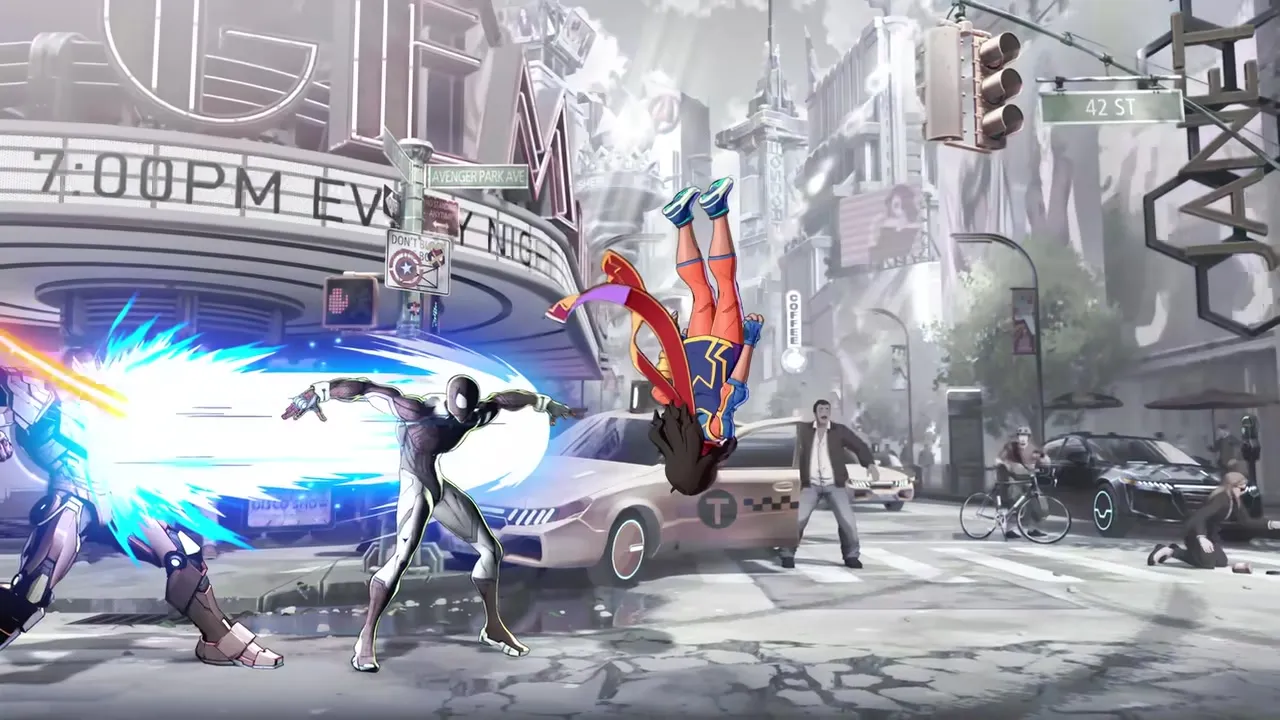
Standing still is the fastest way to lose.
Movement in MARVEL Tōkon: Fighting Souls looks built for speed. Arc System Works has consistently designed fighting games where standing still is a death sentence — Guilty Gear rewards constant air-ground transitions, Dragon Ball FighterZ lets you superdash across the screen in a blink, and Granblue Rising introduced spot dodges and dashes that reshaped neutral. Tōkon’s Drive Movement system is expected to continue that tradition with its own mechanical twist.
The fundamentals: walking, dashing, jumping
Before anything flashy, the basics. Every character has:
Walk speed. Your slowest movement option but also your most precise. Walking forward or backward lets you adjust spacing by pixels rather than character lengths. In the opening 1v1 phase of a match — before the tag system opens up — careful walking is how you control distance against an opponent who doesn’t have assist coverage yet.
Forward dash. A quick burst forward, typically activated by double-tapping forward or pressing a dedicated dash button. Forward dashes are how rushdown characters close space — Spider-Man and Wolverine are expected to have fast, long dashes that eat up screen distance and get them into their preferred striking range.
Backdash. The defensive mirror of the forward dash. Backdashes usually have brief invincibility frames at the start, letting you dodge through an attack if timed correctly. They’re slower and shorter than forward dashes by design — the game wants you moving forward, not running away.
Jumps. Standard jumps get you airborne for air normals, cross-ups, and escape routes. Jump arc and speed vary by character: a big fighter like Ghost Rider probably has a floatier, more telegraphed jump, while Ms. Marvel might have a quick, compact hop that’s harder to anti-air.
Air dashes
Air dashes are a hallmark of ArcSys fighters, and Tōkon almost certainly includes them. After jumping, you input a dash command in the air to change your trajectory — forward to rush in, backward to bait, and in some games diagonally to vary your angle of descent.
Air dashes turn the sky into a second battlefield. Instead of jumping being a simple arc with a predictable landing, air-dashing characters can alter their timing and spacing mid-flight. This makes anti-airing much harder for the opponent and creates mixup opportunities — is the attacker going to air dash in for an overhead attack, or empty air dash to land and throw?
Characters with strong air games are expected to excel once the match opens up to full 4v4 tag play, where assists can cover their landing recovery and make air dash approaches very difficult to contest.
Super jump
A super jump — performed by quickly pressing down then up — launches your character much higher than a standard jump. This has several applications:
- Reaching high aerial opponents who are trying to zone from the sky, like Storm throwing projectiles from jump height
- Starting aerial combos that convert ground launches into full air strings
- Escaping corner pressure by going over the opponent (risky but sometimes necessary)
- Changing the pace of the match — a sudden super jump resets the screen state and buys thinking time
Super jumps typically cannot be blocked during their startup, so they carry risk. But the height advantage they provide opens up approach angles that regular jumps can’t reach.
The Drive system (expected)
Here’s where Tōkon is expected to put its own stamp on movement. The “Drive” in Drive Movement likely refers to a special enhanced movement option — something beyond the standard dash that costs a resource or has unique properties.
Based on what ArcSys has done with similar systems (Roman Cancel dashes in Guilty Gear, Dragon Install mobility changes in Strive), the Drive Dash might:
- Travel farther and faster than a regular dash, covering half the screen in a burst
- Have armor or invincibility during the rush, letting you push through projectiles
- Cost a portion of the Skill Gauge meter, making it a deliberate investment rather than a free tool
- Transition directly into attacks, allowing you to start a combo from the dash itself
If Drive Dashes cost meter, they become a movement-resource tradeoff. Spending a bar to close distance means one fewer bar for supers or defense. That tension — move in with style or save your resources — would add a strategic layer that pure free-movement games don’t have.
Movement by archetype
Different character archetypes are expected to have meaningfully different movement profiles:
| Archetype | Expected movement trait | Example |
|---|---|---|
| Rushdown | Fastest dashes, best air mobility | Spider-Man, Wolverine |
| All-rounder | Average speed, balanced options | Iron Man, Captain America |
| Zoner | Slower dashes, strong air control | Storm, Star-Lord |
| Technical | Average speed with unique tools | Magik, Doctor Doom |
| Power | Slower but with armor/command dashes | Ghost Rider |
Understanding your archetype’s movement profile is essential — you can’t outdash a rushdown character as a zoner, but you can use air control and projectiles to maintain your preferred range.
Movement connects to every other system: mobility triggers Wall Breaks by carrying opponents to corners, assists cover your approach, offense starts with getting in, and defense begins with getting out. The beginner’s guide covers practical movement habits for your first matches.