Roster Watch: Fourteen Fighters Confirmed and Counting
All fourteen confirmed characters in MARVEL Tōkon: Fighting Souls, organized by archetype and team — plus predictions for the remaining launch slots.
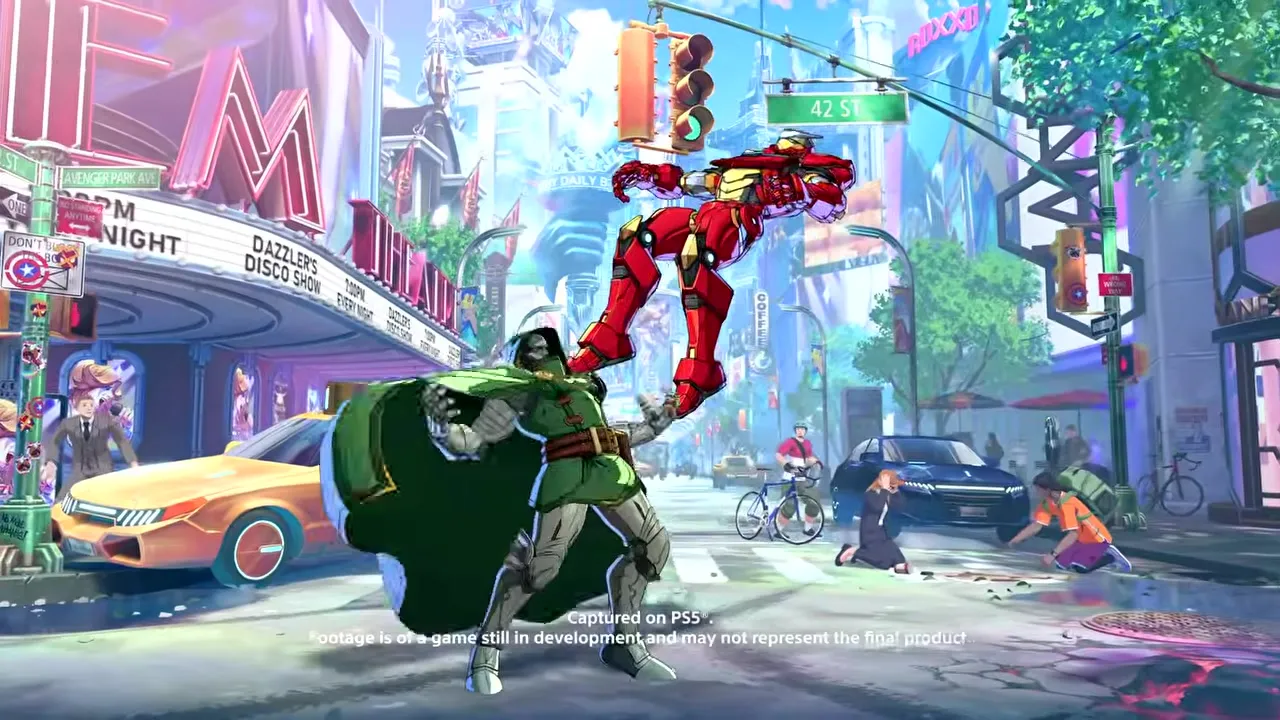
Update (July 6, 2026): This piece captured the roster mid-reveal at fourteen fighters. It’s since been completed — the Samurai Outriders reveal at Evo 2026 locked the launch lineup at 20 fighters across five teams. For the finished board, see the confirmed roster tracker. The prediction section below is preserved as a snapshot of where things stood.
Fourteen Down, At Least Six to Go
The roster for MARVEL Tōkon: Fighting Souls sits at fourteen confirmed fighters as of today, with the game promising 20+ characters at its August 6 launch. That means we’re looking at a minimum of six unrevealed slots — potentially more if “20+” is doing heavy lifting — with just six weeks until the game ships. The community is deep in prediction mode, and honestly, so am I. But before we get to speculation, let’s take stock of what we actually have.
Fourteen characters across five affiliations, covering every major archetype in fighting game design. Here’s the full confirmed lineup, broken down by team and playstyle.
The Avengers
The core Marvel team has four representatives in the confirmed roster, and they cover an impressive range of playstyles despite sharing an affiliation.
Iron Man is the all-rounder, rated easy difficulty, and from trailer footage he looks like the character Arc System Works wants new players to start with. Strong normals at every range, a projectile game that’s effective without being overwhelming, and flight mechanics that add depth without demanding it. He’s the beginner’s guide recommendation in a human-shaped suit of armor.
Captain America is another all-rounder at easy difficulty, but his approach is noticeably different from Iron Man’s. Where Tony fights at range and in the air, Cap is grounded and mid-range focused. His shield throw looks like it functions as both a projectile and a combo extension tool — he throws it out, continues a ground string, and the returning shield hits the opponent from behind for a sandwich setup. That’s more complex than “easy” suggests, and I suspect Cap’s skill ceiling is significantly higher than his floor.
Ms. Marvel rounds out the Avengers’ all-rounder trio at medium difficulty. Kamala’s stretching powers translate into extended normals that control space in a way that blurs the line between all-rounder and zoner. Her limbs extend to cover huge swaths of the screen, making her neutral game about controlling the mid-range with deceptive reach. She’s going to be a frustrating matchup for rushdown players who can’t get past those elongated punches.
Spider-Man is the team’s rushdown specialist at medium difficulty, and based on the State of Play footage, he might be the most technical of the Avengers despite not being labeled as such. His web-swing mobility looks absurd — multiple air movement options, wall-jump mechanics, and what appears to be a web-zip approach tool that closes ground-to-air distance almost instantly. In the 4v4 tag system, Spider-Man looks like an ideal point character: fast enough to rack up early damage and trigger the conditions to unlock your second fighter quickly.
The X-Men
Four mutants represent the X-Men faction, and this is where the roster starts getting interesting from an execution standpoint.
Wolverine is the team’s rushdown character at medium difficulty. He’s fast, he’s in your face, and his berserker barrage-style specials look like they chain into themselves for relentless pressure. Trailer footage showed him performing what looked like a rekka series — a sequence of follow-up attacks from a single starter — that kept the opponent blocking for an uncomfortably long time. His healing factor is represented mechanically, though exactly how hasn’t been detailed. Based on ArcSys convention, it might be a slow passive health regeneration for red (recoverable) health, which would make him even more dangerous in a tag format where cycling characters already recovers red health.
Storm is a zoner at medium difficulty, and her aerial game looks like it rivals Magneto’s for sheer vertical dominance. Her flight state is distinct from Magneto’s, though — where Magneto hovers and repositions precisely, Storm looks more dynamic, with weather effects following her movement and creating hazard zones on the screen. Lightning strikes that function as delayed projectiles, wind pushback that seems to affect the opponent’s Drive Movement options, and a level 3 super that looked like it covered literally the entire visible screen in a storm system. She’s going to be a menace.
Magik is classified as technical with hard difficulty, and she’s the character I’m personally most excited to lab. Her portal mechanics — teleporting through Limbo to reposition or redirect attacks — create a spatial puzzle that no other character in the roster replicates. The trailer showed her sending a sword slash through a portal that exited behind the opponent, hitting them from behind while Magik remained safely at range. If you can master the portal placement, she offers mixups that are genuinely unreactable because the attack originates from a location the opponent isn’t expecting.
Danger is another technical character at hard difficulty, and she’s arguably the deepest cut in the entire roster. For those unfamiliar, Danger is the sentient manifestation of the X-Men’s Danger Room — the training facility that became self-aware. Her gameplay appears to involve shapeshifting and adaptive mechanics, changing her moveset properties based on opponent behavior. That’s an incredibly ambitious design for a fighting game character, and if Arc System Works pulls it off, she could redefine what “technical” means in the genre.
The Cosmic Representative
Star-Lord is currently the lone cosmic affiliation fighter, sitting as a zoner at medium difficulty. His Element Guns provide the expected ranged game, but what sets him apart is his movement. Star-Lord’s jet boots give him a hover mechanic that’s faster and lower to the ground than Storm’s or Magneto’s flight states, making him more of a mobile zoner than a traditional keep-away character. He shoots, he moves, he shoots from a new angle. It’s going to be annoying to fight against and deeply satisfying to play.
The cosmic faction having only one confirmed member strongly suggests that additional cosmic characters are among the unrevealed slots. More on that in the predictions section.
Street-Level Fighters
Ghost Rider (the Robbie Reyes incarnation) represents the street-level affiliation as a power archetype at medium difficulty. His chain whip gives him enormous range on normal attacks, and the Hell Charger — his possessed car — appears to factor into his special moves and possibly his super. Power archetypes in Arc System Works games tend to be high-damage, high-commitment characters, and Ghost Rider’s trailer footage showed devastating single-hit moves that took massive chunks off the opponent’s health bar.
The Knights of Doom
The villain faction was revealed in full with four members, making it the most complete team in the current roster.
Doctor Doom — technical, hard. Traps, screen control, and a super that involves sitting on a throne. Perfect.
Magneto — zoner, hard. Flight states, magnetic pull, and aerial dominance that’s going to create some of the most visually spectacular combos in the game.
Green Goblin — technical, hard. Fights from the glider with pumpkin bomb setplay. The weirdest character in the roster by a comfortable margin, and I mean that as the highest compliment.
Carnage — rushdown, medium. The accessible villain. Tendrils, aggression, and a super that fills the entire screen with symbiote violence.
For a detailed breakdown of each Knight’s gameplay, check our dedicated Knights of Doom article.
Archetype Coverage Analysis
Looking at the fourteen confirmed characters through an archetype lens reveals a well-balanced roster with one conspicuous gap.
- Rushdown (3): Spider-Man, Wolverine, Carnage
- All-Rounder (3): Iron Man, Captain America, Ms. Marvel
- Zoner (3): Storm, Magneto, Star-Lord
- Technical (4): Doctor Doom, Magik, Green Goblin, Danger
- Power (1): Ghost Rider
No grapplers. Not a single one. In a fighting game with a confirmed grappler archetype in the content schema, the absence is glaring. This almost certainly means at least one of the unrevealed characters fills the grappler role. The community’s money is on The Thing or Colossus — both are physically massive characters whose comic personas revolve around up-close brawling and throwing people around.
The technical archetype is also disproportionately represented at four characters, but that’s less of a balance issue and more a reflection of Arc System Works’ design philosophy. They love complex characters. The FGC loves complex characters. Everyone’s happy.
Predictions for the Remaining Slots
Now the fun part. At least six slots remain, assuming the “20+” floor is exactly twenty. Here’s who I think fills them, ranked by likelihood. And I want to emphasize: these are predictions, not leaks or confirmed information.
Near-certainty: Deadpool. He’s the most commercially popular Marvel character among gaming audiences, he fits naturally as a rushdown or all-rounder, and his absence from the confirmed roster at this point feels like they’re saving a crowd-pleaser for a big reveal moment.
Very likely: A grappler from the Fantastic Four or X-Men. The Thing or Colossus, as mentioned above. The roster needs a grappler, and both characters are iconic enough to justify the slot.
Likely: A Guardians of the Galaxy representative beyond Star-Lord. Gamora (speed/rushdown), Rocket Raccoon (zoner/technical), or Groot (power/grappler) would all add to the cosmic faction while providing archetype coverage.
Possible: Black Panther or Doctor Strange. Both are A-list Marvel characters whose absence from the confirmed roster is notable. Black Panther could fill a speed archetype, Strange could add another zoner/technical option.
Wildcard: Venom. With Carnage already on the roster, Venom feels like both an obvious mirror-match opportunity and a fan-demanded pick. He’d likely play as a power or grappler archetype, filling two gaps at once.
What This Roster Means for the Meta
Fourteen characters in a 4v4 tag system means the team-building meta is going to be extraordinarily deep. With the progressive unlock mechanic — where you earn access to your third and fourth characters mid-match through Wall Breaks and damage thresholds — the question isn’t just “which four characters do I pick?” but “in what order do I unlock them?”
Early theorycrafting suggests that rushdown characters make the best point fighters (first on screen) because they rack up damage fastest, while technical characters shine in the third and fourth slots where complex setplay benefits from having more resources and more space created by Wall Break transitions. Zoners might be optimal as second characters — unlocked early enough to control mid-game neutral while your setup characters are still waiting in the wings.
This is all speculative, of course. The meta won’t crystallize until the game is in players’ hands and tournament results start filtering in. But the depth is there, and fourteen characters is already enough to create hundreds of viable four-character team permutations.
Staying Updated
We’re tracking every reveal in real time. Our confirmed roster guide is the definitive source for who’s in, and our individual character pages — linked throughout this article — go deep on gameplay details as they emerge. The everything we know hub ties it all together.
Six weeks to go. Six or more characters still hiding. Every reveal from here to August 6 is going to hit like a Wall Break — explosive, dramatic, and reshaping the landscape of what’s possible. Stay tuned.