Danger
Danger Room Construct Engine
Danger technical guide for MARVEL Tōkon Fighting Souls. Danger Room AI playstyle, construct specials, X-Men team synergy and tips.
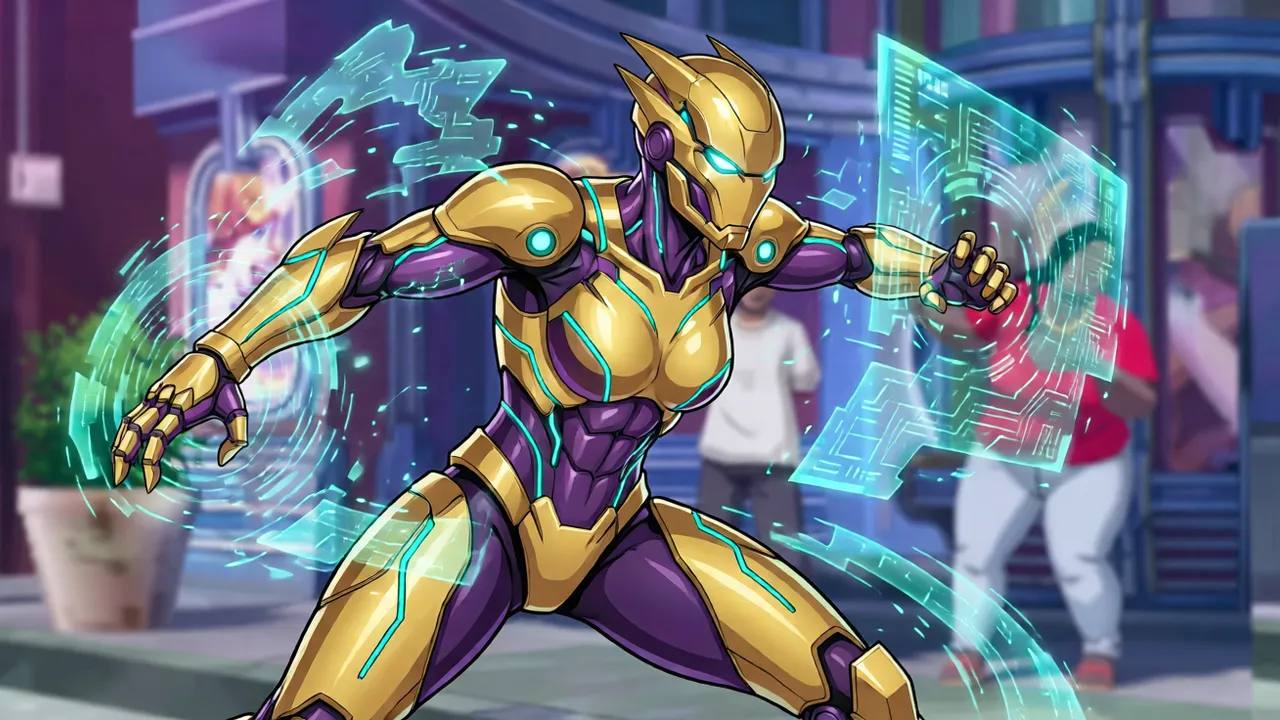
I am the room where heroes are forged. Imagine what I do to villains.
Who Is Danger in MARVEL Tōkon: Fighting Souls?
Here’s a deep cut that made the fighting game community do a double-take. Danger is the sentient AI of the X-Men’s Danger Room — the holographic training facility where mutants hone their powers. She gained a physical form and became a character in her own right, and now she’s in MARVEL Tōkon: Fighting Souls as part of the X-Men roster. It’s an unusual choice that speaks to ArcSys’ desire to make every character on the roster play fundamentally differently.
And play differently she will. Danger’s entire identity is built around creating holographic constructs — barriers, turrets, platforms, and hazards that reshape the battlefield. If Green Goblin is a trap character, Danger is a construction character. She doesn’t just place traps; she potentially rebuilds the stage.
Playstyle and Archetype
Danger is technical at an extreme level — possibly the most complex character in Tōkon. Her expected construct deployment mechanic means she’s not just fighting the opponent; she’s building an environment that fights for her. Imagine placing a holographic barrier that blocks projectiles, a turret that fires at the opponent on a timer, and a platform that changes your jump arc — all while managing your own normals and defense.
That sounds overwhelming, and it is. Her hard difficulty rating is well-earned. But the payoff is that a mastered Danger player creates board states that no other character can replicate. When the constructs are set up correctly, the opponent isn’t fighting Danger — they’re fighting the Danger Room itself.
Her robotic body likely has unique properties too. ArcSys often gives mechanical characters unusual defensive traits — maybe additional armor hits, altered knockback, or different wake-up timing. These subtle differences add yet another layer for dedicated players to explore.
In the tag system, Danger’s constructs could be revolutionary. If constructs persist when she tags out — which would match her design identity — then she fundamentally changes how tags work. Place constructs, tag to Wolverine or Storm, and your teammate fights with Danger Room infrastructure still active on screen. That’s unprecedented in a tag fighter.
Signature Moves and Specials (Expected)
Heavy speculation — Danger has minimal fighting game history, so this is built from her comic abilities and ArcSys’ likely design approach.
Construct Barrier — Danger deploys a holographic wall at a set position. It probably blocks projectiles and possibly acts as a physical obstacle for opponents to navigate around. Placement and duration management are likely the core of her gameplan.
Construct Turret — A holographic turret that fires automatically at the opponent on a timer. Low damage per shot but forces the opponent to respect it and deal with it, splitting their attention between Danger and the turret.
Hard-Light Slash — Danger manifests a weapon construct (sword, spear, axe) for a melee attack. Probably her primary normal enhancement — her base strikes are functional, but construct-enhanced versions have better range and properties.
Reconfigure — Danger rearranges her constructs or changes their type. This might be a stance-switch tool that alters what her construct specials produce, adding another decision layer.
Danger Room Protocol (Super) — Danger activates a full Danger Room sequence, filling the screen with constructs and hazards. Based on the Skill Gauge, probably her level-1 — an install-style super that enhances all her constructs for a duration.
Extinction Protocol (Expected Level-3) — A cinematic super where Danger unleashes the Danger Room at maximum output. Expect holographic Sentinels, laser grids, and the kind of overwhelming visual spectacle that makes you briefly feel sorry for whoever’s on the receiving end.
Tag and Assist Synergy
Danger’s assist potential is weird in the best way. If her assist places a construct rather than doing direct damage, she’d be the only character in the game whose assist changes the stage rather than hitting the opponent. A Construct Barrier assist that blocks projectiles for your point character could shut down zoning entirely. A Construct Turret assist that fires for a few seconds after being placed would provide persistent pressure support.
In the tag system, Danger is ideally a setup character who goes first, places constructs, then tags out for a rushdown partner to exploit them. The X-Men team of Wolverine, Storm, Magik, and Danger covers an incredible range: Logan rushes down, Ororo zones, Illyana teleports, and Danger rebuilds the entire stage to suit the team’s needs.
Her Wall-Break potential is moderate. She’s not going to carry opponents to walls with raw aggression — but her constructs might push, block, or redirect opponents toward wall edges in ways that make Wall Breaks happen as a consequence of good construct placement rather than direct aggression.
Who to Pair Her With
Danger wants teammates who thrive in the environments she creates.
Wolverine — Logan in the Danger Room is the most classic X-Men training scenario, and it translates perfectly to gameplay. Danger places constructs, tags to Wolverine, and Logan hunts the opponent through a holographic obstacle course. It’s terrifying and thematically perfect.
Storm — Storm’s projectiles combined with Danger’s construct barriers create a one-way shooting gallery. Ororo fires through the constructs; the opponent’s return fire gets blocked. If this interaction works as expected, it could be one of the most oppressive combinations in the game. See the defense guide for how to survive this.
Magik — Portals plus constructs equals a stage that looks nothing like it did thirty seconds ago. Both characters reward creative lab work, and together they create board states that are genuinely unique to every match. Not for the faint of heart, but the ceiling is limitless.
Tips for Beginners
Danger is the hardest character on the roster for a reason. If you’re new to fighting games, she will frustrate you. Her constructs require planning and awareness that’s hard to develop without solid fundamentals. Start with Captain America or Iron Man, learn how the game works, then come back to Danger when you understand spacing, the tag system, and defense mechanics. If you’re dead set on learning her, start with zero constructs — learn her basic normals and how she moves. Add one construct type at a time. Don’t try to manage everything at once. The beginner’s guide is mandatory reading.
Tips for Competitive Players
Danger’s competitive viability depends entirely on construct persistence rules. If constructs stay when she tags out, she’s potentially format-defining. If they disappear, she’s a solo specialist. Lab construct placement timing obsessively — you need to know exactly how many frames it takes to place each construct so you can set up during knockdowns, Wall Break transitions, and round starts. Her matchup spread will probably be extreme: dominant against characters who can’t deal with constructs, and terrible against characters with projectile-clearing supers or fast enough rushdown to prevent setup. Identify which characters threaten her early and develop counter-strategies. At the highest level, Danger rewards the player who treats the match like a chess game — positioning and planning over raw reactions.