Blade
Vampiric Blade Master
Blade fighting guide for MARVEL Tōkon: Fighting Souls. Muramasa sword specials, Heartstopper setups, and Samurai Outriders tag tech.
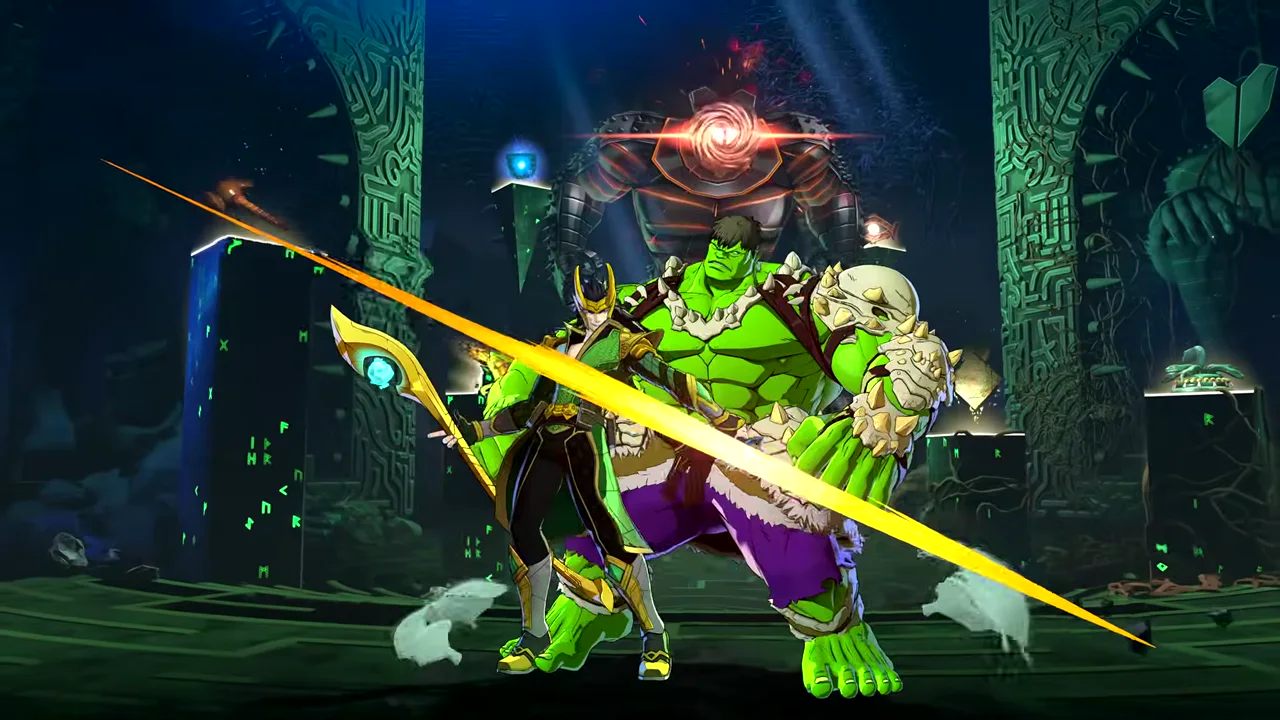
The sword doesn't wake up for just anybody. You should feel honored.
Who Is Blade in MARVEL Tōkon: Fighting Souls?
Evo 2026 gave us the Samurai Outriders reveal, and honestly, Blade stealing the show next to Ghost Rider makes total sense once you see him in motion. Eric Brooks has always been the vampire hunter who trained in Japan, and Arc System Works clearly leaned into that half of his history rather than just his blaxploitation-era gun-and-coat aesthetic. He’s a Daywalker — human-vampire hybrid, immune to sunlight, hunting the things that go bump in the night — and that duality is baked into how he’s being framed for this roster. He’s not a mystic like Doctor Doom or a cosmic force like Storm; he’s street-level menace with a blade that might be more dangerous than he is.
That blade is the Muramasa, a demon-slaying sword that’s normally sealed. When Blade unleashes its full power, it glows red and his sword skills sharpen considerably — which tells me Arc System Works is building an install mechanic around it, something in the vein of a temporary power-up state rather than a passive stat boost. Combine that with his machine guns and glaives for ranged pokes, and you’ve got a character who can flow between close-range vampire-hunter brutality and mid-range gun pressure without missing a beat.
Playstyle and Archetype
Blade is a rushdown character, but not the pure “jump in your face” kind — he’s aggressive close-range with ranged tools mixed in, which is a slightly more layered identity than someone like Wolverine. The confirmed Heartstopper special is the clearest signal of his gameplan: he throws a stake that pins the opponent in place, and that pin is his cue to rush in and start his real offense. That’s a classic rushdown structure — a ranged tool that isn’t there to zone, it’s there to convert into pressure.
His machine guns and glaives probably fill the gaps between Heartstopper setups. I’d expect the guns to function as a suppressing tool that stuffs opponents trying to jump or dash past his stake, while the glaives give him a mid-range poke option that doesn’t require committing to a full sword swing. None of this is confirmed frame-data-wise, but it tracks with how ArcSys usually builds “aggressive with ranged tools” characters — Sol Badguy in Guilty Gear is the obvious comparison, a rushdown character who still carries a fireball to control space before he closes in.
The Muramasa’s glowing-red power-up state is where things get interesting for difficulty. If it’s a resource you build and spend, Blade’s medium difficulty probably comes from managing that meter alongside the Skill Gauge — deciding when to pop the sword’s full power for a bigger combo versus banking it for a comeback moment.
Signature Moves (Expected)
Nothing frame-data confirmed beyond Heartstopper — everything else here is informed speculation based on the trailer and Blade’s comic kit.
Heartstopper — Confirmed. Blade throws a stake that pins the opponent in place. This is his combo starter and neutral tool rolled into one; expect it to have decent range and a clear rush-in follow-up window.
Muramasa Awakening (expected) — The red-glow power-up state for the sealed sword. Likely a install-style special that boosts his sword normals’ speed or damage for a limited time, possibly tied to meter.
Glaive Toss (expected) — A mid-range thrown-weapon special, filling the gap between Heartstopper’s pin range and his up-close sword game.
Gun Barrage (expected) — Machine-gun suppressing fire, probably functioning as a way to stuff jump-ins or punish opponents trying to dash past his pokes.
Vampire Hunt (Super, expected) — Based on how the super meter tends to scale in this game, I’d guess his level-1 is a rushing sword combo that closes distance from a stake pin.
Daywalker’s Judgment (expected Level-3) — A cinematic finisher where the Muramasa hits full power and Blade cuts loose completely. ArcSys rarely misses on these cutscene supers, and a vampire hunter unleashing a demon-slaying sword at full glow is exactly the kind of moment their cel-shaded engine was built for.
Tag and Assist Synergy
Heartstopper as an assist is the pick I’m most excited about. A stake that pins the opponent in place, called in from off-screen, is a genuinely nasty neutral tool — it converts scrambles into full combos for whoever’s on point, and it gives zoning-averse rushdown teammates a way to freeze an opponent before diving in. If it works anything like the described mainline version, expect Blade’s assist to become a staple on aggressive Samurai Outriders squads.
On point, Blade wants to open with guns or glaives, land a Heartstopper pin, and convert into whatever his up-close Muramasa game offers. In the tag system, that pin window is also a great tag-in cue — bring in a heavier hitter the moment the stake lands and let them finish what Blade started.
His Wall-Break potential looks high, mostly because a pinned opponent eating a full sword combo is the kind of extended punish that racks up the carry needed to break a wall. He’s not Ghost Rider-level in raw damage, but the setup consistency from Heartstopper makes his Wall-Break routes more reliable to execute on demand.
Who to Pair Them With
Ghost Rider — Both Samurai Outriders teammates share a “hunter” identity, and mechanically it works too: Blade pins with Heartstopper, Ghost Rider tags in for a chain-range punish that’s already one of the hardest-hitting combos in the game.
Loki — Chaos and precision together. Loki’s trickery keeps the opponent guessing about spacing while Blade capitalizes on any hesitation with a clean Heartstopper read.
Deadpool — The other new Samurai Outrider brings his own gun-and-blade chaos, and a team built entirely around this reveal trio (plus Ghost Rider) is going to be an aggressive, high-pressure nightmare for anyone trying to zone. Check the confirmed roster to see how this team stacks up against the other four launch squads.
Tips for Beginners
Start by drilling Heartstopper into your basic rush-in — that’s Blade’s entire gameplan in miniature, and getting comfortable with the timing of “pin, then close the gap” will carry you a long way before you touch his more complex Muramasa tech. Don’t feel pressured to use guns and glaives constantly; they’re there to open doors, not to win the match on their own. Once Heartstopper connects, commit to your combo rather than trying to be fancy — Blade rewards decisive follow-through more than cute mix-ups early on.
Tips for Competitive Players
Once frame data drops, the two things worth labbing immediately are Heartstopper’s recovery (how punishable is a whiffed pin?) and whatever meter cost the Muramasa Awakening state carries. If the glowing sword state is a scaling resource, competitive Blade play is going to be about banking it for Wall Break windows rather than firing it off reactively. Also worth testing early: how Heartstopper interacts with the tag system as a call-in — if it truly freezes opponents in place, chaining it into a teammate’s overhead/low mix-up could be one of the strongest neutral-skip tools in the whole game.
A themed splash image for Blade renders automatically above this page.