Deadpool
Fourth-Wall Wildcard
Deadpool guide for MARVEL Tōkon: Fighting Souls. The Merc with a Mouth's guns, swords, healing-factor high-risk play and tag synergy explained.
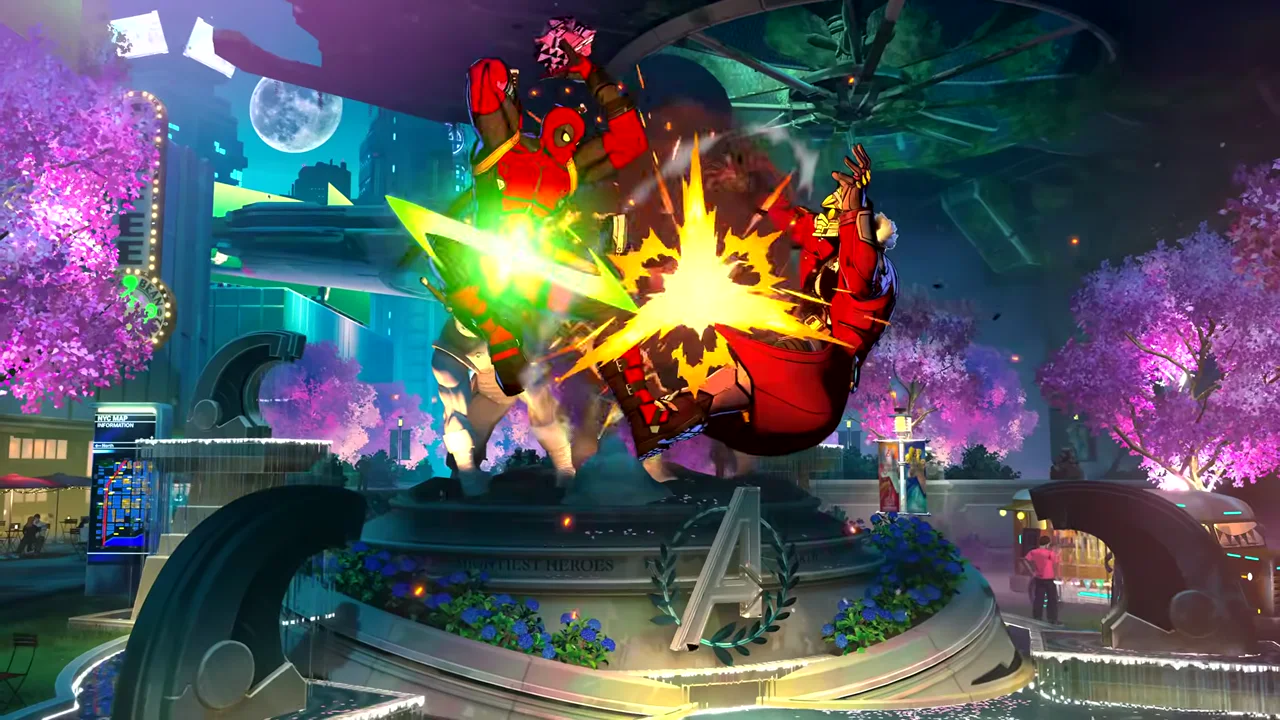
Maximum effort! Also, hi, yes, I know I'm in a video game.
Who Is Deadpool in MARVEL Tōkon: Fighting Souls?
Of course he made it. You don’t build a Marvel fighter this stacked and leave out the Merc with a Mouth — the Evo 2026 reveal that closed out the Samurai Outriders would’ve felt incomplete without him, and the crowd reaction told the whole story. Wade Wilson rounds out the final team alongside Blade, Loki, and Ghost Rider, and he brings exactly the flavor you’d hope for: guns, grenades, swords, and a running commentary that never once acknowledges the fight is real.
Anyone who played Marvel vs. Capcom 3 already knows the shape of this character, and the developers clearly do too. Deadpool’s design here leans into the wacky, hype-forward moveset that made his MvC3 version a fan favorite — fourth-wall-breaking attacks, absurd animations, and the sense that he’s the one character who knows he’s in a fighting game.
The Story Bit (Yes, He Has One)
Underneath the jokes, the framing is genuinely grim: Wade is a Canadian mercenary with a badly unstable mind and severe scarring, both courtesy of the healing serum from the Weapon X Program. That healing factor is the whole reason he can fight the way he does — recklessly, throwing his body into danger that would kill anyone else. The comedy and the tragedy are the same mechanic, which is very Deadpool.
Playstyle and Archetype
I’m slotting Deadpool as an all-rounder, and it fits his kit: he’s got a ranged game (guns, grenades), a melee game (swords), and the tools to operate at whatever distance the matchup demands. That versatility is the classic all-rounder promise — no glaring holes, an answer for most situations.
The twist is the “high-risk” half of his identity. Official material describes reckless techniques enabled by his healing factor, which strongly implies moves that trade his own health or safety for extra reward. That’s the kind of design that makes a character accessible to pick up but genuinely punishing to play greedily — you can hang yourself with the same rope that wins you the round.
Signature Moves (Expected)
Everything below is informed speculation from the trailer and his fighting game history — nothing is frame-data confirmed yet.
Gunplay — Expect Deadpool’s pistols to serve as his ranged pokes and combo filler, likely doubling as his assist call to give teammates screen control.
Sword strings — His katanas should cover the close-range rushdown side of his kit, with the fast, cancelable normals an all-rounder needs to start pressure.
Grenades / traps — A lobbed or planted explosive would give him a setplay option and a way to control space he can’t reach with bullets.
Fourth-wall hijinks — If the MvC3 lineage carries over, at least one move will do something structurally silly — pulling out a prop, breaking the camera, or acknowledging the HUD. Pure hype fuel.
Tag and Assist Synergy
Deadpool’s flexibility makes him easy to build around in the 4v4 tag system. A gunfire assist patches full-screen gaps for slower teammates, and his own point pressure builds the damage thresholds that unlock the rest of your squad through Wall Breaks. Because he can operate at any range, he’s not picky about who he’s paired with — a genuine glue character.
Who to Pair Him With
Blade — Keep the Samurai Outriders together. Two aggressive close-range threats with ranged tools means relentless, layered pressure once you get going.
Wolverine — Double rushdown never goes out of style. Two characters who love pressing buttons in your face can overwhelm anyone who struggles with tag pressure.
Storm — A zoner backline to cover Deadpool’s approach lets him play the mid-range gunfight he’s best at while she locks down the screen.
Tips for Beginners
Deadpool is a friendly starter if you like flexibility. Learn one bread-and-butter combo with his swords and one safe way to throw out gunfire, and you’ll have a game plan at every range. The one habit to break early: resist spamming his flashy high-risk moves. Use them as reads, not defaults. The beginner’s guide covers universal defense so you’re not relying on his healing factor to bail out bad decisions.
Tips for Competitive Players
The skill in Deadpool is discipline — knowing exactly when the high-risk options are worth it. Map out which of his reckless techniques give up health or leave him minus, and only reach for them when the reward closes a round or the risk is covered by an assist. His all-rounder toolkit means you’ll be improvising ranges constantly, so lab his conversions from both gunfire and sword starters, and treat every team matchup as a chance to abuse whichever range the opponent handles worst.