Marvel Tōkon Community Pulse: DLC Timelines, Steam Population Debates, and New PS5 Tournaments
Addressing the Year 1 DLC expectations, analyzing the Steam concurrent player debate against Guilty Gear Strive, and highlighting upcoming Unbreakable X-Men tournaments.
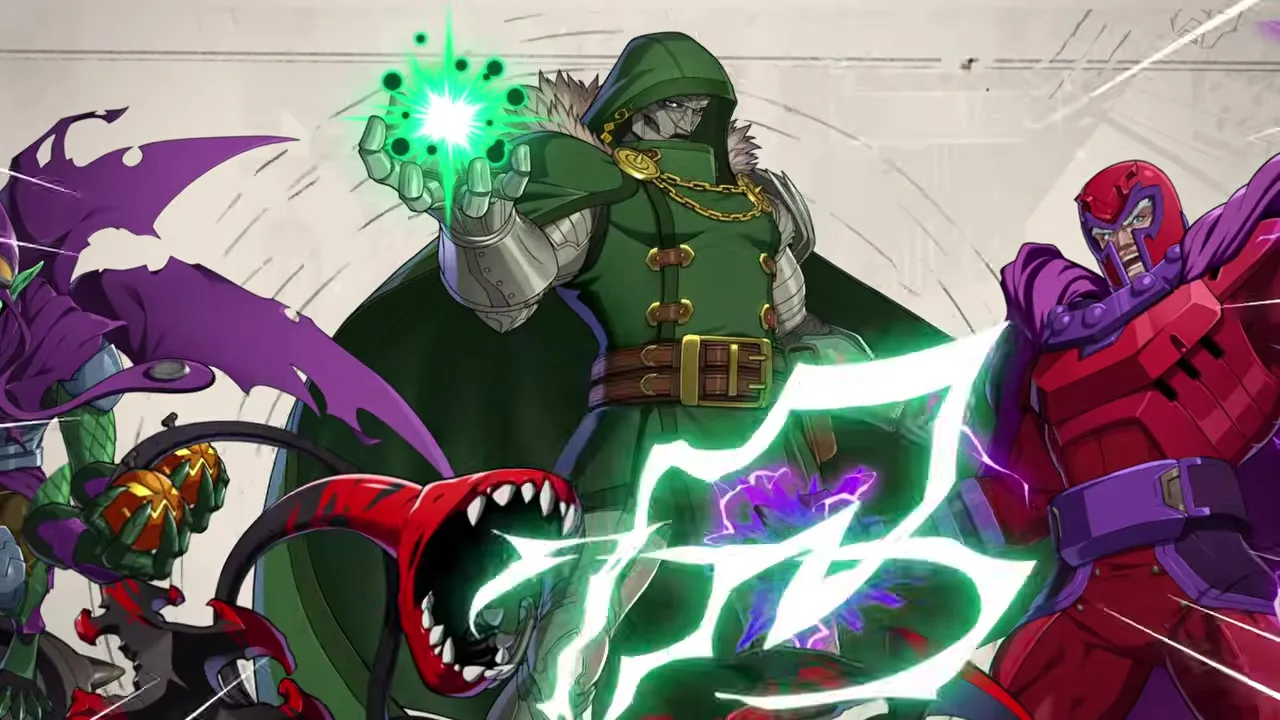
It has been just over a month since the explosive August 6th release of MARVEL Tōkon: Fighting Souls. As the dust settles from the launch window and the meta begins to solidify around optimal tag combinations and assist calls, the community is looking toward the horizon. The execution barrier is normalizing, players are locking in their main 4v4 squads, and the discourse has naturally shifted toward the game’s lifespan and competitive future.
This week, we are looking at the most hotly debated topics currently circulating in the community: the reality of the Year 1 DLC timeline, the ongoing discussion regarding Steam player retention compared to other Arc System Works titles, the rollout of the Unbreakable X-Men focused PS5 Tournaments, and the upcoming grassroots “Throne of Souls” KOTH event.
Year 1 DLC Timeline: Trusting the Arc System Works Pipeline
Currently, a primary source of community anxiety seems to be the lack of immediate announcements regarding the post-launch roadmap. As a reminder, Arc System Works has officially confirmed that Year 1 will introduce four new characters and one new stage to the current 20-character roster. However, a recent and highly upvoted post on the game’s subreddit offered a much-needed reality check to those demanding instant updates.
Developing a fighting game character, particularly with Arc System Works’ signature anime-style visuals, is a monumental task. The studio uses a proprietary rendering technique where 3D models are animated on stepped frames to mimic traditional 2D cel animation. Every single frame of an attack, a hit reaction, a throw escape, or a tag-in animation is manually tweaked for lighting and shadow to ensure it looks like an authentic illustration in motion.
Furthermore, consider the mechanical implications in a 4v4 ecosystem like MARVEL Tōkon. When a new character drops, they don’t exist in a vacuum. The developers must program and balance their assist attacks—tied to the Assemble Gauge—to ensure they don’t create game-breaking infinite loops when paired with the other 20 existing characters. They must balance their supers, which consume the Skill Gauge, so that Delayed Hyper Combos (DHCs) scale properly.
Voice actors must be brought in not just for the new character, but potentially for existing characters to record specific intro, outro, and mid-match dialogue interactions. If a new addition has specific narrative ties to the Champion of the Universe in Episode Mode, that requires extensive scripting integration. Finally, as the community rightly pointed out, the new stage coming in Year 1 must fully support the physics of the wall break mechanic, which requires rigorous hitbox and boundary testing. History shows that Arc System Works delivers high-quality, meticulously balanced additions, but that craftsmanship takes time.
The Steam Population Debate: 4v4 Tag vs. 1v1 Traditional Fighters
Another major talking point this week revolves around the game’s Steam concurrent player numbers. Recent metrics showed MARVEL Tōkon: Fighting Souls occasionally hovering below the 24-hour peak of Guilty Gear Strive, a game that is essentially five years old. This sparked a massive debate among the FGC on Reddit about the accessibility and long-term appeal of 4v4 tag fighters versus more traditional 1v1 experiences.
Why is a brand-new Marvel fighting game trailing behind an older title on Steam? The answer lies in the inherent complexity of the subgenre. While Strive was specifically designed to be accessible—focusing on high-damage, shorter combos, and clear neutral interactions—Tōkon leans heavily into the chaotic, high-octane legacy of tag team fighters.
Managing four characters simultaneously imposes a massive mental stack. You aren’t just learning one moveset; you must deeply understand how the tag system works. You have to monitor your shared Vital Gauge constantly, ensure your Assemble Gauge is properly utilized for pressure and combo extensions, and optimally route your Skill Gauge to close out rounds. You are rarely just blocking a high/low mixup; you are blocking a high/low mixup covered by a Green Goblin assist while the opponent prepares an unreactable cross-up.
Because the game features a shared Vital Gauge for the entire team, making a critical error with an assist call can result in a “happy birthday” situation, where both your point character and your assist take catastrophic damage. This level of volatility and offensive oppression can be frustrating for players who prefer the deliberate pacing of 1v1 neutral.
The drop in Steam numbers primarily reflects a more casual audience bouncing off this steep learning curve. However, it’s vital to note that fighting games do not live or die purely by PC concurrents. The robust rollback netcode and crossplay infrastructure ensure that matchmaking remains incredibly fast, pulling heavily from the massive PlayStation 5 player base. The core audience for tag fighters is fiercely dedicated, and as players hit the lab to demystify the chaos, the active population will stabilize.
Official PS5 Tournaments: The Unbreakable X-Men Take Over
For those looking to test their skills in a structured environment, the official PlayStation Tournaments feature built directly into the PS5 UI has rotated its focus. Earlier this week, players noticed that the new automated brackets are entirely themed around the Unbreakable X-Men squad.
This means you can currently enroll in specific tournament ladders dedicated to celebrating the mutants. Participating in these automated brackets provides valuable match experience under tournament nerves and rewards digital collectibles. If you are struggling with the mental stack of drafting hybrid teams, focusing on mastering one specific pre-built faction—like the Unbreakable X-Men—is highly recommended.
Let’s break down the synergy of this specific squad. Storm acts as the ultimate air-space controller. Her ability to float and alter her descent trajectory makes her incredibly difficult to anti-air. You want to use her to safely build the Skill Gauge from a distance, forcing the opponent to approach through a maze of projectiles.
Once you have the opponent locked down, tagging in Wolverine is your primary win condition. Wolverine is a pure rushdown monster. His frame data allows for relentless pressure, and his unique divekick alters his aerial momentum to bait out defensive mash attempts. By utilizing Danger’s tactical assists to cover Wolverine’s approach, you can force the opponent into horrifying strike/throw mixups. Magik rounds out the squad as a versatile mid-range threat; her teleportation can bypass zoning entirely, making her an excellent counter to heavily defensive teams. Mastering this internal synergy will drastically improve your win rate in these official brackets.
Grassroots Competition: The “Throne of Souls” KOTH Event
Beyond the official Sony integrations, the community grassroots scene is thriving. Tomorrow marks the beginning of the “Throne of Souls” King of the Hill (KOTH) event, organized by prominent community tournament organizer blakksenseii in partnership with Blumint.
Grassroots tournaments like these are the lifeblood of any anime fighting game. They serve as the laboratory where high-level players stress-test the meta. If you want to see optimal usage of the Skill Gauge, cutting-edge assist setups utilizing the Assemble Gauge, and defensive strategies to mitigate the punishing offense of popular squads like the Knights of Doom, you should absolutely tune in to the broadcast or sign up to compete.
Events formatted as King of the Hill are particularly great for studying matchups. In KOTH, if you win, you immediately face the next challenger in line. The reigning King cannot rely on gimmicks; once the lobby sees your setups, the next player will have adapted before they even sit down to play. It requires a deep understanding of the entire 20-character roster and flawless resource management. We look forward to seeing which team compositions manage to hold the throne this weekend.