Marvel Tōkon Developers Reflect on Launch Troubles as Community Labs Deadpool's Nasty 'Little Bomber' Mixups
Arc System Works issues a hopeful message to the community regarding the rocky launch of MARVEL Tōkon: Fighting Souls, while hardcore players showcase the game's immense depth through a viral Deadpool mixup guide.
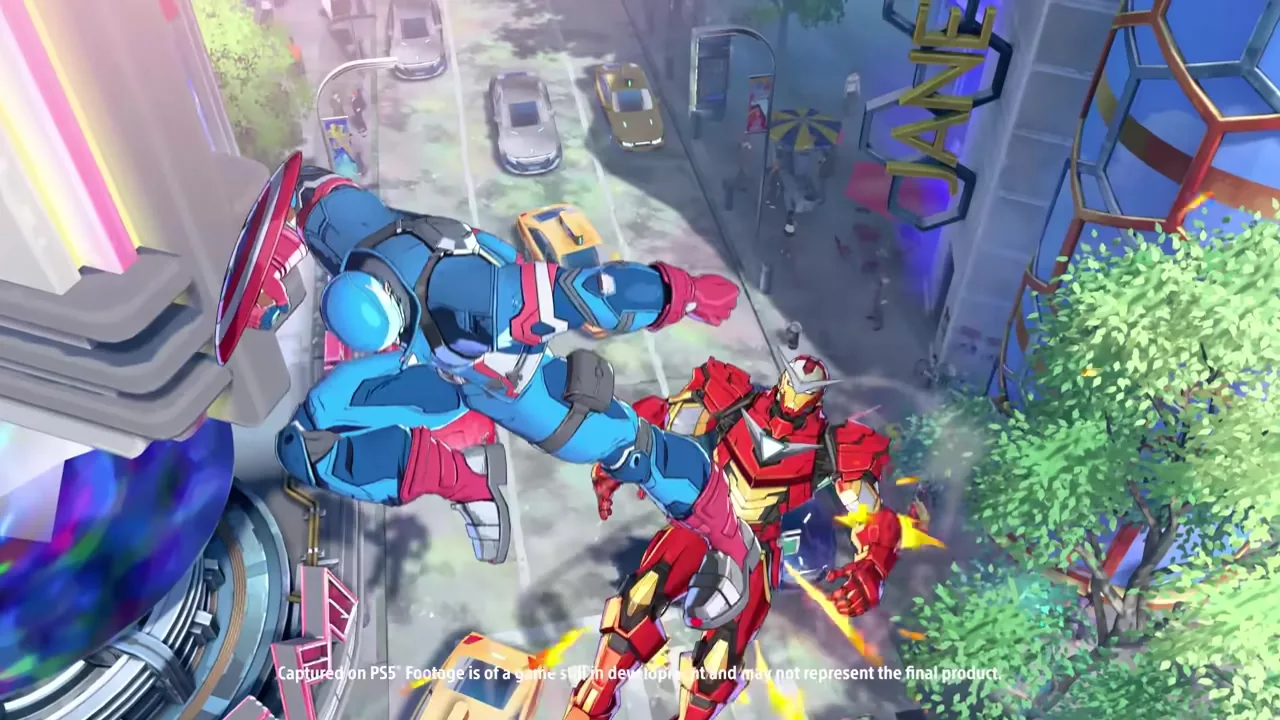
It has been roughly two months since Arc System Works, in collaboration with PlayStation Studios and Marvel Games, unleashed MARVEL Tōkon: Fighting Souls onto the global fighting game community. Releasing on August 6, 2026, for the PlayStation 5 and PC via Steam and Epic Games Store, the bold anime-styled 4v4 tag-team brawler promised a revolution in team-based fighting mechanics. The core gameplay loop—centered around executing high-octane tag maneuvers and managing shared team resources—has proven to be exceptionally deep and rewarding. However, the wider gaming community knows that the initial launch window was heavily marred by technical hurdles, PC port optimization issues, and polarizing regional account controversies.
Now, the developers are making a direct appeal to the community, openly reflecting on these launch troubles and asking players to give the game another shot. Simultaneously, the dedicated core of the FGC (Fighting Game Community) that stuck around is proving exactly why the game is worth returning to. A freshly discovered, diabolical mixup setup for Deadpool, appropriately dubbed the “Little Bomber,” is currently tearing through online ranked lobbies and reminding everyone of the game’s staggering tactical ceiling.
The Developer’s Plea: Rebuilding Trust in the Anime Fighter
Taking to Reddit this week, representatives from the development team shared an earnest reflection on the turbulent first few months of the game’s lifecycle. Titled “Devs Reflect On Its Troubles And Hope Players Give It Another Shot,” the open letter acknowledges the friction points that caused the player base to dip shortly after launch. The initial release was undeniably bumpy, especially for the PC community. As we previously documented during the height of the PC launch fallout, the game suffered from pervasive stuttering, rollback netcode hiccups, and highly criticized mandatory PSN account linking requirements for Steam players.
The developers want the community to know they have not abandoned ship. They emphasized that regaining the trust of fighting game enthusiasts is their absolute top priority moving forward. Arc System Works has a long and proven history of turning rocky launches into legendary, genre-defining fighting games through relentless patching and community-driven balance updates. The statement highlighted the numerous hotfixes that have already been deployed to stabilize the matchmaking infrastructure and smooth out input latency, ensuring that the blistering fast pace of the 4v4 combat remains completely uncompromised. The underlying message from the studio is clear: the foundation of the game is incredibly solid, and they are urging the community to reinstall, log back in, and experience the adrenaline-pumping mechanics as they were originally intended to be played.
The Core FGC Remains: Thriving Offline and in the Lab
While casual players might have confidently rolled the credits on the single-player Episode Mode—having defeated the towering, cosmic threat of the Champion of the Universe and foiled the evil schemes of the Knights of Doom—the competitive lab monsters have not stopped grinding for a single day. The sheer mechanical depth of the game’s custom engine has cultivated a fiercely loyal sub-community. In MARVEL Tōkon: Fighting Souls, the shared Vital Gauge demands a completely different approach to team composition and risk management compared to traditional tag fighters where each character has their own health bar. If one of your fighters takes a massive, unscaled combo, your entire team inches dangerously close to total defeat. This high-stakes environment means that defensive fundamentals, spatial awareness, and optimal assist usage via the Assemble Gauge are non-negotiable skills for high-level play.
Because the launch roster of 20 fighters was strictly locked into five thematic 4-player squads—specifically the Unbreakable X-Men, Amazing Guardians, Fighting Avengers, Knights of Doom, and Samurai Outriders—some players initially worried that the overarching meta might become rigid. Instead, the community has completely blown the roof off the game’s combo theory. The ability to seamlessly weave assists and active tags into extended blockstrings has generated a massive sandbox of offensive possibilities. Even as the overall concurrent player numbers on Steam experienced harsh fluctuations, the grassroots tournament scene has continued to thrive, heavily driven by specialized players dissecting the frame data and inventing high-level setups that the developers themselves likely never anticipated.
Enter Deadpool: The Samurai Outriders’ Wildcard
A perfect example of the community’s relentless creativity is a recent viral video centered around the Merc with a Mouth himself. A Reddit user and dedicated lab monster going by the handle Tensatrics uploaded a highly entertaining character guide titled “DEADPOOL MIXUP GUIDE BUT EXPLAINED LIKE A HUNTER X HUNTER EPISODE.” Beyond the phenomenal editing, intense pacing, and anime-inspired presentation, the video serves as a masterclass on a terrifying new offensive flowchart the community is collectively calling the “Little Bomber.”
Deadpool, fighting under the Samurai Outriders banner alongside Ghost Rider, Blade, and Loki, is already notorious for his erratic movement and unpredictable neutral game. He thrives in the chaos of a scrambling opponent. However, the Little Bomber setup transforms him from a chaotic nuisance into an absolute offensive powerhouse. Fundamentally, the Little Bomber is a multi-layered mixup sequence designed to keep the opponent completely disoriented. It is a precise sequence of attacks that exploits Deadpool’s unique toolset to force the opponent into a desperate guessing game on their wakeup—or in fighting game parlance, a true okizeme nightmare. When executed correctly, the defending player has to perfectly predict whether Deadpool will strike high, go low, or commit to an unblockable command throw, all while dealing with overwhelming visual pressure.
Breaking Down the Mixup Execution and Team Synergy
To truly grasp why the Little Bomber is so devastating in actual tournament play, we have to look closely at the mechanics of offense and mixups within the Tōkon engine. When Deadpool successfully scores a hard knockdown in the corner, he immediately initiates the Little Bomber sequence. This involves deliberately staggering his initial meaty attack to create a tight frame trap, heavily punishing any opponent who panics and tries to aggressively mash their fastest light attack on wakeup. But the true genius of the setup lies in how it seamlessly integrates team synergy.
By spending a dedicated portion of the Assemble Gauge to call in a teammate—perhaps Loki for his deceptive visual illusions or Blade for his wide-sweeping, lockdown slash—Deadpool can completely cover the vulnerable startup frames of his trickiest overhead animations. The incoming assist locks the opponent into extended block stun, severely limiting their defensive options. If the opponent tries to backdash or jump away to reset the neutral, they get clipped by the assist. If they hunker down and respectfully block the overhead threat, Deadpool can cleanly transition into an empty-jump low, instantly shattering their guard.
Defending against the Little Bomber is a monumental task. The game gives defenders access to parries and pushblocks, but relying on these mechanics when Deadpool is actively staggering his pressure is a massive gamble. A mistimed parry attempt will result in a catastrophic, fully scaled counter-hit. Furthermore, if you truly understand how the tag system works, you can utilize the active tag feature to safely bail Deadpool out if the opponent somehow manages to successfully read the mixup and deploy a flawless, invincible reversal. This makes the Little Bomber a relatively low-risk, astronomical-reward scenario. If the mixup successfully opens the opponent up, Deadpool’s hit confirm window is incredibly generous, allowing players to easily route into an optimized corner combo that dumps the entire Skill Gauge for massive, round-stealing damage.
Year 1 DLC and The Road Ahead
The organic emergence of advanced, community-driven tech like the Little Bomber proves that MARVEL Tōkon: Fighting Souls is teeming with unexplored potential. The core mechanics are undeniably rich, the character roster is diverse, and the execution skill ceiling is practically non-existent. This vibrant meta evolution perfectly contextualizes the developer’s recent plea. Arc System Works knows they have built a spectacular fighting engine, and they are working tirelessly to ensure the netcode and matchmaking infrastructure can adequately support the weight of these high-level interactions.
With the game’s Year 1 DLC roadmap already confirmed by the studio—promising the highly anticipated addition of four brand-new characters and a fresh stage—the 4v4 tag-team universe is poised for significant expansion. If you stepped away from the game during the notoriously rocky launch week, now might be the perfect time to reinstall and update your client. The servers are steadily stabilizing, the developers are actively listening to feedback, and the training room is wide open. Just make sure you spend some serious time in the lab before you queue up for ranked mode, because the Samurai Outriders are out there, and the Little Bomber mixup is waiting to crack your defense wide open.