MARVEL Tōkon Hits 740K Sales Milestone as BGS 2026 Tournament Announced and Deadpool Dev Insights Emerge
MARVEL Tōkon: Fighting Souls reportedly reaches 740,000 copies sold. Plus, Sony announces a live BGS 2026 tournament and Arc System Works details Deadpool's moveset.
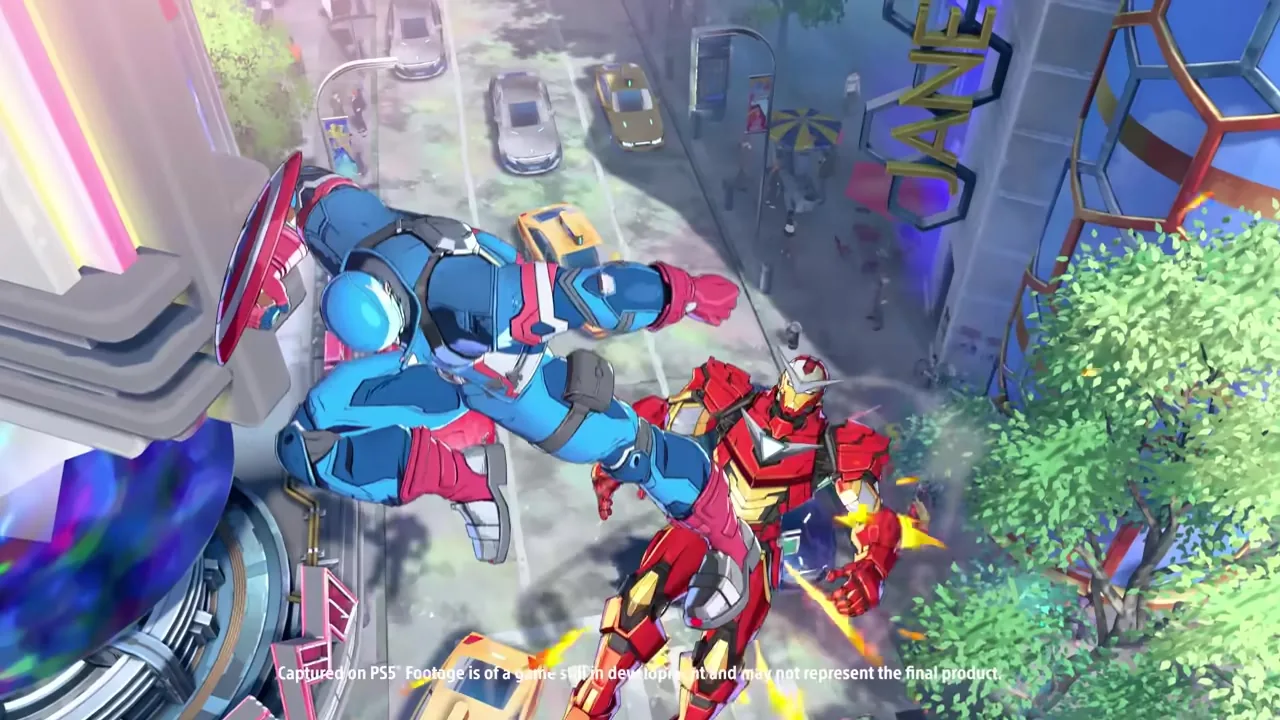
Six weeks have passed since Arc System Works and Sony Interactive Entertainment dropped MARVEL Tōkon: Fighting Souls on August 6, 2026, across PlayStation 5 and PC platforms, and the momentum refuses to slow down. The fighting game community (FGC) often sees a sharp decline in player populations a month after a major release as casual players filter out, but recent reports indicate the game is maintaining a remarkably healthy ecosystem. This ongoing success arrives concurrently with massive esports announcements—namely, a PlayStation Tournaments event culminating at Brasil Game Show (BGS) 2026—and an exclusive developer interview shedding light on the mechanical design behind the Merc with a Mouth.
For a title that took massive risks by overhauling traditional versus-fighter mechanics, the current landscape proves that the 4v4 tag team formula has resonated deeply with both hardcore lab monsters and casual Marvel fans. Here is a breakdown of what these recent developments mean for the current meta, the tournament scene, and the long-term health of the game.
The 740,000 Sales Milestone: Why the Meta is Thriving
According to a recent analytical report circulating heavily within the FGC, MARVEL Tōkon: Fighting Souls has reportedly moved roughly 740,000 units across PlayStation 5, Steam, and the Epic Games Store. When the game initially launched, week-one sales hovered around 485,000. Gaining over 250,000 new players in the subsequent weeks is a testament to strong word-of-mouth and a surprisingly sticky gameplay loop that rewards gradual execution improvements.
The retention largely stems from how Arc System Works engineered the game’s core resource economy. Unlike traditional versus games where individual characters have their own health bars, the controversial shared Vital Gauge forces players to completely rethink their approach to team building and defense. You cannot simply let a low-health point character absorb a fatal mixup to safely tag in your anchor. Every stray hit, every poorly timed assist call, and every dropped combo directly penalizes the entire team’s lifespan.
This shared health pool places a massive emphasis on managing your active resources. The Assemble Gauge dictates your assist calls and active tagging capabilities. Because players aren’t managing four separate lifebars, the mental stack is entirely focused on positioning, resource management, and situational awareness. When a new player jumps into ranked matchmaking, they quickly realize that spamming assists without a clear gameplan will leave them locked out of their primary defensive options. The learning curve is undeniably steep, but mastering how the tag system works provides a euphoric sense of control that keeps players queuing up for just one more match.
Furthermore, the robust Episode Mode has acted as a critical onboarding tool. By pitting players against the imposing Champion of the Universe and the menacing forces of the Knights of Doom, the single-player campaign effectively disguises system tutorials as cinematic boss fights. It teaches the fundamentals of the Skill Gauge—the meter strictly used for EX moves and cinematic super arts. By the time casual players roll the credits, they have enough foundational knowledge to survive the shark-infested waters of the lower ranked tiers without feeling completely overwhelmed by system mechanics.
PlayStation Tournaments Expands the Circuit to BGS 2026
With strong sales comes a thriving competitive scene. Reports have surfaced that Sony is officially organizing a MARVEL Tōkon tournament through the PlayStation Tournaments infrastructure, with the grand finals set to take place live at Brasil Game Show (BGS) 2026. This is a monumental victory for the Latin American FGC, a region historically known for producing some of the most ferocious and mechanically gifted versus-game competitors in the world.
An official tournament with a live final at South America’s premier gaming expo indicates that Sony and Arc System Works are heavily investing in the grassroots longevity of the title. The LATAM scene is renowned for its hyper-aggressive playstyles, unrelenting pressure sequences, and flawless execution under pressure. It will be fascinating to see how the regional meta develops compared to what we saw during the recent European major at UFA 2026.
In the current tournament landscape, team synergy dictates everything. We are seeing players meticulously craft their 4-character squads from the 5 available factions. While faction-pure teams like the Amazing Guardians offer inherent synergy and thematic flair, the true terror of the competitive scene lies in customized hybrid teams. A common setup involves using a strong neutral-skip character on point, backed by two lockdown assists, and a dedicated resource-building anchor who can efficiently farm the Skill Gauge.
At high-level offline play, the neutral game is heavily dictated by screen control and frame traps. Players are utilizing the Assemble Gauge to cover their unsafe approach options, forcing the opponent into prolonged, suffocating blockstrings. If the defending player tries to mash out a jab or jump away, a well-timed assist will catch the pre-jump frames, leading to a devastating full conversion. Grinding your combo basics is absolutely non-negotiable if you want to compete at a BGS level. Dropping a combo doesn’t just cost you damage—it costs you precious positioning and tempo in a game where momentum snowballs rapidly.
Decoding the Merc: Developer Insights on Deadpool
While the competitive scene grinds the lab for new tech, the broader community is eagerly digesting new behind-the-scenes information. In a recent exclusive interview with ComicBook.com, the developers at Arc System Works finally opened up about the design philosophy behind one of the roster’s most chaotic inclusions: Deadpool.
As a member of the Samurai Outriders faction (fighting alongside Ghost Rider, Blade, and Loki), Deadpool serves as the team’s ultimate wild card. The developers revealed that his moveset was intentionally stuffed with obscure comic references and fourth-wall-breaking mechanics designed to frustrate both the opponent and, occasionally, the player controlling him.
The interview highlighted how Arc System Works approached his unique animations and hitboxes. Translating Deadpool’s erratic personality into a highly structured anime fighting game required breaking a few fundamental rules of the genre. His ability to interact with the game’s UI—specifically his visual gags that obscure or playfully mock the Skill Gauge—isn’t just for show. In high-level play, these animations actually serve to mask the startup frames of some of his trickiest mixups.
From a gameplay perspective, Deadpool is an absolute nightmare to fight against in the neutral. His projectile game is highly unorthodox, often hitting at strange, unpredictable arcs or detonating on a delayed timer. This forces the opponent to constantly second-guess their movement options and defensive spacing. When a Deadpool player calls in Ghost Rider’s chain whip or Blade’s advancing sword strikes for an assist using the Assemble Gauge, the screen is instantly flooded with confusing visual noise. This visual occlusion makes his subsequent high/low mixups incredibly difficult to block on pure reaction. Furthermore, his command normals and unique overheads have disjointed hitboxes, allowing him to poke safely from just outside the standard attack range of close-quarters brawlers like Wolverine.
However, the developers noted that this sheer chaos is balanced by his rigid execution requirements. To optimize his damage and convert off stray hits, players need precise timing. His pseudo-Roman Cancel mechanics require strict frame-perfect inputs to maintain pressure. If a player mashes mindlessly with Deadpool, they will quickly find themselves out of Skill Gauge and heavily negative on block, ripe for a punishing counter-attack.
Anime News Network Review Praises the Bold Aesthetic
Adding to the wave of positive momentum, Anime News Network (ANN) recently published their formal review of the game, cementing its status as a critical darling among genre enthusiasts. The review heavily focused on the title’s “bold anime style,” praising how Arc System Works successfully filtered the iconic Marvel universe through their signature 2.5D visual engine.
The art direction was arguably a massive gamble. Moving away from the hyper-realistic or comic-book-shaded aesthetics of previous Marvel games, the developers opted for a vibrant, high-contrast anime look. According to the ANN review, this style elevates the physical impact of every hit and special move. The particle effects during a wall bounce or a cinematic Level 3 super are blindingly spectacular, giving the game a distinct identity that stands out in a crowded market.
This aesthetic choice particularly shines when looking at the villainous factions. The Knights of Doom look incredibly intimidating in this engine. Their dark, oppressive energy auras stand in stark contrast to the bright, primary-colored VFX of the Fighting Avengers. The visual storytelling embedded in the character models, their unique idle animations, and the dynamic camera angles during supers add a layer of polish that traditional fighting games often struggle to achieve. While some early critics during the July open beta expressed concerns about visual readability during chaotic 4v4 skirmishes, the final release seems to have struck a highly functional balance, using distinct color palettes to ensure players can parse the action.
Looking Ahead to Year 1
As the dust settles on the first month and a half of release, the future of MARVEL Tōkon: Fighting Souls looks exceptionally bright. The base roster of 20 characters is deeply complex, and top players are still actively discovering new unblockable setups, fuzzy guard strategies, and optimized assist routes.
With the reported 740,000 sales milestone achieved and major offline tournaments like BGS 2026 locked in on the horizon, the community is more active than ever. Arc System Works has already confirmed that the Year 1 DLC will introduce four new characters and one new stage to the game. While the exact identities of these DLC additions remain tightly under wraps (and players should continue to ignore rampant, unsubstantiated community rumors), the current ecosystem has more than enough depth to keep fighters busy.
Whether you are grinding through Episode Mode to finally defeat the Champion of the Universe, organizing local FT10 brackets with your training partners, or simply labbing new Assemble Gauge combinations in training mode, the game has established a rock-solid foundation. Manage your Vital Gauge, respect the Skill Gauge economy, and keep your assists ready—the next battle is already loading.