Marvel Tōkon PC Update Deploys Today As UFA 2026 Viewership Highlights Esports Growth
Arc System Works drops a crucial PC update for Marvel Tōkon today, optimizing input latency just as Esports Charts confirms the game's massive UFA 2026 viewership success.
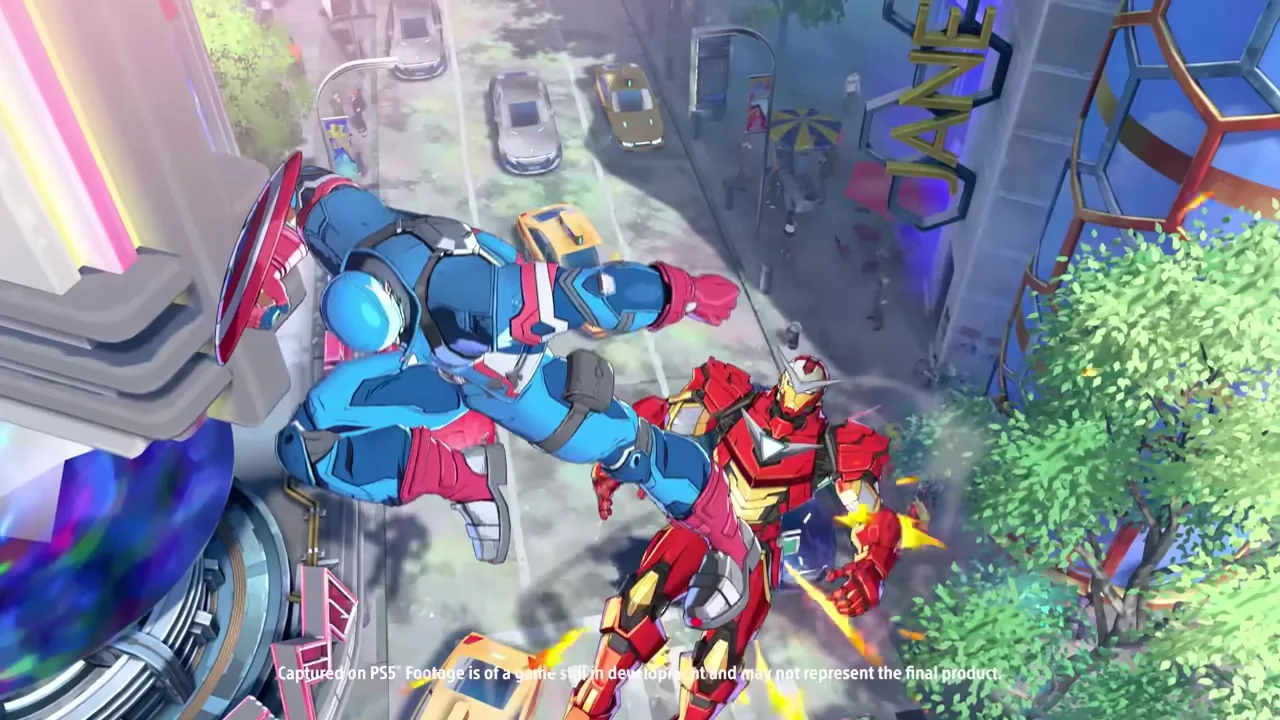
The landscape of MARVEL Tōkon: Fighting Souls is experiencing a significant shift today. Over a month after its explosive August 6 launch, the title continues to evolve both as a fiercely competitive multiplayer experience and as a spectator juggernaut. Today, September 18, Arc System Works has officially deployed a highly anticipated PC-exclusive update across Steam and the Epic Games Store. Simultaneously, the renowned esports data aggregator Esports Charts has published the complete viewership overview for the recent Ultimate Fighting Arena (UFA) 2026, cementing the 4v4 anime fighter as a top-tier attraction in the modern fighting game community.
These two developments are heavily intertwined. As the professional scene pushes the mechanical boundaries of the roster, the demand for a flawless, lag-free online training environment on PC has never been higher. Today’s update aims to provide exactly that, ensuring that the incredible combos and mind games showcased at UFA can be replicated cleanly in everyday ranked matchmaking.
The PC Client Stabilization Effort
Since the initial global launch, the PC community has been navigating a somewhat turbulent experience. While the PlayStation 5 build showcased the game’s bold, kinetic art style flawlessly, PC players faced their fair share of technical hurdles—ranging from early DRM controversies to frustrating shader compilation stutters. However, Arc System Works has remained transparent and committed to refining the client.
Today’s PC-only deployment is a direct realization of the input fixes and assist changes that the game director promised earlier this week. For the hardcore online warriors, this patch is a massive quality-of-life improvement. The update directly addresses the desynchronization issues reported when calling specific assists during visually chaotic screen states.
In a lightning-fast ecosystem where dropping a one-frame link can cost you the match, input polling accuracy is everything. Players who rely on execution-heavy characters—like timing Spider-Man’s maximum-range web zips or orchestrating Danger’s hard knockdown setups—should immediately feel a tighter response from their arcade sticks and leverless controllers. By smoothing out these edges, the developers are actively protecting the integrity of the game’s rollback netcode, ensuring that online sets on PC feel as close to an offline tournament setup as possible.
Decoding the Esports Charts Viewership Data
While the PC community hits the lab to test the new patch, the broader FGC is digesting the impressive metrics released by Esports Charts regarding UFA 2026. The data confirms what the community already suspected during the live broadcasts: MARVEL Tōkon is an absolute monster when it comes to spectator engagement.
Fighting games live or die by their tournament viewership, and breaking into the main stage rotation is notoriously difficult for new IPs. Yet, the viewership numbers for the Tokon bracket at UFA rivaled legacy franchises. This wasn’t merely a fleeting spike of launch-window curiosity; viewers tuned in early and stayed locked throughout the Top 8, demonstrating a genuine investment in the competitive meta.
The high retention rate highlighted by Esports Charts speaks volumes about the game’s underlying design. Despite being a frenetic, fast-paced anime fighter, it manages to maintain exceptional visual readability, allowing even casual fans to understand the ebb and flow of the match without getting lost in the particle effects.
The Readability of Chaos: Why 4v4 Works for Spectators
The secret weapon driving this massive spectator appeal is undoubtedly the bold implementation of the tag system. Historically, team-based fighters can suffer from extreme visual clutter and complex “snowball” mechanics where eliminating one character completely cripples the remaining team’s toolkit. Arc System Works bypassed this entirely by introducing the shared Vital Gauge.
Because all four members of a squad—whether it’s the Unbreakable X-Men or the Samurai Outriders—share a single, massive health pool, the stakes are always immediately apparent. Viewers don’t need to perform mental math to figure out who has the health lead; they simply look at the top of the screen. There are no convoluted character eliminations to track; the match simply ends when the Vital Gauge is depleted. This creates an incredibly tense viewing experience where every hit matters, and massive comeback swings are always just one confirmed opener away.
Furthermore, the game’s anime-inspired art direction serves a functional purpose. The distinct silhouettes and color-coded energy effects—such as Magneto’s deep purple magnetic waves or Captain America’s bright blue shield impacts—make it remarkably easy for spectators to parse the action during a scramble, keeping them engaged round after round.
High-Level Assemble Gauge Mastery
Another major factor contributing to the UFA viewership success was the high-level resource management on display, specifically regarding the assists tied to the Assemble Gauge. In the early weeks following the game’s release, most players used their Assemble Gauge strictly for basic combo extensions or simple projectile cover in the neutral game.
The UFA tournament showed the community an entirely different paradigm. Professional players were utilizing the Assemble Gauge for intricate “dirty” tag setups, deploying characters like Loki or Peni Parker to create ambiguous cross-up frame traps. Viewers got to see defensive assist calls executed with frame-perfect precision, completely interrupting oppressive blockstrings. The sheer depth of the Assemble Gauge mechanics turned top-level matches into high-speed games of 4D chess, where baiting out an opponent’s assist and punishing it became the primary win condition.
The commentary teams at UFA excelled at breaking down these interactions, turning the broadcast into an educational masterclass. This dynamic undoubtedly fueled the viewership, as players logged on to learn optimal routes and strategies to bring back to their own ranked grinds.
From Episode Mode Bosses to Tournament Meta
Interestingly, the path to understanding these complex tournament interactions begins right in the game’s single-player content. The transition from casual fan to hardcore spectator is incredibly smooth, largely thanks to how the game handles its PvE encounters.
In the cinematic Episode Mode, players are forced to confront the cosmic threat of the Champion of the Universe, alongside grueling battles against the Knights of Doom faction. Facing off against Doctor Doom’s suffocating screen control and Green Goblin’s unpredictable aerial assaults forces players to actually learn the mechanics. You cannot brute-force the Champion of the Universe; you must learn how to properly rotate your team, utilize the Assemble Gauge to break pressure, and manage your Skill Gauge for optimal damage windows.
By the time a player finishes the Episode Mode, they possess the foundational knowledge required to understand what the pros are doing on the UFA main stage. They know the difference between a panicked tag and a calculated DHC (Delayed Hyper Combo) using the Skill Gauge. This brilliant onboarding pipeline is a massive reason why the viewer base for tournaments is so highly engaged and technically literate.
The Road Ahead for the FGC
With the UFA 2026 meta heavily influenced by Spider-Man, Magik, and Blade, the community now has a clear benchmark for what optimal play looks like. As the PC update deploys today, the thousands of players grinding on Steam finally have the stable, highly responsive client they need to practice these precise, tournament-winning strategies.
Looking forward, the health of MARVEL Tōkon: Fighting Souls appears incredibly robust. Between the finalized 20-character launch roster and the confirmation of the upcoming Year 1 DLC (which will bring four new characters and a new stage), there is plenty of content on the horizon.
As players prepare for the next wave of major tournaments leading up to Evo Singapore 2027, the synergy between Arc System Works’ active technical support and the FGC’s enthusiastic competitive embrace is creating a perfect storm. Today’s PC patch isn’t just a bug fix; it’s a foundational repair that ensures the game will continue to deliver the hype, high-octane matches that Esports Charts and the community are so eager to watch.