Marvel Tōkon Meta: Spider-Man, Magik & Blade Dominate UFA 2026
Following UFA 2026, the competitive meta for MARVEL Tōkon: Fighting Souls has heavily favored a 'Big 3' trio. Meanwhile, casual players are praising the offline Episode Mode.
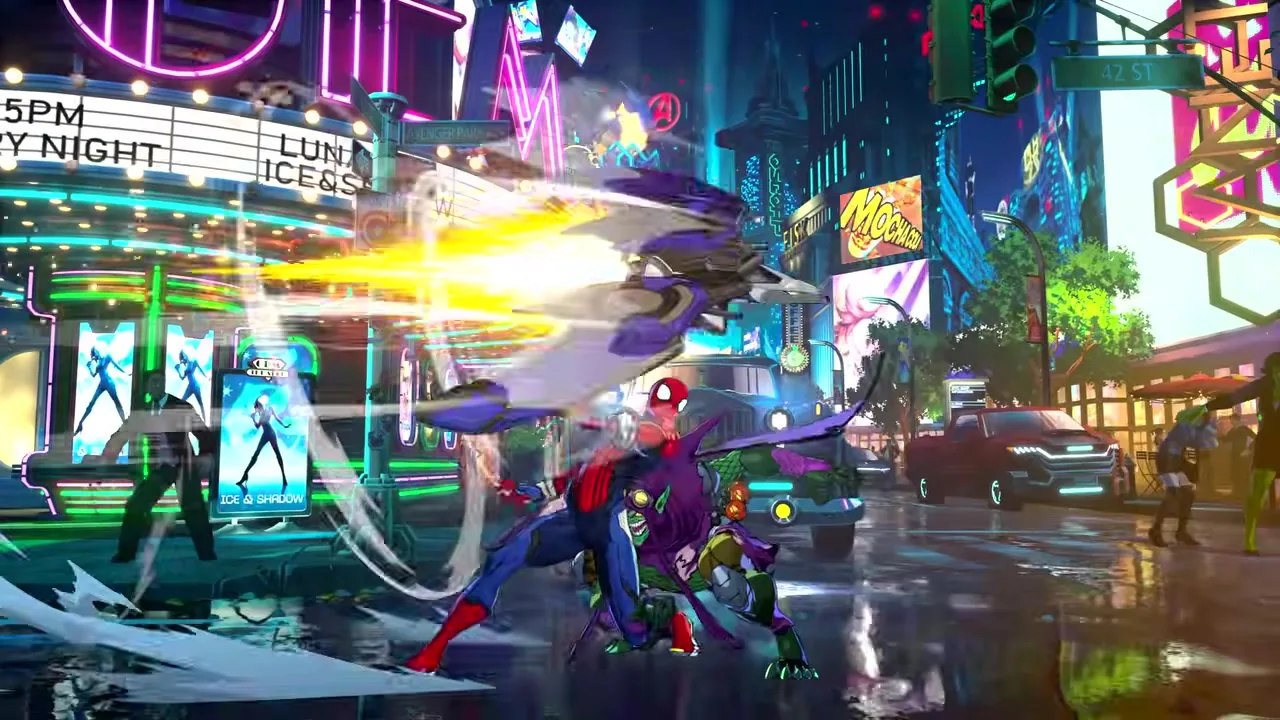
The dust has settled at UFA 2026, and the competitive landscape for MARVEL Tōkon: Fighting Souls is starting to heavily solidify. Arc System Works delivered an incredibly bold 4v4 tag team brawler when the game launched this past August, and the community has spent the last month tearing the mechanics apart to find the most optimal ways to break the system. While the game’s shared Vital Gauge and rapid-fire tag system offer unprecedented team synergy, the highest level of play is beginning to coalesce around a very specific, oppressive trio of fighters.
If you have attended any grassroots locals or tuned into the UFA 2026 streams this past weekend, you have likely noticed an unavoidable trend. The meta has shifted drastically toward a dominant “Big 3”: Spider-Man, Magik, and Blade. It is reaching a point where competing in bracket without at least one or two of these heavy hitters on your squad feels like you are playing an entirely different, much more difficult video game.
With the competitive circuit heating up and EVO France looming on the horizon as the first auto-qualifier for the Arc World Tour 2026-27 finals, the pressure is on. Let’s break down why this specific trio is gatekeeping the top tiers, how the roster size affects team diversity, and why, conversely, the casual crowd is having the time of their lives avoiding the competitive sweat entirely.
UFA 2026 and the Road to EVO France
Ultimate Fighting Arena (UFA) 2026 was a massive litmus test for Tōkon’s tournament viability after a month of labbing. We saw players finally punishing overzealous tag setups and demonstrating frame-perfect raw tags to save characters with low health. But more importantly, UFA set the stage for what professional players need to prepare for heading into the fall.
The Arc World Tour (AWT) is the holy grail for Arc System Works competitors, and EVO France is officially designated as the first auto-qualifier. This means the winner gets a golden ticket straight to the AWT finals next year. The stakes could not be higher. Because of this, players are no longer experimenting with thematic comic lore teams as much as they were during the open beta. They are bringing their absolute grimiest, most optimized setups to bracket. The honeymoon phase is over; it is now about picking the characters that guarantee a two-touch kill and abuse the Skill Gauge most efficiently.
The Rise of the “Big 3”
In the trenches of local scenes and major brackets alike, the trinity of Spidey, Magik, and Blade reigns supreme. The sentiment echoing from local tournaments in Houston to the grand stage in Paris is the same: character specialists are being forced to staple these top-tiers to their teams just to make their unique picks viable.
Why are these three causing so many problems for the rest of the cast?
Spider-Man’s Oppressive Neutral
Spider-Man is the undisputed king of controlling the pace of the match. His web zips allow him to bypass the traditional neutral game entirely, creating erratic approach angles that are incredibly difficult to anti-air or predict. Once he is in, his high/low mixups are heavily supported by staggeringly fast normals. But his real strength lies in his assist value. When called via the Assemble Gauge, his lockdown web-shooters keep the opponent entirely stationary, allowing the point character to set up unblockable setups or recharge the Skill Gauge safely. He fits on literally every team composition, functioning as both an unstoppable point character and a best-in-class assist.
Magik’s Disjointed Dominance
Magik takes the concept of space control and turns it up to eleven. Her Soulsword hitboxes are notoriously disjointed, meaning she can throw out massive sweeping attacks without putting her own hurtbox at risk. If you try to zone her out, her teleportation abilities allow her to instantly close the gap. In a 4v4 environment where screen real estate is constantly cluttered by active assists and screen-filling projectiles, Magik’s ability to cleanly snipe assists out of the air while catching the point character is unmatched. She is the ultimate anchor and safety net; a character who can easily clutch out a 1v3 situation thanks to her massive damage output and hard-to-read resets.
Blade’s Relentless Pressure
Rounding out the trio is the Daywalker. Blade operates like a blender. His Muramasa mechanics allow him to deal terrifying amounts of chip damage. Even if you block his strings perfectly, your shared Vital Gauge is going to suffer significantly. He forces opponents into a state of panic, demanding that they guess correctly on defense or lose a massive chunk of team health. Furthermore, Blade’s specific combo routes generate Skill Gauge faster than almost anyone else in the cast. By the time he finishes a blockstring, he usually has enough meter to safely cancel out of a risky situation with an EX move or force a tag, keeping the offensive momentum entirely in his favor.
The 20-Character Roster Crunch
The dominance of this trio highlights a mathematical reality of MARVEL Tōkon: Fighting Souls. The game launched with a base roster of exactly 20 characters, neatly divided into 5 thematic teams (Unbreakable X-Men, Amazing Guardians, Fighting Avengers, Knights of Doom, Samurai Outriders).
In a 4v4 fighter, each player selects 4 characters. That means 8 characters are on screen in any given match. With a total pool of only 20 fighters, 40% of the entire cast is present in a single bout. When you factor in the undeniable strength of the Big 3, severe overlap becomes unavoidable.
Veterans of the genre often compare this to older tag fighters like Ultimate Marvel vs. Capcom 3, which boasted over 50 characters in a 3v3 format. The sheer volume of choices in those legacy titles allowed for distinct player expression and wildly varied team compositions. In Tōkon, if both players want to win optimally right now, you are almost guaranteed to see a mirror match of at least two characters on the screen.
While we already know that the Year 1 DLC will introduce 4 new characters and a new map, adding just four fighters to the pool will not drastically dilute the concentration of the Big 3 overnight. The community is actively calling for targeted balance adjustments in the next major patch to bring the outliers down to earth, or better yet, buff the underperforming members of the Knights of Doom to create more viable team shells.
The Offline Oasis: Episode Mode Shines
While the competitive scene wrestles with roster diversity and optimized grime, a massive portion of the player base is perfectly content playing entirely offline. For casual fans and lore enthusiasts, the offline offerings of MARVEL Tōkon are proving to be a huge selling point, completely divorced from the stress of the ranked ladder.
Community forums are currently filled with praise for the game’s Episode Mode. Arc System Works leaned heavily into their bold anime aesthetics, presenting the game’s narrative through gorgeous, dynamic comic book panel storyboards. Rather than standard 3D cutscenes, it feels like reading through a high-stakes, fully voiced graphic novel.
The narrative focuses heavily on the Knights of Doom acting as the primary antagonist faction, leading up to a spectacular, screen-breaking boss fight against the Champion of the Universe. This cosmic elder provides a genuinely challenging single-player boss encounter that forces players to actually understand the game’s mechanics—specifically how to manage the shared Vital Gauge and maximize damage output during limited vulnerability windows, without the stress of an online opponent teabagging them.
For players who only spend a fraction of their time playing online, or who prefer local couch sessions and arcade runs, Tōkon is a beautifully crafted love letter. The presentation, the stellar English voice cast, and the sheer spectacle of landing a massive 4-person team super against an apocalyptic boss make it easily worth the price of admission. It stands as a firm testament to the fact that fighting games do not need to be exclusively sweat-fests to be enjoyable.
Looking Ahead
MARVEL Tōkon: Fighting Souls is currently living a double life. On one side, you have a fiercely competitive FGC grinding out frame traps and loudly debating the homogenization of teams at grassroots events. On the other, you have a thriving offline community soaking in the spectacular Episode Mode.
As we move closer to EVO France and the Arc World Tour qualifiers, all eyes will be on Arc System Works. Will they step in to adjust the oppressive nature of Spider-Man, Magik, and Blade, or will they let the meta develop naturally as players figure out new defensive counter-tech? Whatever happens, the road to the AWT finals is going to be a chaotic ride.