Marvel Tōkon's Accolades Trailer Drops While the Community Battles 2H Whiffs and Input Buffers
Arc System Works celebrates Marvel Tōkon's success with a new trailer, but the community is focused on solving frustrating 2H whiffing issues and input buffer mechanics.
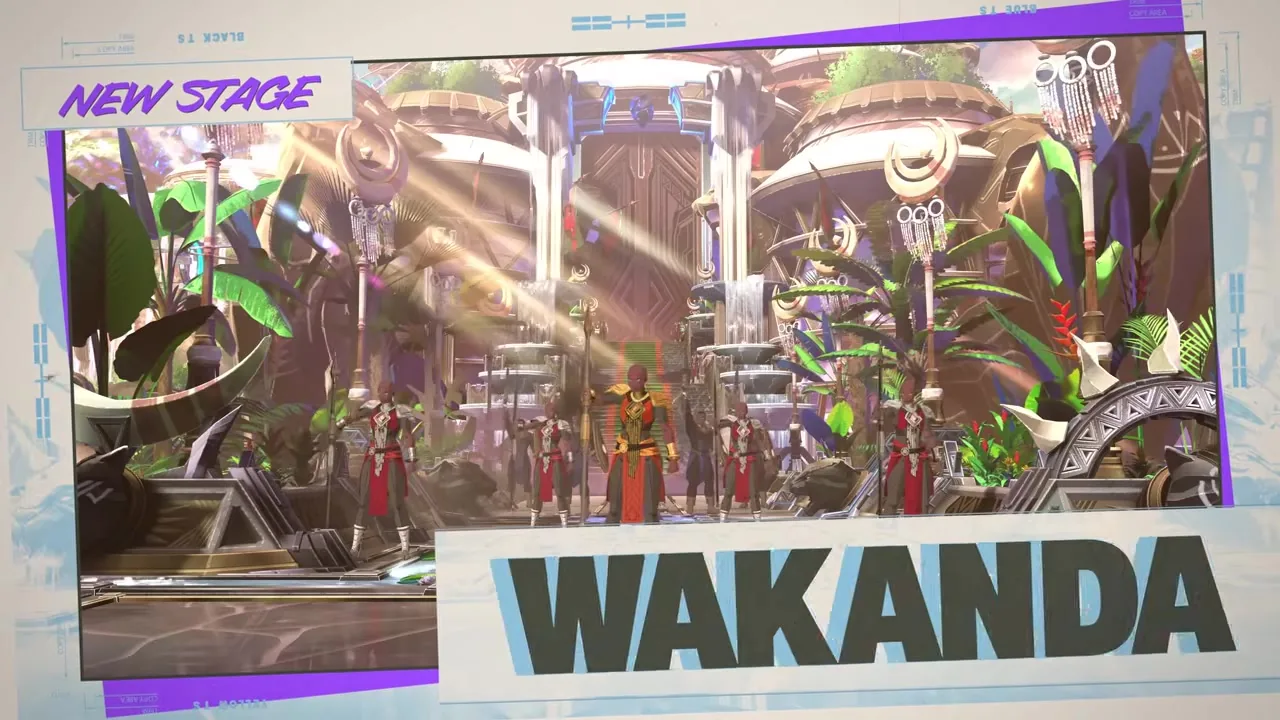
It has been nearly a month since MARVEL Tōkon: Fighting Souls officially launched on August 6, 2026, and Arc System Works is taking a well-deserved victory lap. The developer recently dropped the official Accolades Trailer, highlighting the overwhelming praise from media outlets regarding the game’s bold anime aesthetic, chaotic 4v4 tag team format, and incredibly smooth rollback netcode on both PS5 and PC.
However, while the trailer focuses on the cinematic spectacle of the Knights of Doom clashing with the Samurai Outriders, the actual player base in the trenches is currently embroiled in a massive debate. Across Reddit, Discord, and local scenes, a growing number of players are reporting intense frustration with the game’s input buffer—specifically surrounding the universal 2H (crouching heavy) attack. Is the game intentionally strict, is the netcode masking an input reader flaw, or are players simply carrying over bad habits from other anime fighters?
Let us break down what is happening with the 2H situation, how the game is handling input leniency, and what newer players migrating from different fighting game subgenres need to know to survive the madness.
The 2H Epidemic: Why Your Anti-Air is Whiffing
If you spend any time browsing the community hubs this week, you will inevitably run into a variation of this rant: “I block my opponent’s unsafe attack, I press 2H to punish them, and nothing comes out. Then they call an assist and steal their turn back.”
In anime fighting games, 2H is universally recognized as the primary anti-air and standard launcher tool. Players coming directly from Dragon Ball FighterZ are completely hardwired to press 2H the millisecond they recognize an opponent committing to a super dash, a careless jump-in, or an unsafe grounded string. In those older titles, the input buffer is incredibly generous. You can mash 2H while trapped in blockstun, and the game will politely queue the input and execute the attack on the exact first possible frame of your recovery.
MARVEL Tōkon: Fighting Souls does not play by those exact rules.
Based on extensive community labbing and frame data analysis, the input buffer window coming out of blockstun in this game is notoriously tight. If you press 2H too early while your character is still reeling from blocking a heavy attack, the game completely eats the input. Because the visual feedback for blockstun recovery can be obscured by the massive hit sparks and screen shake characteristic of the game’s anime style, players feel like they are hitting the button at the right time when, mathematically, they are slightly early.
Furthermore, players are feeling the sting of the game’s aggressive pushback mechanics. When an opponent realizes they made a mistake and threw out an unsafe attack, they will immediately spend their Assemble Gauge to call in an active partner. If your 2H input gets eaten because you pressed it a frame too early, you end up just standing there while their assist locks you down, making it feel like the game is rewarding them for a mistake.
To adapt, you must actively train yourself to delay your punish slightly. Relying on visual cues rather than pure rhythm is difficult in a frantic 4v4 environment, but understanding the defense mechanics and how blockstun functions in this specific engine is the only way to consistently land those crucial punishes without feeling cheated by the system.
Combo Inconsistency and Gravity Scaling
The 2H issue is not just isolated to punishing in neutral; it is also plaguing basic offensive structure. A perfect example of this is the current struggle many Blade players are facing.
New players hopping into training mode are finding that they can land Blade’s simple ground string into 2H launcher flawlessly 100% of the time against a stationary dummy. But the moment they take the Samurai Outrider into a real online match, the 2H suddenly whiffs completely, leaving Blade wide open for a catastrophic punish.
This is not a glitch. The community has deduced that this is a harsh lesson in spacing and hitstun decay. In a real match, players are rarely starting their strings point-blank. If you connect with Blade’s far light or medium attacks and attempt to chain into 2H, the pushback from the initial hits pushes the opponent just outside the active frames of his launcher. This is exacerbated by the fact that Tōkon utilizes a very unique combo gravity and scaling system compared to its peers.
The solution here requires players to stop auto-piloting their strings. If you hit a stray button at max range, you cannot blindly execute your standard route. You must incorporate micro-dashes to close the gap before launching, or route into a different special move entirely. Brushing up on the combo basics and understanding the specific ranges of your character’s hitboxes is non-negotiable if you want to climb the ranked ladder.
The NRS Migration: Is the Game Too Hard to Learn?
The mechanical friction surrounding the 2H buffer has sparked a parallel discussion among fighting game veterans crossing over from completely different subgenres. Specifically, players who cut their teeth on NetherRealm Studios titles like Mortal Kombat or Injustice are asking if the execution barrier in Tōkon is simply too high.
Transitioning from the dial-a-combo systems and dedicated block buttons of MK to the chaotic, motion-input heavy, hold-back-to-block world of a 4v4 tag fighter is a massive paradigm shift. However, Arc System Works clearly anticipated this learning curve.
For players intimidated by complex stick motions, the game features a highly functional “Quick Button” system. This option allows players to execute special moves with simplified directional inputs combined with a dedicated button, drastically lowering the floor for execution. While purists might scoff at this, it is an incredibly effective way for newcomers to start enjoying the game immediately without spending 40 hours in training mode just to learn how to do a quarter-circle forward consistently under pressure.
However, the real difficulty in MARVEL Tōkon: Fighting Souls has very little to do with raw physical execution. The true learning curve lies in mental stack management.
Remember, this game does not give each of your four characters their own health bar. Your entire team shares a single Vital Gauge. This completely redefines the concept of “safe” play. You cannot simply sacrifice a low-health character to buy time. Every single hit matters to the entire squad.
Managing your resources effectively is the core of the meta. Knowing when to spend your Assemble Gauge to call an assist to cover your unsafe pressure, or when to burn your Skill Gauge for an EX move (like the highly damaging EX sequences Storm players have been optimizing recently) requires intense situational awareness. The Quick Button will help you throw the fireball, but it will not teach you when to throw it.
Moving Forward
As the hype from the Accolades Trailer continues to bring fresh blood into the ecosystem, the community will inevitably keep debating the strictness of the input buffer and the learning curve of the 4v4 mechanics. Whether Arc System Works decides to tweak the buffer leniency in a future balance patch remains to be seen. But for now, the rules of engagement are set.
If you are struggling to find your footing, stop mashing your anti-airs, pay close attention to your spacing, and focus heavily on how you are utilizing your Assemble and Skill Gauges. The mechanics are built to reward precision, and whether you are grinding ranked matches or preparing to face the Champion of the Universe in Episode Mode, mastering these nuances is the only path to victory. Take advantage of the game’s robust training tools, experiment with how assists can cover your specific character’s weaknesses, and try not to break your arcade stick the next time your 2H refuses to come out on frame one.