Mastering Marvel Tōkon's Engineered Combat: Movement Quirks and Input Shortcuts
Is Marvel Tōkon's combat too restrictive? We dive into the community debate on auto-systems, strict movement, and how to exploit input leniency for better combos.
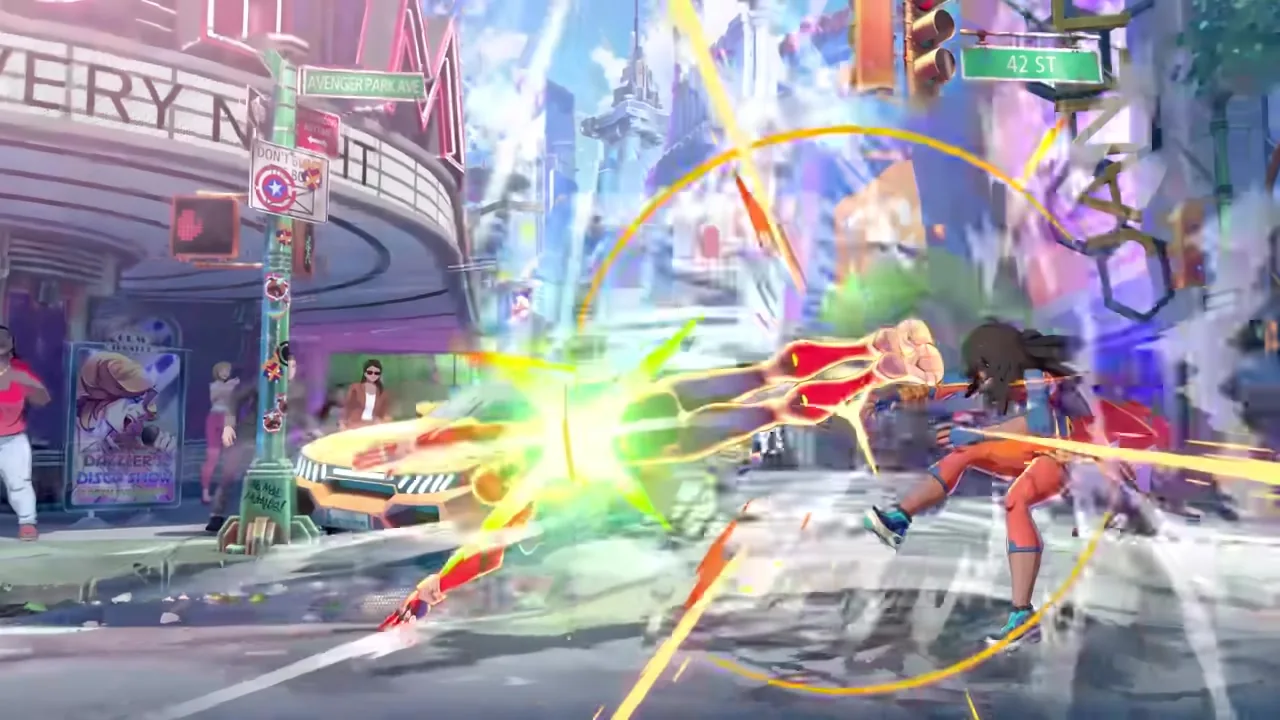
Since MARVEL Tōkon: Fighting Souls officially launched on PlayStation 5 and PC, the fighting game community has been relentlessly dissecting the mechanics built by Arc System Works. With an audacious anime art style and a chaotic 4v4 tag-team structure, the game has undeniable visual flair. The Unbreakable X-Men and the Samurai Outriders are tearing up the ranked ladders, and players are finally getting a grip on the chaotic macro-strategy of managing a single shared Vital Gauge across four characters.
However, as the dust settles from the launch window and the honeymoon phase transitions into serious competitive labbing, a fascinating debate is erupting within the community. The core of this discussion revolves around the mechanical freedom of the game. On one side, veterans are questioning whether the game’s movement and combo structures are a bit too “engineered,” restricting player expression. On the other hand, lab monsters and hardware enthusiasts are discovering that the game’s input parser is surprisingly lenient, opening the door for massive optimization on leverless controllers and arcade sticks.
In this deep dive, we will explore the ongoing debate surrounding Marvel Tōkon’s movement systems, break down the newly discovered input shortcuts for your Skill Gauge abilities, and discuss how to develop the elusive “game sense” required to survive the Knights of Doom.
The “Engineered” Combat Debate
One of the most defining characteristics of legacy versus-style fighters is the sheer freedom of movement. Historically, if a game handed you a box of movement tools—super jumps, air dashes, eight-way momentum—it was entirely up to you to figure out how to piece them together. Marvel Tōkon: Fighting Souls, however, takes a noticeably different approach, leading to a growing sentiment that the game dictates your trajectory more than you do.
A highly discussed thread in the community recently articulated this feeling perfectly: the game doesn’t necessarily feel “too simple,” but rather deeply “engineered.” The system seems to have a heavily pre-determined idea of what every interaction is supposed to become.
The prime example of this is the universal Down + Circle launcher. When you land this attack, it doesn’t just hit the opponent into the air for you to manually chase; it automatically carries your character upward into the sky alongside them. Furthermore, if you completely let go of the controls and press nothing after the launch, your character will automatically execute a downward tracking attack.
This is a massive amount of automated behavior baked into a single two-button input. For newcomers, this is an incredibly accessible feature. It guarantees that you can secure a basic knockdown and maintain pressure without needing to understand manual super-jump cancels or complex air-dash tracking. But for veterans, this feels strangely restrictive. When you attempt to move diagonally, redirect your momentum, or improvise an unorthodox air sequence outside of the engine’s expected trajectory, you suddenly run into an invisible wall. The game wants you to follow the sequence of designed outcomes.
This strict approach to aerial momentum creates a highly structured neutral game. You cannot easily bait an anti-air by altering your fall speed mid-launcher, because the auto-system commits you to a specific flight path. To break the mold, you have to burn your Assemble Gauge for an assist to cover your pre-determined landing, or carefully route your offense through character-specific tools rather than universal mechanics.
The Blessing of Input Leniency
While the movement physics might feel rigidly designed, the actual input parser in Marvel Tōkon is incredibly forgiving—a fact that controller optimizers are just now fully realizing.
In a game where dropping a combo can mean losing a massive chunk of your shared Vital Gauge, consistency is king. Recently, the leverless community (HitBox users) discovered a massive shortcut regarding the game’s super moves. When burning your Skill Gauge for an Ultimate Skill, the game does not require diagonal inputs.
For players using a D-pad, this might not seem like a game-changer, but for arcade stick and leverless players, this is revolutionary. Typically, a quarter-circle forward motion requires Down, Down-Forward, Forward. Because Marvel Tōkon ignores the necessity of the diagonal (Down-Forward), you can input Supers with much slopier, faster finger taps (e.g., just tapping Down, then Forward) and the engine will still interpret it as a valid Ultimate Skill command.
Furthermore, players have found incredible success utilizing the in-game “Throw” bind as a macro during these super inputs. By buffering the directional inputs (even without diagonals) and slapping your dedicated Throw button bind, the leniency allows for near 100% consistency on sliding techniques and complex combo enders. If you are struggling to cash out your damage at the end of a long wall-carry, utilizing this leniency is mandatory. For more tips on setting up your hardware to take advantage of these engine quirks, check out our guide on controls and setup.
The Hardware Hurdle: Defending in 4v4 Chaos
Speaking of hardware, the lenient inputs are causing some secondary friction for players transitioning to arcade sticks. A common debate among newer stick users in Marvel Tōkon is the choice of restrictor gates—specifically Square vs. Octagonal gates.
Because the game is so forgiving with motion inputs (like quarter circles for specials), many beginners swap to an Octagonal gate to physically “feel” the corners of their fireballs. However, this comes at a steep defensive cost. Marvel Tōkon is a 4v4 game, meaning you are constantly dealing with a point character attacking you while an assist character flies in from the background, all fueled by the Assemble Gauge.
To survive this, your crouch-blocking (holding Down-Back) must be absolutely flawless. Players using Octagonal gates are finding that the extra notches make it deceptively easy to slide out of the true Down-Back position into a pure Down or pure Back position. If you accidentally stand up for a single frame against Wolverine and Magik swinging at you simultaneously, you will be opened up instantly. If you find yourself constantly getting hit by lows while you swear you were blocking, it might be time to switch back to a Square gate to ensure your defensive corners are hard-locked. For a deeper dive into surviving the relentless pressure of this game, review our breakdown of defense mechanics.
Building “Game Sense” vs. Fighting the Engine
Ultimately, the friction players are feeling—whether it’s wrestling with the “engineered” movement or getting mixed up in the corner—comes down to developing what the fighting game community calls “Game Sense.”
We are seeing a massive influx of frustrated players hitting the 50-hour mark and hitting a brick wall in ranked mode. They’ve spent money on expensive leverless controllers, they’ve practiced the inputs, yet they are still losing to aggressive Spider-Man players and Doctor Doom zoning.
The reality of Marvel Tōkon: Fighting Souls is that execution is only a fraction of the battle. Because the combos are somewhat automated and the inputs are intentionally lenient, Arc System Works has shifted the skill gap entirely toward pattern recognition, situational awareness, and resource management.
Basic awareness (knowing what your buttons do) only gets you through the first few dozen hours. To climb the ranks, you need to reach the pattern recognition phase. You need to understand that because movement is restricted and “engineered,” you can precisely predict where an opponent will land after they use a launcher. You need to know exactly when their Assemble Gauge is on cooldown, meaning they have no backup to cover a risky approach.
Stop trying to force the game to play like a sandbox fighter from 2000. Accept the pre-determined flight paths of the Down + Circle launcher and use them to set up inescapable traps on your opponent’s wakeup. Focus on mastering combo basics so you never drop guaranteed damage, and learn how to structure layered pressure using your assists to create offense mixups that the opponent simply cannot block.
Marvel Tōkon: Fighting Souls might have a rigid structure, but within those rules lies a deeply rewarding, highly strategic tag fighter. Whether you are rocking an octagonal gate, a leverless controller, or a standard PS5 pad, adapting to the engine’s logic is the only way to conquer the arena.