Marvel Tōkon PC Port Chaos: Bizarre Fixes, Maximilian Dood's Rage Quit, and the New Rescue Patch
Arc System Works deployed a major PC patch for Marvel Tōkon: Fighting Souls after severe 60 FPS stuttering led to bizarre community fixes and streamer rage quits.
The PC Port Dilemma of the Summer
When MARVEL Tōkon: Fighting Souls officially launched on August 6, 2026, the global fighting game community (FGC) was instantly divided into two very different camps. On one side, PlayStation 5 players have been feasting on what is arguably Arc System Works’ most ambitious project to date. With a roster of 20 heavily stylized characters grouped into 5 unique 4-player teams, the high-octane 4v4 tag mechanics have delivered on every promise made since the Evo 2026 roster lock. Console players have been seamlessly integrating complex assist calls and exploring the deep neutral game completely unbothered by technical hurdles.
On the flip side, the PC launch—specifically on Steam—has been a grueling endurance test. While fighting games occasionally suffer from day-one server hiccups or minor matchmaking glitches, the Steam release of Marvel Tōkon was plagued by an infinitely more sinister issue: the inability to maintain a locked 60 frames per second. For a fast-paced anime fighter, frame rate drops are not just a visual annoyance; they are a fundamental breakdown of the game’s core logic.
Today, Arc System Works and Sony Interactive Entertainment have finally pushed a massive rescue patch aimed at salvaging the PC ecosystem. But the road to this update was paved with streamer rage quits, bizarre community workarounds, and intense debates over digital storefronts.
The Breaking Point: Maximilian Dood Uninstalls Live
Nothing encapsulates the initial frustration of the PC player base quite like the viral moment involving FGC titan Maximilian Dood. As reported by IGN and heavily clipped across social media, the veteran content creator reached his boiling point during a live broadcast, ultimately uninstalling the Steam version of Marvel Tōkon mid-stream.
To understand why a veteran player would resort to this extreme measure, you have to look at how modern rollback netcode functions. Games developed by Arc System Works utilize highly tuned rollback structures that absolutely require both local clients to run at a rock-solid 60 FPS. When your PC drops frames—even momentarily dipping to 57 or 58 FPS—the game struggles to sync inputs with the opponent over the network. This desynchronization creates artificial lag spikes, rollback teleportation, and entirely eaten inputs.
In a 4v4 tag team environment, dropping an input is a death sentence. The game’s economy revolves around the shared health pool, known officially as the Vital Gauge. Because all four characters on a team share this single Vital Gauge, a single dropped combo or a missed block due to micro-stuttering can result in a devastating loss of overall team health. Furthermore, defensive mechanics like burst escapes and alpha counters rely on precise timing utilizing the Assemble Gauge. When the frame rate stutters, your Assemble Gauge inputs get swallowed by the void, leaving you wide open to relentless pressure from the opposing Knights of Doom or Samurai Outriders. Maximillian’s frustration mirrored the exact sentiment of thousands of Steam players who felt robbed of their well-earned combo basics due to underlying optimization failures.
The Wild West of Community Home Remedies
With Arc System Works remaining mostly quiet over the opening weekend while investigating the backend logs, the PC community did what it always does: they started experimenting. Eurogamer published a fascinating report detailing the absolute sheer madness of the “home remedies” players cooked up to stabilize the game.
Some of the most popular community fixes included aggressive external modifications. Players were heavily advised to download Rivatuner Statistics Server (RTSS) to force a hard lock on the frame rate outside of the game’s internal engine. Others went deep into their motherboard BIOS to disable specific CPU cores or adjust hyper-threading, treating the game’s stuttering like a hardware disease that needed surgical intervention.
Perhaps the most surprising revelation came from the community over at the /r/MarvelTokon subreddit, where users discovered a massive disparity between digital storefronts. According to numerous reports and benchmarks, players who purchased the game via the Epic Games Store experienced a significantly smoother ride than their Steam counterparts. The leading theory suggests that the Steam overlay, combined with Steam’s heavy API background polling and robust input wrappers, was choking the game’s rendering pipeline. “The issue Steam has with running multiplayer games… is only going to get worse since they aren’t addressing it,” noted one vocal Reddit user, urging the community to stop review bombing the game itself and instead point the blame at the launcher bloat.
Beyond frame drops, PC players also battled weird visual glitches. Another widespread Reddit post documented strange static and artifacting on the character select screen, where fighters would render with corrupted textures overlapping the UI blocks. It was a messy weekend, forcing hardcore players to jump through burning hoops just to lab their setups.
The August 10 Rescue Patch: Arc System Works Responds
Thankfully, the dark ages of external frame limiters and storefront swapping might finally be behind us. As covered by Destructoid and Wccftech today, Arc System Works has officially deployed a comprehensive maintenance patch targeting these exact critical PC performance issues.
The full patch notes, heavily circulated by EventHubs and Insider Gaming, indicate that the developers have fundamentally adjusted how the game handles asset streaming and background API calls on PC. The update explicitly targets the frame pacing issues that were causing micro-stutters during high-intensity moments, such as screen-filling supers and simultaneous four-character pile-ups.
For the competitive scene, this patch cannot be overstated in its importance. Optimal play in Marvel Tōkon requires razor-sharp execution. When you are trying to confirm a stray hit into a massive super combo, you need to confidently cash out your Skill Gauge—the official term for the super meter in this game, not to be confused with a “Soul Gauge” which simply does not exist. The Skill Gauge governs all EX moves and ultimate cinematic supers. Before today’s patch, PC players were terrified to spend their Skill Gauge because a sudden micro-stutter could cause their level 3 super input to read as a simple heavy punch, leading to a massive punish from the opponent.
With the 60 FPS cap now reportedly holding steady on mid-to-high-end rigs, the Steam community can finally engage with the tag system the exact way it was intended. Early reports from the subreddit and community Discords indicate that input lag feels significantly snappier, and the rollback netcode is no longer fighting a losing battle against local client desyncs.
The Meta Marches On: Diaphone’s “Employment Level” Tier List
While the technical side of the PC community was busy fighting their own hardware, the FGC lab monsters were already dissecting the 20-character roster. In what is undoubtedly the most entertaining piece of meta-analysis to come out of the launch window, professional player and content creator Diaphone released an “ease of use” tier list based entirely on a player’s “employment level,” which was promptly highlighted by EventHubs.
The premise is brilliant in its accuracy. Fighting games demand time, and Marvel Tōkon is incredibly demanding if you want to master the entire roster. Diaphone’s tier list categorizes characters by how much free time you need in your real life to properly play them.
For the “9-to-5 Full-Time Job” category, Diaphone highly recommends brawlers and straightforward rushdown characters. Hulk (Fighting Avengers) and Wolverine (Unbreakable X-Men) sit comfortably at the top of this list. Their game plans are intuitive: get in, hit hard, and don’t worry about complex resource management. A player who works 40 hours a week can easily pick up Wolverine, learn a universal sequence, and effectively utilize his assists to cover their approach without needing to spend hours in training mode perfecting one-frame links.
Conversely, the “Unemployed Lab Monster” tier is reserved for characters with immense technical ceilings and convoluted neutral tools. Doctor Doom is the poster child for this category. As a premier member of the Knights of Doom, his toolkit is overflowing with delayed projectiles, flight cancels, and multi-layered zoning traps. To play Doom efficiently, you must memorize specific screen positioning, understand the exact frame data of his traps, and have the flawless execution required to convert stray projectile hits into full air combos. Magik (Unbreakable X-Men) and Peni Parker (Amazing Guardians) also fall into this high-maintenance category, requiring endless hours of practice to orchestrate their portal mix-ups and drone setups.
Looking Ahead
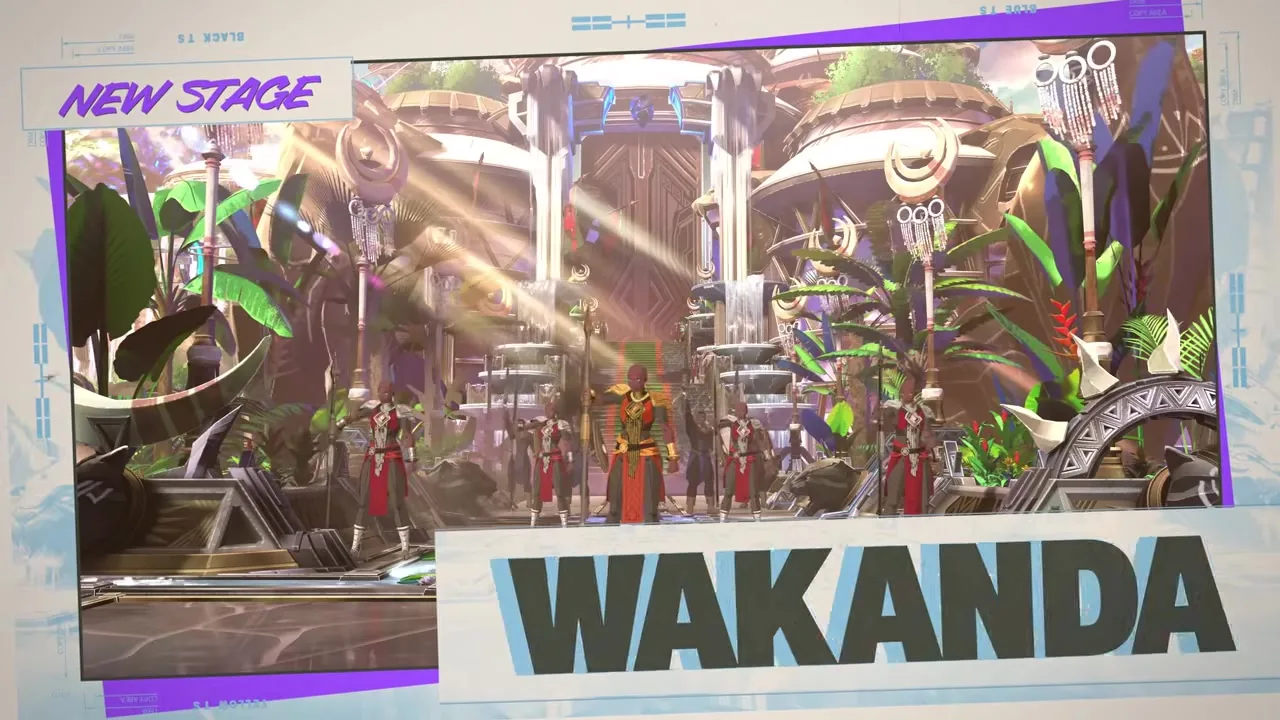
As the dust settles on this chaotic launch window, the future of MARVEL Tōkon: Fighting Souls looks incredibly bright. With the PC performance issues largely addressed by today’s patch, the entire community can finally turn their attention back to the gameplay and the upcoming Year 1 DLC. Arc System Works has already confirmed that four additional characters and one new stage are on the way, though their identities remain a closely guarded secret (despite the endless, unverified rumors floating around social media).
Additionally, players who have been avoiding the online ranked grind due to the network issues can finally dive into the expansive single-player Episode Mode with confidence. Here, the narrative pits the heroic factions against the Knights of Doom and the overarching big bad, the cosmic elder known as the Champion of the Universe, offering a fantastic training ground to practice those newly stabilized frame-perfect inputs.
Whether you are a casual fan enjoying the gorgeous anime aesthetic, a 9-to-5 worker mashing out Hulk combos, or a dedicated lab monster perfecting Doctor Doom’s flight loops, the game is finally in a fully playable state across all platforms. Ensure your Steam client is updated, double-check your graphic settings, and we will see you in the arena.