MARVEL Tōkon: Fighting Souls Episode Mode Features Legendary Manga Artists
Discover how acclaimed manga creators like Hiro Mashima and Betten Court bring the 4v4 tag teams to life in Marvel Tōkon's Episode Mode campaign.
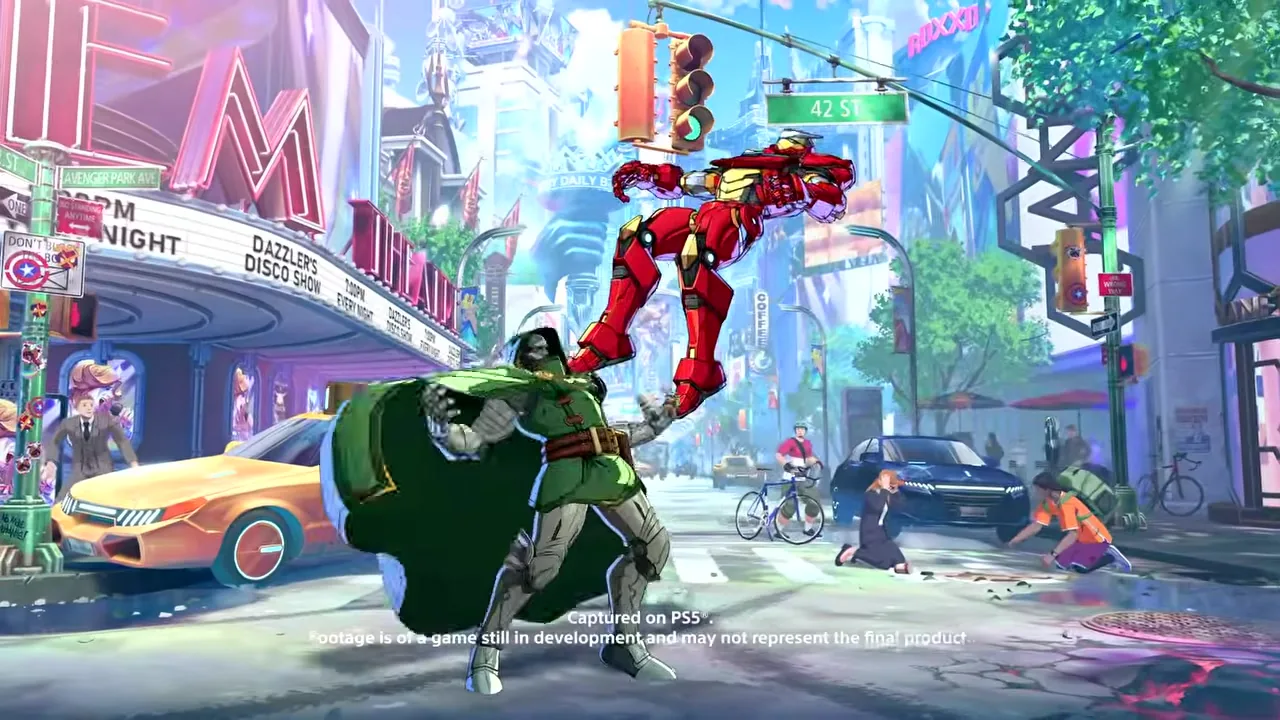
The wait is finally over. On August 6, 2026, Arc System Works, in collaboration with PlayStation Studios and Marvel Games, unleashed MARVEL Tōkon: Fighting Souls to the world on PS5 and PC. Since the initial jaw-dropping roster confirmation at Evo 2026, the fighting game community has been itching to get their hands on this 4v4 tag-team brawler. The game’s core selling point—a wildly aggressive, fast-paced team fighter dripping with a highly stylized, unapologetic anime aesthetic—has been front and center in every trailer leading up to launch.
However, while the pre-release marketing heavily pushed the rollback netcode and the competitive viability of the game, Arc System Works kept one of their best cards hidden until the street date broke. Players diving into the single-player Episode Mode have discovered a visual goldmine. While we already knew the overarching narrative was in capable hands with acclaimed writer Kieron Gillen, the actual visual storytelling during the campaign cutscenes and character dialogue portraits has been outsourced to a murderers’ row of legendary manga artists and comic illustrators.
This collaboration elevates the Episode Mode from a standard fighting game arcade ladder into a true celebration of both western comic book history and Japanese manga culture. For a game that literally translates to “Fighting Spirit” in its title, bringing in artists known for drawing some of the most iconic shonen and superhero battles of the last decade is a masterstroke.
Meet the Manga and Comic All-Stars
When you boot up Episode Mode and select a faction, you aren’t just getting the standard 3D in-game models talking to each other. You are treated to gorgeous, bespoke 2D artwork that gives each of the five 4-person squads a completely unique visual identity. The decision to assign different illustrators to different teams highlights the diverse playstyles and tonal shifts across the roster.
Hiro Mashima Takes on the Fighting Avengers
Starting with the Fighting Avengers, Arc System Works tapped Hiro Mashima, the legendary creator of Fairy Tail and Edens Zero. Mashima’s signature high-energy, clean-lined shonen style fits the heavy hitters perfectly. When you see Captain America rallying the team, he looks like a classic anime protagonist straight out of a Weekly Shonen Magazine spread. Hulk is rendered with exaggerated, impossible muscular proportions that make his rage feel palpable on the screen, translating his massive in-game hitboxes into 2D art effortlessly. Iron Man and Black Panther (Shuri) benefit from his incredibly crisp mecha and tech detailing, making their armor pop during dialogue sequences.
Emanuela Lupacchino Illustrations for the Unbreakable X-Men
For the Unbreakable X-Men, the studio brought in Emanuela Lupacchino. A powerhouse in the western comic industry known for her stellar run on Wonder Woman and Supergirl, Lupacchino bridges the gap between classic American comic shading and Arc System Works’ anime stylings. Her illustrations for Storm and Magik emphasize flowing, dynamic movement—perfect for characters that rely heavily on wind mechanics and mystical portal setups in the neutral game. Wolverine retains his gritty, stocky comic-accurate frame, looking ready to rip through a frame trap, while Danger looks as imposing and cold as her in-game robotic pressure strings suggest.
Betten Court Brings Vigilante Flair to Amazing Guardians
The Amazing Guardians campaign is helmed by Betten Court, the artist famous for My Hero Academia: Vigilantes. Court is a master at drawing street-level heroics and youthful exuberance, making him the absolute ideal choice for this ragtag squad. Spider-Man and Ms. Marvel (Kamala Khan) leap off the screen with kinetic, elastic energy. Court’s knack for action poses makes Spidey’s web-swinging look incredibly dynamic. Star-Lord carries that suave, laid-back smuggler vibe perfectly, and Peni Parker, alongside her massive SP//dr mech, looks like they were ripped straight out of a premium mecha manga. It’s a gorgeous fit for the team’s highly mobile and assist-heavy playstyle.
Yusuke Osawa’s Dark Edge for the Samurai Outriders
Finally, the Samurai Outriders are illustrated by Yusuke Osawa, the artist behind Spider-Man: Fake Red and The Mandalorian manga adaptation. Tasked with the game’s most eccentric and lethal squad, Osawa employs a much darker, grittier linework. Ghost Rider’s flaming skull and hellfire chain mechanics look absolutely terrifying, while Blade’s stoic vampire-hunting aesthetic feels right at home in Osawa’s moody inking style. Deadpool, predictably, breaks the fourth wall in his illustrations, winking at the player with an exaggerated, comedic flair that perfectly matches his chaotic mixup game on the screen.
The Knights of Doom and The Ultimate Threat
Conspicuously absent from the early community image dumps on platforms like Reddit are the Knights of Doom. This villainous faction—comprising Doctor Doom, Magneto, Green Goblin, and Carnage—serves as the primary antagonistic force for much of the campaign. While image limits on forums have kept their 2D illustrations somewhat under wraps for now, early clearers report that their designs are appropriately menacing, matching the overwhelming threat they pose.
Of course, all of these factions are on a collision course with the true big bad of the game. The narrative demands that these rival teams eventually face off against the Champion of the Universe, a cosmic elder obsessed with proving his absolute superiority in combat. Having these legendary artists visually interpret the journey toward this cosmic showdown adds an incredible amount of weight to the story mode, making the final climb to the boss feel like a massive crossover comic event.
Beyond the Art: Using Episode Mode as a Training Ground
Episode Mode isn’t just a beautifully illustrated visual novel; it’s a masterfully disguised training dojo for the intense 4v4 tag system mechanics. Jumping straight into ranked matchmaking with a team of four can be incredibly daunting, but the story campaigns incrementally teach you how to manage the chaos on the screen.
The most critical lesson the campaign drills into you is managing the shared Vital Gauge. Unlike traditional tag fighters where each character has their own individual health pool, your entire squad in MARVEL Tōkon shares a single Vital Gauge. If it depletes, your team loses the round. This makes defensive tagging and safe approaches absolutely paramount to your success.
Furthermore, your Assemble Gauge dictates your assist calls and tags. Community defense guides emphasize that calling an assist in neutral doesn’t cost any pips from your Skill Gauge, meaning you can aggressively use Ms. Marvel’s stretching punches or Loki’s illusions to cover your approaches while you safely block. Speaking of the Skill Gauge (which some beginners incorrectly refer to as a Soul Gauge), that resource is strictly reserved for EX moves and your massive cinematic supers.
The Episode Mode also helps players navigate the game’s input systems in a low-stress environment. For instance, the community has quickly figured out that simply holding back to block during an attack prevents the auto-combo system from taking over. This brilliant quality-of-life feature allows intermediate players to execute classic manual inputs and combo basics without the game overriding their decisions with beginner-friendly strings.
Weathering the Launch Week Headwinds
Despite the overwhelming praise for the Episode Mode art direction, the fantastic 20-character launch roster, and the highly addictive combat loop, MARVEL Tōkon: Fighting Souls is currently navigating some turbulent waters. Over on Steam, the game is sitting at a “Mixed” rating (hovering around 58% negative reviews at the time of writing). A significant portion of the PC player base is experiencing optimization issues, particularly severe micro-stuttering on high-end laptops equipped with RTX 4070s. Furthermore, Linux and Steam Deck users are completely blocked out due to the kernel-level anti-cheat, and the mandatory PSN account linking remains a massive point of contention for regions where the service is unavailable. Prominent FGC content creators like Maximilian Dood have even expressed immense frustration over the PC port’s technical hiccups on stream.
However, if you are playing on PS5 or have a PC setup that manages to avoid the stuttering bugs, the underlying game is nothing short of a masterpiece. The seamless blend of western comic lore, legendary manga illustrations, and Arc System Works’ undeniable fighting game pedigree makes MARVEL Tōkon: Fighting Souls an unforgettable experience. The art alone makes Episode Mode worth the price of admission, setting a new gold standard for how fighting games can present their single-player content.