Practical Execution: How the Marvel Tōkon Community is Rewriting Official Level-Up Combos
Discover why Marvel Tōkon players are abandoning flashy day-one setups to optimize practical, tournament-viable starters for characters like Spider-Man and Loki.
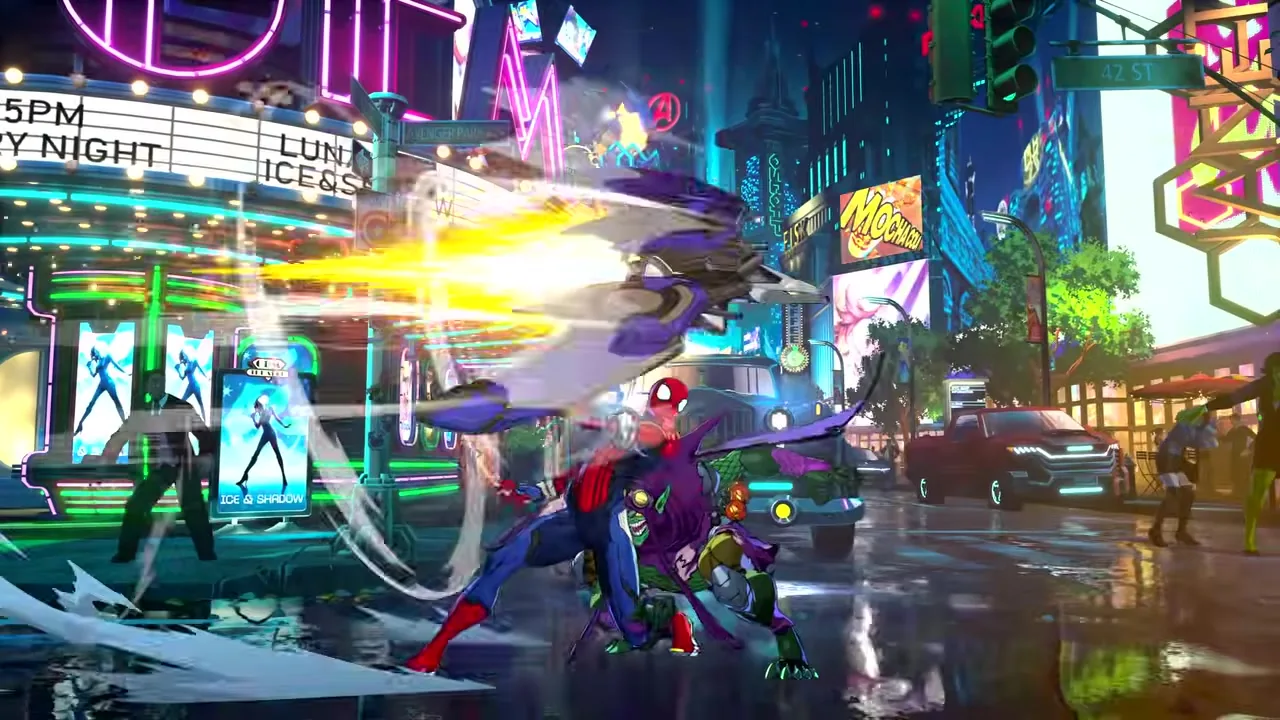
Two months into the lifespan of MARVEL Tōkon: Fighting Souls, the honeymoon phase of hundred-hit Twitter clips and wildly impractical training room exhibitions is definitively over. Arc System Works delivered an incredibly volatile 4v4 tag environment when the game launched this past August, giving us a baseline roster of 20 fighters bursting with offensive potential. But as the competitive meta starts to solidify and regional qualifiers demand actual consistency, the player base is undergoing a massive shift in how they approach time in the lab.
We are currently seeing a massive community push to strip down the flashy, resource-heavy sequences designed by the developers, replacing them with hyper-optimized, tournament-ready conversions. Official tutorials are being heavily scrutinized, modified, and in some cases, completely rewritten by the players who actually have to pilot these teams under pressure.
The Problem with Official Level-Up Missions
When tackling a new 4v4 team fighter, the built-in combo trials are usually the first stop for any aspiring competitor. In Marvel Tōkon, the “Level-Up Missions” serve this exact purpose, walking players through increasingly complex sequences intended to showcase what a character can do when pushed to the limit. They look spectacular, leveraging the anime-style kinetic engine that Arc System Works is famous for, and they effectively teach players the rhythmic cadence required for the game’s engine.
However, a glaring issue has become a common talking point within the fighting game community: many of the advanced official missions rely on highly situational, deeply impractical combo starters.
If you are looking to master the combo basics, learning how to execute a sequence that starts from a fully charged heavy attack on an airborne, cornered opponent is objectively terrible for your neutral game. In real matches, opponents are blocking, back-dashing, and throwing out pokes. You don’t get the luxury of setting up a perfect jumping heavy punch unless your opponent has made a catastrophic error.
This disconnect between tutorial theory and match practicality has sparked a wave of “re-dos” across character discords and subreddits.
Spider-Man’s Mission 3: A Case Study in Practicality
A prime example of this community-driven optimization surfaced recently on Reddit, where user OniAzul posted a highly praised “re-do” of Spider-Man’s Level-Up Mission 3.
The original developer-intended sequence for the Amazing Guardians’ agile frontman requires a starter that you will almost never land on a seasoned opponent. It looks fantastic—highlighting his web-swing mobility and wall-bounce mechanics—but getting the initial hit requires a reckless commitment that leaves you entirely vulnerable to a devastating counter if blocked.
OniAzul’s modified version completely changes the mathematical equation of the encounter. By swapping the starter to a fast, low-committal crouching light attack (a standard low poke), the resulting combo is infinitely more useful. Yes, starting a combo with a light attack triggers heavy damage scaling in this game, meaning the final numerical output of the sequence is significantly lower than the official trial. But a heavily scaled combo that you can land consistently off a quick low hit confirm is infinitely better than a maximum damage combo you never actually get to use.
This type of optimization is crucial because of Marvel Tōkon’s unique Vital Gauge system. Since all four characters on a team share a single Vital Gauge, making a reckless gamble for a big starter doesn’t just risk one character—it risks the entire match. Taking a massive punish because your impractical jump-in got anti-aired depletes the health of your entire squad. The community is learning that reliable, safe pressure is the only way to survive the high-stakes environment of shared health pools.
Loki and the Demand for Frame-Tight Confirmations
This exact same trend is being mirrored in the Samurai Outriders camp. Loki is arguably one of the most mechanically demanding characters on the base roster, heavily reliant on complex illusion setups, tricky cross-ups, and brutal frame traps. Initially, the community was enamored with massive, looping illusion sequences that drained the opponent’s entire Vital Gauge while emptying the player’s own Skill Gauge (required for EX moves and Supers).
But just this week, a prominent Loki specialist known as NMPziirr released “Loki Combos Vol 2,” a comprehensive showcase that actively steps away from the theoretical maximums. Instead, this second wave of character tech focuses heavily on hit-confirming off stray hits.
In a frantic 4v4 game, you will often clip the opponent with a weirdly spaced projectile or a rogue assist call. “Volume 2” routing focuses on how to convert those stray, unpredictable hits into a guaranteed knockdown. The focus has shifted from spending three bars of Skill Gauge for raw damage, to finding the cheapest possible route to push the opponent into the corner, allowing the Loki player to set up their oppressive illusion mixups on a waking opponent.
It demonstrates a mature understanding of the game’s economy. Burning your Skill Gauge on a heavily scaled combo is usually a massive waste of resources. Saving that meter to threaten a reversal, or using your Assemble Gauge to orchestrate a safe tag out, wins far more matches than blowing everything you have on a single, flashy interaction.
Grassroots Tournaments: The Ultimate Stress Test
Why is the community suddenly so obsessed with consistency over flash? The answer lies in the resurgence of offline, grassroots communities forming around the game.
While Marvel Tōkon boasts excellent rollback netcode for its online infrastructure, nothing quite matches the pressure of sitting shoulder-to-shoulder with your opponent. Recent posts, such as one from user CafeteriaFraiche96 organizing a brand new local fighting game community in Ithaca, New York, highlight how the game is successfully pushing players back into physical venues.
When you transition from the comfort of your own bedroom to a noisy, cramped local venue, the phenomenon known as “tournament nerves” kicks in. Your hands get cold. Adrenaline makes your inputs sloppy. That one-frame link that you hit 90% of the time in the training mode suddenly becomes a 50/50 coin toss when there are five people standing behind your chair watching the monitor.
Local FGC gatherings are the crucible where impractical combos go to die. Dropping a highly complex sequence offline usually results in an immediate, fatal punish. Players are quickly learning that if a combo route relies on a microscopic visual tell or a deeply unnatural finger motion, it belongs in a highlight reel, not a tournament bracket. The Ithaca FGC, and hundreds of localized scenes just like it popping up around the globe, are the primary drivers forcing this evolution in the meta.
The Role of the Assemble Gauge in Practical Routing
A massive part of this practical shift involves how players are now utilizing their assists. In the first few weeks following the Evo 2026 launch window, the Assemble Gauge was primarily used aggressively. Players would call in allies strictly to extend combos to grotesque lengths, trapping the opponent in the air for agonizingly long sequences.
Now, we are seeing the Assemble Gauge utilized as a safety net for these newly developed BnB combos. If a player attempts the practical Spider-Man low starter we mentioned earlier, and the opponent manages to block it, the player can immediately call in a teammate using the Assemble Gauge to cover their retreat or lock the opponent down in blockstun.
This creates a seamless flow of offense that doesn’t completely collapse if the initial hit isn’t confirmed. Official Level-Up Missions rarely teach this kind of dynamic resource management, as they are typically static scenarios. The community lab work is filling in the gaps, teaching players not just how to land a sequence, but how to pivot safely when the sequence is denied.
Looking Ahead
As we approach the winter tournament season and look forward to the upcoming Year 1 DLC announcements, the mechanical floor of Marvel Tōkon is rising rapidly. Arc System Works provided a beautiful, hyper-kinetic canvas with characters like Storm, Hulk, and Magneto, but the players are the ones deciding how the game is actually played.
The shift away from developer-sanctioned trial combos toward community-engineered, practical routing is a healthy sign of a game with deep legs. Whether you are battling the Champion of the Universe in Episode Mode or sitting down at your first local tournament, taking the time to unlearn the flashy habits of the game’s opening weeks and adopting the disciplined, consistent routes being developed on Reddit and Discord will be the key to climbing the ranks.