MARVEL Tōkon: Fighting Souls Meta: DBFZ Broly Mechanics and the Infinite Combo Debate
Explore how Hulk and Champion of the Universe reportedly inherit DBFZ Broly mechanics in MARVEL Tōkon, and why the community is debating infinite combos and player retention.
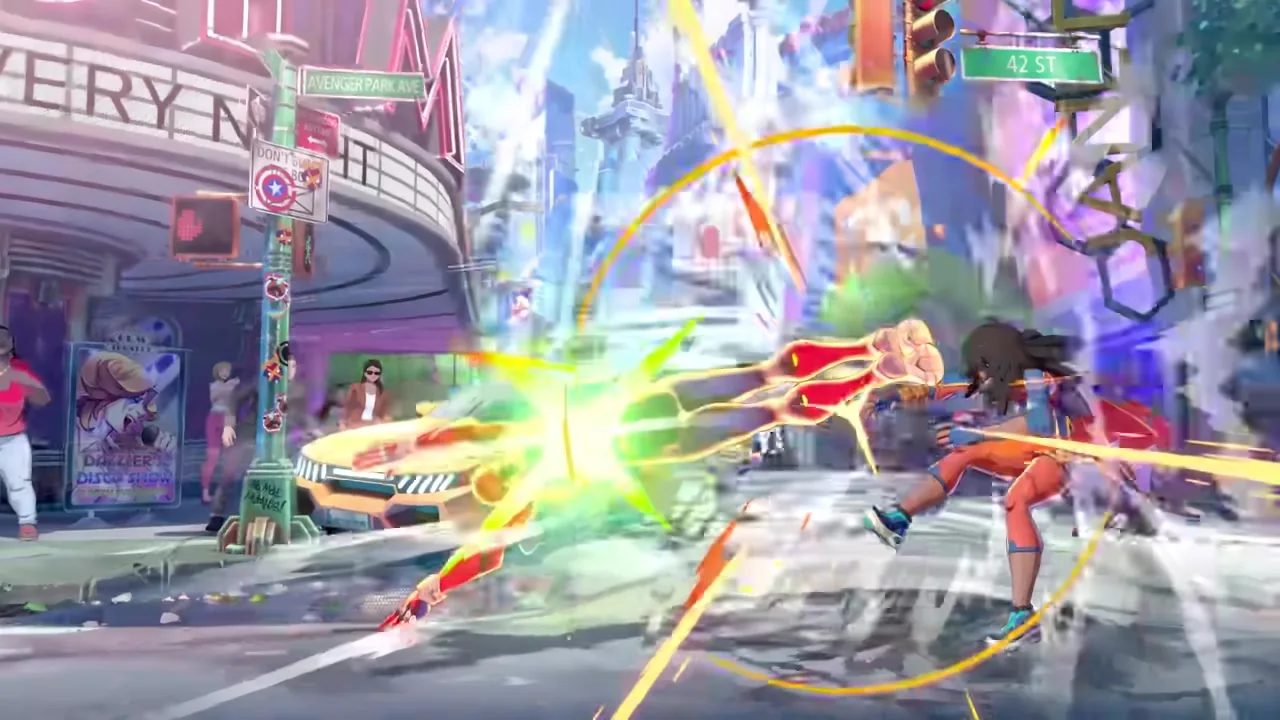
The Honeymoon is Over: The Post-Launch Reality
When Arc System Works, in collaboration with PlayStation Studios and Marvel Games, officially unleashed MARVEL Tōkon: Fighting Souls on August 6, 2026, the global fighting game community (FGC) braced itself for a wildly chaotic, high-octane 4v4 tag-team brawler. Following the massive roster lock-in at Evo 2026 and the highly populated July open beta, expectations were astronomical. Fast forward a couple of weeks to late August, and the competitive honeymoon phase is officially over. The reality of a blistering anime-style fighter with complex tag mechanics is aggressively setting in, and the community is currently deeply divided over the game’s offensive structure.
While the hardcore FGC is busy tearing apart the frame data and optimizing touch-of-death sequences, the casual player base is experiencing severe whiplash. Forums and social media channels are flooded with complaints regarding oppressive character mechanics, inescapable corner pressure, and what many are calling “infinite” combos. This early meta friction is reportedly having a stark impact on the game’s commercial and casual longevity, leading to a polarizing split in how MARVEL Tōkon is being received across different skill brackets. We are breaking down the current state of the meta, looking at the grapplers terrorizing the ranked queues, addressing the combo controversy, and highlighting how the grassroots tournament scene is reacting.
The “Broly” Blueprint: Unpacking Hulk’s Arsenal
Arc System Works is legendary for recycling, refining, and perfecting their best character archetypes across different titles, and MARVEL Tōkon: Fighting Souls is absolutely no exception to this rule. Over the past week, community analysts and lab monsters have noticed a striking similarity between certain bruisers in this 4v4 environment and the legendary Broly from Dragon Ball FighterZ. This mechanical DNA transfer is most glaringly obvious when you look at the Fighting Avengers’ resident tank, Hulk.
According to intensive community breakdowns on Reddit, Hulk has reportedly inherited a near 1:1 replica of DBFZ Broly’s infamous Charged Heavy Punch mechanic. In practical application, this means Hulk can proactively absorb incoming hits with super armor while winding up a massive, highly plus-on-block strike. In a 4v4 tag fighter where the neutral game can become extremely frantic due to the constant threat of assists and tags, having a gigantic button that simply ignores standard pokes and projectiles is incredibly dominant. If you try to challenge his approach with a fast light attack, the armor will eat your hit, and you will eat a devastating counter-hit combo.
Furthermore, when Hulk spends his Skill Gauge (the resource strictly used for EX moves and supers—not to be confused with the non-existent “Soul Gauge”), his supers reportedly manifest as massive, screen-filling shockwaves that function remarkably like Broly’s Eraser Blow and Gigantic Meteor. These tools force opponents into the corner and keep them locked down in true blockstun, creating nightmarish frame traps. This oppressive design makes Hulk an absolute menace for characters lacking invincible reversals. If you get caught by his armored approach, you are going to surrender a massive chunk of your team’s shared Vital Gauge. Finding optimal counterplay usually involves utilizing the Assemble Gauge for perfectly timed alpha counters or defensive tags, but if your resources are tapped out, Hulk has the structural tools to steamroll an entire squad single-handedly.
Champion of the Universe: The Ultimate Raid Boss
If Hulk represents the competitive, balanced application of this grappler archetype, the Episode Mode’s big bad takes it to an entirely different, absurdly overtuned boss-level extreme. The Champion of the Universe, a cosmic elder who serves as the primary antagonist of the single-player campaign, is reportedly designed as the ultimate realization of the unyielding grappler archetype.
Within the Episode Mode narrative, the Champion of the Universe violently clashes with the antagonistic Knights of Doom faction (consisting of Doctor Doom, Magneto, Green Goblin, and Carnage). However, it is his gameplay mechanics that truly steal the show and break the conventional rules of the engine. Players grinding through the story on higher difficulties have noted that the Champion plays like a hyper-tuned, radioactive version of Hulk. He possesses the exact same armored approaches but with significantly faster startup frames, practically no recovery, and even more devastating command grabs that pull you out of the air.
His attacks chew through the player’s Vital Gauge at a frightening pace. More importantly, because he fights as a solo raid boss against your full squad of four, he operates under entirely different hitstun and scaling modifiers. The community consensus expects that defeating the Champion on the highest difficulty setting will require absolutely flawless mastery of the game’s defense mechanics. You simply cannot block all day against a boss that can command-grab you from half a screen away through your block. Players are forced to internalize when to neutral jump, when to backdash, and when it is absolutely critical to spend the Skill Gauge on invincible supers to blow right through his armor. The Champion stands as a brutal, unapologetic skill check that quickly exposes whether you’ve truly learned the engine or if you’ve just been mashing auto-combos against the AI.
The Infinite Combo Controversy and Player Retention
While the grappler menace is a hot topic for theory-crafters, an even more pressing and universal issue is currently tearing through the game’s discourse: the perceived prevalence of extremely long, inescapable combos. Over the last several days, reports have flooded various fighting game forums from newer players complaining about being caught in “infinite” loops.
To clarify, true infinite combos (where a sequence loops endlessly without triggering the game’s internal hitstun deterioration system) are notoriously rare in modern ArcSys titles, and any genuine infinites will likely be patched out quickly. What players are actually experiencing are highly optimized, extremely long anime-style blockstrings and juggle routes. In MARVEL Tōkon: Fighting Souls, your entire 4-person team shares a single, massive Vital Gauge. This core design choice was intended to streamline the HUD, reduce visual clutter, and make high-stakes comebacks more readable for spectators. However, it has a nasty psychological side effect.
If an opponent manages to confirm a hit in the neutral and has the optimal routing memorized, they can theoretically burn all their Skill Gauge and continuously utilize their Assemble Gauge to swap characters mid-combo. This keeps the victim airborne, wall-bounced, or ground-bounced for agonizingly long periods of time. For beginners transitioning from slower-paced, footsie-based games, getting tagged by a stray assist and subsequently watching 60% of your shared Vital Gauge disappear over the course of thirty seconds feels exactly like being hit by an infinite.
The lack of cheap, low-cost burst mechanics means that once you are in the blender without adequate Assemble Gauge to force a defensive swap, you are effectively a spectator to your own demise. Many casual players simply do not want to endure the rigorous, repetitive lab work required to learn extensive combo basics and optimal defensive routing just to survive a low-rank ranked match.
This steep barrier to entry and the resulting frustration are having a documented impact on the game’s player retention. Mainstream gaming outlets and industry trackers like Kotaku and TechPowerUp have reported that the game is heavily underperforming in its post-launch window. SVG recently published a startling report indicating a massive drop in active concurrent players—claiming a staggering 90% decline since the initial hype of the Evo reveals.
The Grassroots FGC Response Remains Unshaken
Despite the grim headlines regarding player retention and the sharp drop-off of casual buyers, the hardcore fighting game community refuses to abandon ship. The sheer mechanical depth of the 4v4 systems offers an incredibly high skill ceiling for those willing to endure the brutal learning curve. The FGC is historically used to carrying games through rough launch periods, and we are already seeing that grassroots resilience in action.
A prime example of this dedication is the competitive tournament scene stepping up to support the player base. Notably, the legendary online tournament organizer Tampa Never Sleeps (TNS) recently announced that they are officially welcoming PC players into their MARVEL Tōkon weeklies. This is a massive structural boon for the game’s competitive health. The PC port has suffered its own unique share of launch drama—including bizarre DRM controversies and input lag tests—but the integration of PC players into major, recognized weeklies ensures a much wider, healthier pool of high-level talent.
As the competitive meta continues to evolve and mature, we expect to see top-tier players develop significantly better strategies for mitigating these massive combo strings and neutralizing the armored neutral tools of characters like Hulk. The first few weeks of any versus fighter are historically chaotic, dominated by unblockable setups and heavily unoptimized defense. Only time will tell if Arc System Works will intervene with a targeted balance patch to tone down the offensive extremity, or if the community will naturally adapt to the unforgiving, lightning-fast rhythm of MARVEL Tōkon: Fighting Souls.