Loki Character Guide Breakdown: Mastering Illusions in MARVEL Tōkon: Fighting Souls
Analyze Loki's official character guide ahead of launch. Learn his projection setups, feint mechanics, and team synergies within the 4v4 tag format.
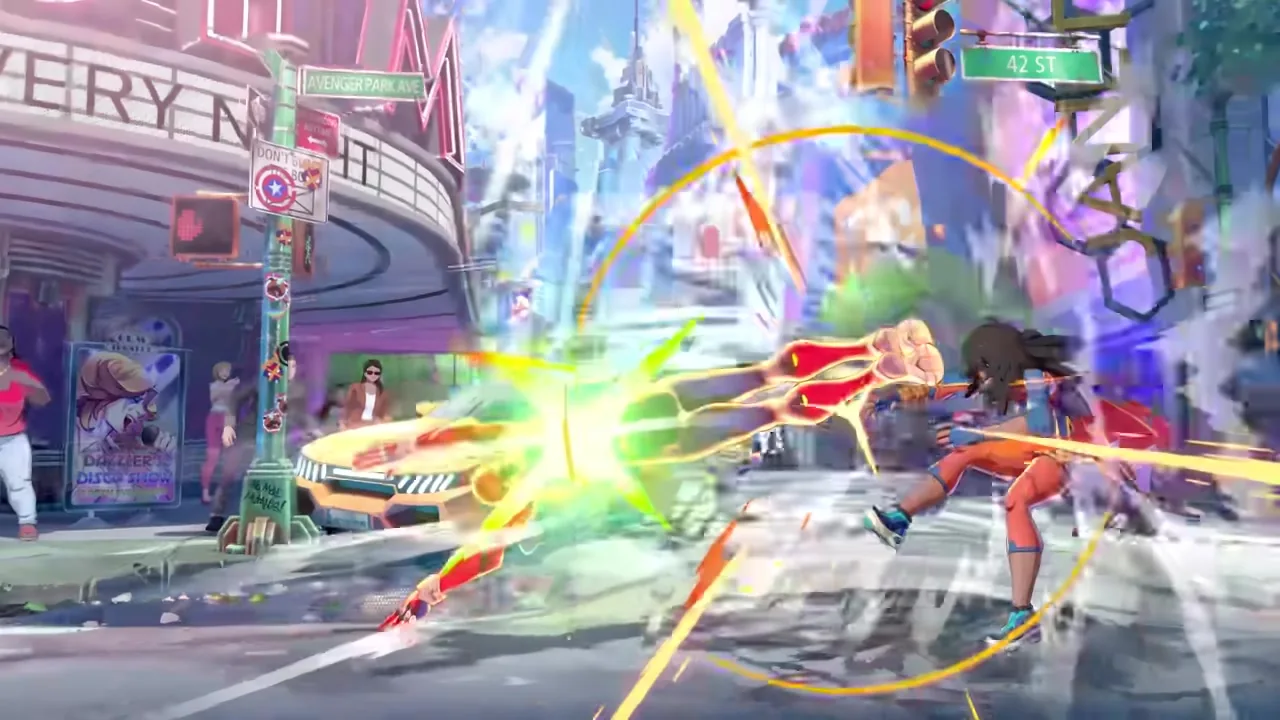
The God of Mischief Enters the Cosmic Arena
Tomorrow is August 6, 2026—the official release date for MARVEL Tōkon: Fighting Souls on PlayStation 5 and PC (Steam and Epic Games Store). With the global launch countdown ticking down its final hours and pre-loads actively running for Ultimate Edition owners, Arc System Works and Sony Interactive Entertainment have dropped what appears to be the final character guide for the base roster. This time, the spotlight is placed firmly on Loki, the God of Mischief and Lies.
Loki is officially ready to break ankles, disrupt the neutral game, and completely flood the opponent’s mental stack. Positioned as a core member of the Samurai Outriders squad—fighting alongside Ghost Rider, Blade, and Deadpool—Loki brings a completely different tempo to the battlefield. While his teammates largely want to close the gap aggressively or control the screen with massive weapon hitboxes, Loki’s gameplay is purely psychological. This breakdown will analyze his official gameplay trailer, exploring how his projections, feints, and trickery fit into the game’s chaotic 4v4 format.
Defining the Archetype: Setups, Feints, and the Mental Stack
In a modern 4v4 tag system, having a character who can completely dictate the pace of a match is a massive competitive asset. Based on the footage provided in the official character guide, Loki operates as a hybrid setup and trap character. He relies heavily on spatial control and conditioning the opponent to second-guess their defensive responses. He isn’t going to overwhelm you with blistering raw speed like Spider-Man, nor will he armor through your offense like the Hulk. Instead, Loki wants you to hang yourself with your own mistakes.
The absolute core of his gameplay loop revolves around his projections. Loki can summon visual illusions of himself to perform various actions on screen. The true terror here lies in the feints. The guide demonstrates exactly how he can initiate a special move animation, only for it to be a harmless projection, while the real Loki recovers instantly to punish the opponent’s reaction.
In traditional anime fighters, this kind of toolkit is devastating. If you try to challenge what looks like a committed, advancing physical attack with a heavy normal or an invincible reversal, you are going to whiff the air. Loki will then secure a full combo counter-hit from a completely safe distance. Because MARVEL Tōkon: Fighting Souls utilizes a shared Vital Gauge for the entire team, taking unnecessary risks on defense is severely punished. You can’t just lose 30% of your point character’s health on a bad read and brush it off; that damage permanently impacts your whole squad’s survival. Loki’s elusive nature makes him an incredibly safe point character. He can poke and prod at the opponent’s defense from a safe distance, baiting out mashing (abare) without ever committing his own physical hurtbox.
Managing Projections and the Skill Gauge
Let’s talk about the specific mechanics of these illusions. When Loki throws out a projection, it appears to act as a physical entity on the screen for a brief duration. It can obscure visual space, create a wall of confusing hitboxes, and force the opponent to guess which target is real. However, utilizing these tools effectively will require strict resource management, specifically regarding the Skill Gauge.
The Skill Gauge is your primary meter for EX specials and super moves. While his standard feints and basic projections are entirely meterless, it is highly expected that the EX versions of these clones—costing a portion of the Skill Gauge—will have vastly enhanced properties. We can expect EX clones that aggressively track the opponent’s movement, absorb multiple hits of incoming projectiles, or provide massive frame advantage on block rather than just serving as visual tricks.
In the neutral game, your primary objective is to use Loki’s meterless feints to condition the opponent into hesitating. You want them frozen in place. Once they stop pressing buttons out of fear of getting whiff-punished, that is when you start running your true offense. You establish a frame trap—a sequence of attacks with a deliberate, tiny gap designed to catch the opponent pressing a button. If they bite, they get counter-hit. If they respect the fake pressure because of the projections, you get a free turn to walk up and go for a throw, an empty-jump low, or an overhead mixup. This high-level conditioning is exactly what makes setup characters so terrifying in the hands of a dedicated specialist.
Tag Synergy and Assemble Gauge Strategies
No character exists in a vacuum in this game. The 4v4 format means you have three other characters waiting in the wings, and their interactions are entirely governed by the Assemble Gauge. This secondary meter dictates your ability to call assists, perform active switches, and save your point character from relentless pressure.
When Loki is on point, his optimal teammates are going to provide lockdown assists. Imagine throwing out a Loki projection to obscure the screen, simultaneously calling in a Blade barrage or a Deadpool gunfire assist. The opponent’s screen is flooded with hitboxes and visual noise, completely masking the real Loki’s approach angle. He can choose to go low, instantly dash overhead, or cross-up the opponent while the assist keeps them locked in heavy blockstun. It is a blender of high/low/left/right mixups that will test anyone’s defense.
Conversely, what happens when Loki is in the backline? His assist value is undeniably tied to his trickster nature. The official trailer hints at assist calls that drop a clone directly onto the screen. If his assist functions as a lingering trap or a delayed projectile, he becomes an invaluable tool for characters who traditionally struggle to win the neutral game. By spending a chunk of the Assemble Gauge to bring Loki’s clone onto the field, a bulky, slow character could use the resulting chaos to close the distance without taking chip damage.
Taking on Episode Mode: Outsmarting the Bosses
While the competitive fighting game community will be entirely focused on rollback netcode, frame data, and optimizing touch-of-death combos, a huge portion of the player base is eagerly awaiting the single-player Episode Mode. Here, the narrative pits our five factions against the cosmic elder known as the Champion of the Universe, alongside the menacing Knights of Doom.
AI opponents in fighting games notoriously struggle to deal with setup characters. The computer reads your controller inputs, but it often completely miscalculates delayed traps and lingering hitboxes on the screen. Loki’s projections are going to be an absolute nightmare for the Episode Mode AI. You can likely cheese incredibly difficult boss encounters against the Knights of Doom by simply setting up a wall of clones and letting the aggressive AI walk directly into your counter-hits. If the Champion of the Universe utilizes massive armored attacks or unblockable strikes, Loki’s ability to safely poke from across the screen and teleport out of danger will make him a top-tier pick for clearing the hardest difficulty settings on day one.
Final Thoughts Before Launch
The wait is essentially over. MARVEL Tōkon: Fighting Souls is bringing its bold aesthetic, frantic team-building mechanics, and an incredibly diverse roster of 20 characters to the FGC tomorrow. Whether you are labbing optimal assist extensions, figuring out how to break the wall efficiently, or just mashing buttons to see gorgeous supers, understanding how to fight as—and against—characters like Loki will be essential to your survival.
If you are loading up the game tomorrow, do not just jump straight into Ranked matchmaking with a team full of tricksters. Head into the training room first. Turn on the frame data display, figure out exactly which of Loki’s moves are real and which are just smoke and mirrors, and practice your execution. The God of Mischief heavily rewards those who study the mental game, and he will effortlessly punish those who just want to swing blindly in the neutral.