The Readability Crisis: Is Marvel Tōkon's 4v4 Visual Chaos Hurting the Spectacle?
As Marvel Tōkon: Fighting Souls dominates the FGC, players and viewers debate whether the stunning Arc System Works visuals are too chaotic for 4v4 tag mechanics.
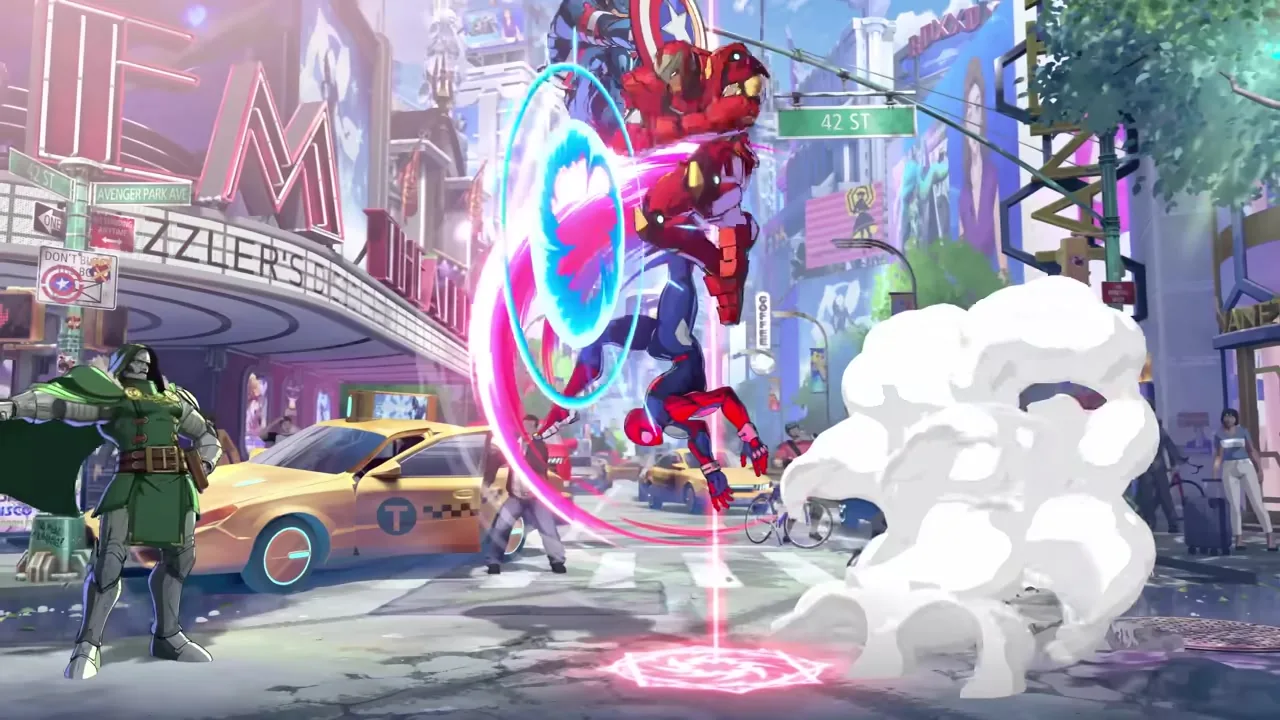
Since its explosive launch on August 6, 2026, MARVEL Tōkon: Fighting Souls has fundamentally shaken up the fighting game landscape. Co-developed by Arc System Works, PlayStation Studios, and Marvel Games, the title has successfully filled a massive superhero-sized void in the genre. Mainstream outlets like GameSpot have gone as far as to say that the game is single-handedly making the agonizing wait for a hypothetical Injustice 3 much more bearable. The 20-character base roster, split neatly into five thematic 4-person squads, looks spectacular in motion. However, as the honeymoon phase ends and high-level competitive play begins to crystallize, a massive debate is tearing through the FGC: is the game simply too difficult to look at?
Arc System Works is globally renowned for its breathtaking, hyper-stylized anime aesthetics. When you are playing a traditional 1v1 fighter, their heavy use of particle effects, aggressive speed lines, and cinematic camera angles emphasize the crushing impact of every counter-hit. But MARVEL Tōkon is not a 1v1 game. It is a wildly ambitious 4v4 tag team brawler. When you combine the developer’s signature visual flair with a system that actively encourages summoning multiple characters onto the screen simultaneously, you get a beautiful, uncompromisingly chaotic mess.
The tipping point for this conversation occurred during CEO 2026. As the first major tournament for the game, thousands of spectators tuned in to watch the highest level of play. The execution on display was phenomenal, but a recurring sentiment echoed across social media timelines and Twitch chat: nobody could tell what was actually hitting them.
A highly upvoted post on the Marvel Tōkon subreddit recently crystallized this frustration under the blunt title, “Visual clarity.” The original poster provided screenshots from the CEO top 8 broadcast, capturing mere frames of action that highlight the absurdity of the current meta. In one specific instance, five characters were simultaneously present on the screen. Ghost Rider was completely obscured behind Magneto’s swirling cape, while a confusing web of assists crossed paths in the foreground. In another screenshot, a brutal left/right mixup from [Blade](/characters/blade/) resulted in Wolverine looking as though he had just been punched in the back of the head by his own Unbreakable X-Men teammate.
This isn’t just an issue for viewers; it fundamentally impacts how defense is played at a high level. In a game where the unified Vital Gauge means every single hit matters for your entire squad’s survival, visual obscurement becomes a lethal weapon.
The root of the problem lies in the Assemble Gauge. Because the game relies heavily on this resource for assist calls and active tags, neutral play is rarely a straightforward exchange of pokes. Players are constantly burning their Assemble Gauge to throw projectiles or lockdown assists on the screen. When a player transitions from an assist call into a massive EX move or a super using the Skill Gauge, the screen explodes with neon green magic, crimson slashes, or blinding cosmic energy. If you are stuck in blockstun while this happens, trying to react to a high/low mixup or a frame trap is practically impossible because the hurtboxes and hitboxes are completely hidden behind a wall of anime fireworks.
FGC veterans are already adapting to this flaw, weaponizing the visual clutter for competitive advantage. Another trending community discussion highlighted the “signs you are about to get absolutely destroyed” in online ranked matchmaking. At the top of the list? Players who color-coordinate their entire squad or use the Chromatic color set.
This isn’t just about fashion; it is a calculated psychological tactic. If a player runs a fully color-coordinated team of Amazing Guardians or Knights of Doom, an active tag during a scramble becomes incredibly difficult to read. When Spider-Man tags into Star-Lord, and both are wearing an identical blindingly bright Chromatic palette, the startup frames of their incoming attacks blend seamlessly into the tag-in visual effect. The opponent is left guessing whether they need to block an overhead or a low, simply because they cannot visually differentiate the point character from the blinding light of the tag transition. For a deep dive into why these transitions are so mechanically potent, you can review our breakdown of [how the tag system works](/guides/how-the-tag-system-works/).
The irony of this overwhelming visual noise is that MARVEL Tōkon: Fighting Souls actually features some of the best onboarding and tutorialization the fighting game genre has seen in years. While the end-game meta looks like a chaotic “Where’s Waldo” puzzle, the initial learning curve is surprisingly gentle.
Mainstream PC gaming outlets have recently published dedicated pieces praising the game’s tutorial structure. PC Gamer explicitly called the game’s combo trials an “elegant tutorial solution” that more fighting games need to adopt. Instead of throwing a massive, overwhelming spreadsheet of frame data at new players, the trials expertly break down [combo basics](/guides/combo-basics/) into digestible, functional rhythms. In the sterile, distraction-free environment of the training grid, the mechanics shine. You can clearly see the startup of Wolverine’s slash, the distinct visual cue for a perfect parry, and the exact moment your Assemble Gauge allows for an extension.
However, there is a massive disconnect between learning your BnB (bread-and-butter) combo in the training room and actually executing it when the Champion of the Universe is covering the stage in cosmic debris during Episode Mode. The pristine readability of the tutorial completely vanishes the moment you enter a real 4v4 match.
Despite the growing pains associated with the visual clutter, there is no denying that Arc System Works’ art direction has resonated deeply with the fan base, even spilling over into real-world economics. The character models and animations are dripping with so much personality that they are actively influencing the comic book market.
Take Magik, for example. Following her dominant presence as the most-used character during the July open beta, her popularity skyrocketed. Recent reports from comic book investment circles note that prices for physical issues featuring Magik on the cover have seen a notable surge in the secondary market. This “Tōkon Effect” proves that the Unbreakable X-Men member’s flashy teleportation combos and smug, anime-inspired aesthetic are a massive hit. If you want to understand why she is dominating the usage charts, check out our guide on [Magik](/characters/magik/).
So, where does the game go from here? With the Year 1 DLC confirmed to bring four new characters and a new stage to the chaotic roster, the screen is only going to get more crowded. The community is actively petitioning Arc System Works for quality-of-life adjustments to salvage the competitive readability.
The proposed solutions from the FGC are relatively straightforward. Many top players are begging for a subtle colored outline around the active point character to distinguish them from incoming assists. Others have suggested an option to dynamically dim the opacity of non-active character models and particle effects, ensuring that the critical strike zones remain visible even when the Skill Gauge is being emptied.
MARVEL Tōkon: Fighting Souls is a spectacular achievement. It successfully blends the frantic, team-building strategy of legacy Marvel fighters with modern, breathtaking anime visuals. But for the game to maintain its momentum on the esports main stage and keep its player base from burning out on visual fatigue, the developers will need to find a compromise. Stripping away the visual identity of Arc System Works would be a mistake, but ensuring that players can actually see the attacks they are supposed to block is a fundamental requirement for the genre’s survival.